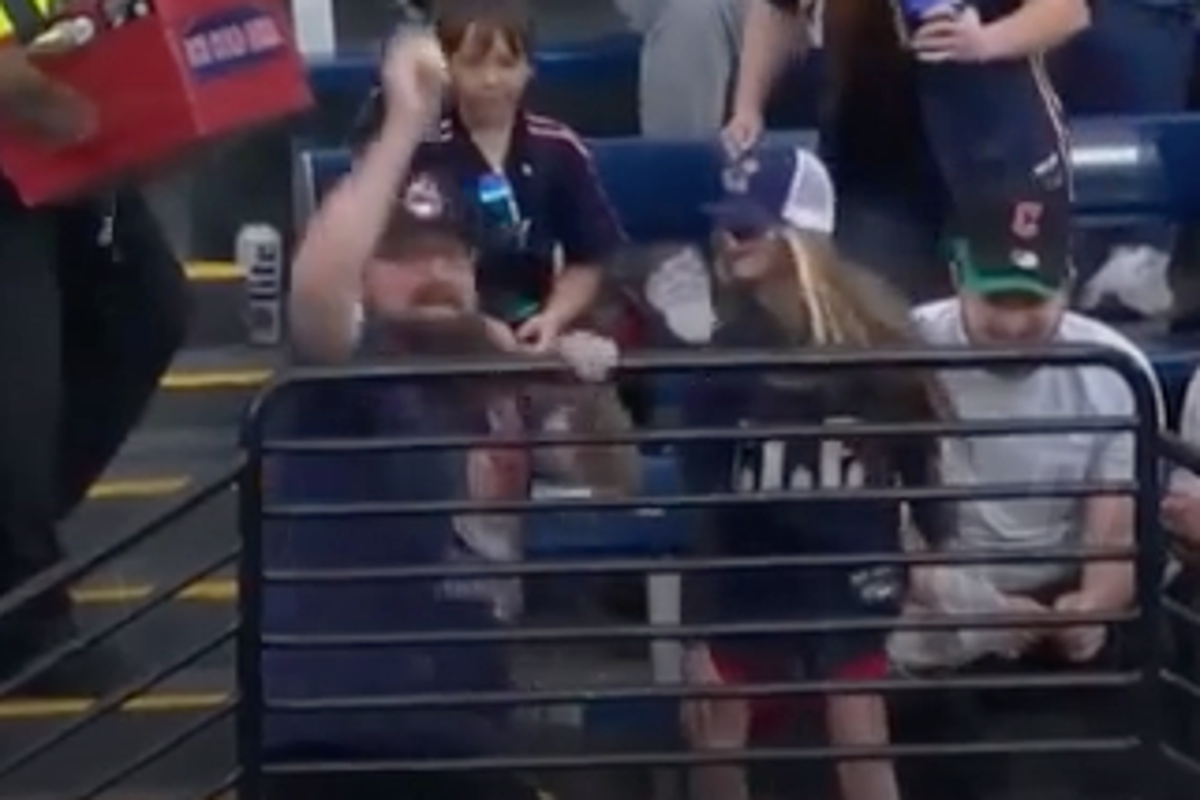
The incident lasted exactly four seconds. A home run ball arched into the stands, a young fan positioned her glove for a lifelong memory, and a grown man lunged across two seats to snatch the prize from her grasp. Within an hour, the footage was a viral contagion. By the next morning, the perpetrator had issued a public apology, citing a "bad decision" fueled by the heat of the moment. But calling this a momentary lapse in judgment is a convenient lie that ignores a rot spreading through the bleachers of every professional ballpark in America.
Modern stadium culture has transformed from a communal experience into a high-stakes hunt for social media validation and secondary-market profit. When a middle-aged man knocks over a child for a piece of cork and cowhide, he isn't just failing a basic empathy test. He is responding to an environment that now prioritizes individual "content" over collective respect. We have reached a point where the souvenir is worth more than the integrity of the game itself.
The Souvenir as Social Currency
The value of a home run ball used to be purely sentimental. You took it home, put it on a shelf, and told the story of the game to anyone who would listen. That era is dead. Today, a captured ball is a ticket to fifteen minutes of digital fame or a lucrative listing on a memorabilia site. The incentives have shifted.
When every fan in the front row is holding a smartphone in one hand and a beer in the other, the stadium becomes a theater of performance. Fans are no longer just watching the game; they are documenting their presence within it. Snatching a ball from a child isn't just about the ball. It is about the "win." It is about the video of the catch that will be uploaded before the next batter steps into the box. This desperation for a tangible trophy of one’s attendance has created an aggressive, every-man-for-himself atmosphere that was once reserved for the most cutthroat corporate environments.
The "bad decision" excuse is a shield used to deflect from a deeper behavioral trend. It suggests the act was an anomaly. It wasn't. Watch any home run landing in a modern MLB park. You will see grown men diving over railings, trampling teenagers, and engaging in physical altercations over a ball that costs the league about $10 to manufacture.
The Failure of the Unwritten Rules
Baseball has always been governed by unwritten rules. These rules dictate that you don't flip your bat after a home run, you don't bunt to break up a no-hitter, and—most importantly for the fans—you always give the ball to the kid. This wasn't just a suggestion; it was a social contract that kept the peace in the cheap seats.
That contract is being torn up in real-time. The breakdown of stadium etiquette reflects a broader societal shift toward hyper-individualism. In the past, the surrounding section would have shamed an adult into handing a snatched ball back to a child. The collective pressure of "the crowd" acted as a moral arbiter. Now, the crowd is often too busy filming the conflict to intervene.
We see this same lack of restraint in how fans interact with players. The barrier between the stands and the field has become increasingly porous, not physically, but psychologically. Fans feel a sense of ownership over the athletes and the objects they produce. They paid for the ticket, so they feel entitled to the spoils, regardless of who they have to shove to get them.
The Economics of the Scramble
Major League Baseball has inadvertently fueled this fire. By leaning heavily into the "gamification" of the fan experience, teams have increased the perceived value of every foul ball and home run. Statcast data tells us the exact exit velocity and distance of the hit, turning a simple play into a set of impressive metrics. Memorabilia hunters use this data to track where balls are most likely to land, turning sections of the stadium into tactical zones for professional "ball hawks."
These are not casual fans. These are individuals who attend dozens of games a season with the sole intent of collecting as much leather as possible. They bring specialized gloves, use range-finding apps, and have no qualms about outmaneuvering a ten-year-old. When a hobby becomes a profession, the sportsmanship is the first thing to go.
The man who snatched the ball from the girl in the recent viral clip likely didn't see a child. He saw an opportunity. He saw an object entering his sphere of influence and reacted with the predatory instinct that modern stadium culture now rewards. The backlash he received was only possible because a camera caught him. For every viral clip of a "bad decision," there are a dozen others that go unrecorded, where the child leaves the park in tears and the adult leaves with a trophy.
The Liability of Silence
Teams and stadium security are often hesitant to intervene in these disputes unless they escalate into physical violence. Their stance is usually that once a ball enters the stands, it is "in play" for the fans. This hands-off approach creates a vacuum where the loudest and most aggressive person wins.
By refusing to enforce a basic code of conduct regarding fan-to-fan interactions over souvenirs, the leagues are silently endorsing the chaos. A "bad decision" is easy to make when there are zero consequences from the usher standing five feet away. If teams started revoking season tickets or ejecting fans who physically displace others for a ball, the behavior would vanish overnight. But teams fear the PR nightmare of being seen as "fun police," so they let the jungle law of the bleachers persist.
The Psychological Toll on the Next Generation
We have to ask what kind of message this sends to the younger demographic the MLB is so desperate to attract. If a child goes to a game and learns that the biggest, strongest person gets the prize regardless of fairness, the magic of the ballpark sours. The stadium should be a sanctuary of sport, not a lesson in the cruelty of adult entitlement.
The victim in these scenarios isn't just the child who didn't get the ball. It is the integrity of the fan experience. When parents have to worry about their children being steamrolled in the stands, they stop bringing them. The short-term gain of an aggressive fan getting his "moment" is a long-term loss for the sport's culture.
Reclaiming the Bleachers
Fixing this isn't about more apologies or viral redemption tours. It is about a fundamental shift in how we occupy public spaces. The man who apologized did so because he was caught, not necessarily because he underwent a moral epiphany. True change requires the reinstatement of the social shame that once governed these interactions.
Fans in the surrounding seats need to be the first line of defense. If someone steals a moment from a child, the section shouldn't just boo; they should demand a correction. Beyond that, the responsibility lies with the organizations. If a ball is contested, the default "winner" should not be the one with the longest reach, but the one who didn't violate the personal space of others to get it.
The stadium is one of the few places left where people of all backgrounds gather for a singular purpose. It is a microcosm of society. If we can't manage to be civil over a piece of rubber and yarn, we have much larger problems than a dip in TV ratings. The "bad decision" isn't just the snatching of a ball; it is the collective decision to let the stadium become a place where greed outweighs the simple joy of the game.
Stop looking at the screen and start looking at the person in the seat next to you. The game is better when the person catching the ball actually deserves to keep it.