The ink on a diplomatic protest carries a weight that rarely translates to the evening news. We see the headlines about "sovereignty" and "compensation," but we miss the smell of ozone after a missile strike or the way a desk vibrates in an office in Abu Dhabi when the regional gears begin to grind. This is not just a story about legal filings. It is a story about the bill finally coming due for a night when the sky turned a violent, artificial orange.
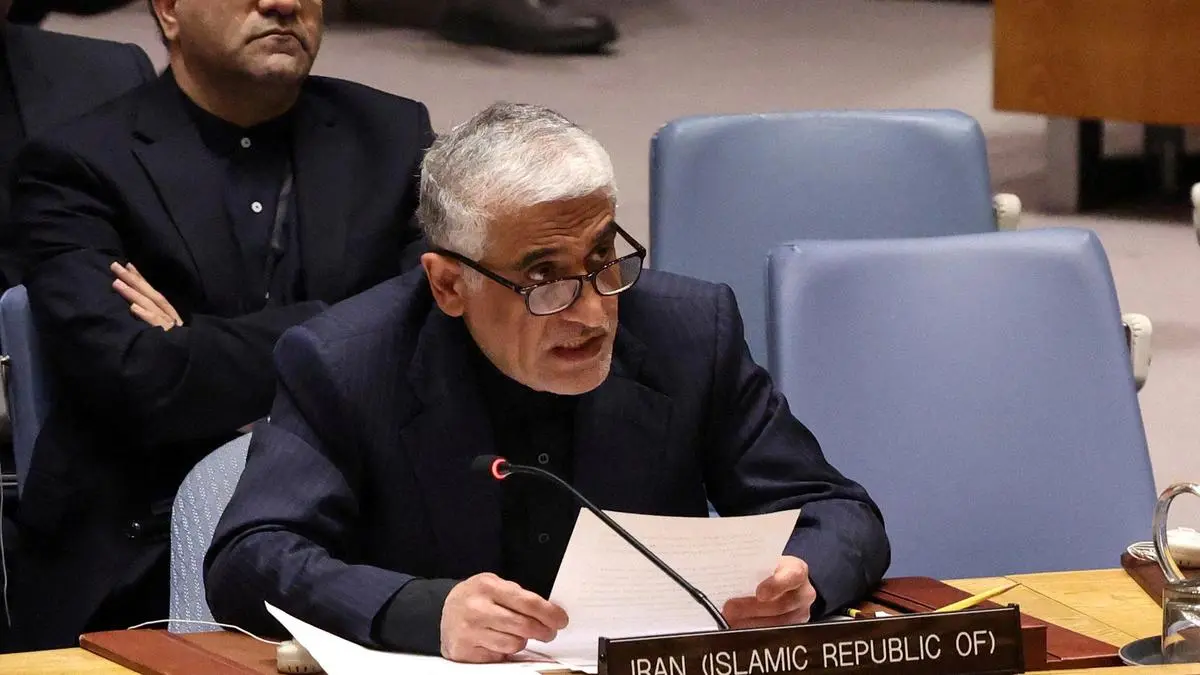
Tehran is currently reaching across the water. It is a reach that bypasses the usual military posturing and lands squarely in the realm of international law and cold, hard currency. The Iranian government is demanding that the United Arab Emirates (UAE) pay for the damage caused by United States military strikes launched from Emirati soil. It is a move that turns a host country into a liable party. It shifts the blame from the person who pulled the trigger to the person who provided the room.
Consider a hypothetical shopkeeper in a coastal Iranian town. Let us call him Reza. For Reza, the geopolitical "chess match" isn't an abstract concept discussed in air-conditioned rooms in Geneva. It is the shattered glass in his storefront. It is the three weeks his fishing boat sat idle because the local port was a restricted zone of charred metal and panicked security. When a drone or a jet takes off from a base across the Persian Gulf to strike a target near Reza’s home, the nationality of the pilot matters less to him than the geography of the launchpad. To Reza, the neighbor who allowed the attacker to use their driveway is just as responsible as the attacker himself.
This is the emotional and legal pivot Iran is now exploiting.
The Calculus of Complicity
For decades, the security architecture of the Middle East has relied on a quiet understanding. The United States maintains a massive footprint, utilizing bases in Qatar, Bahrain, and the UAE to project power. In exchange, these host nations receive a security umbrella. It was a simple trade. But the legal ground is shifting. By seeking compensation from the UAE rather than the U.S. directly, Iran is testing a potent theory of international liability: if you provide the "platform" for an illegal act, you own the consequences of that act.
The legal experts in Tehran are pointing toward the principle of state responsibility. They argue that by allowing American forces to use Al Dhafra Air Base or other facilities for offensive operations against Iranian territory, the UAE has bypassed its "neutrality." It is a surgical strike on the UAE’s brand. Abu Dhabi has spent the last five years trying to position itself as the Switzerland of the Middle East—a hub of de-escalation, high-end real estate, and global trade.
A massive, multi-billion-dollar compensation claim is a stain on that carefully curated image of a peaceful business sanctuary. It forces the UAE to answer a terrifying question: Can you truly be a neutral global marketplace if you are also a "stationary aircraft carrier" for a superpower?
The Invisible Stakes of the Coastline
The Persian Gulf is narrower than most people realize. At its tightest point, the Strait of Hormuz, you can almost see the history of the world reflected in the water. On one side, the gleaming, glass-and-steel ambition of the Emirates. On the other, the rugged, defiant, and ancient coast of Iran.
When strikes occur, the ripples aren't just physical. They are economic. Every time a missile crosses that narrow stretch of water, insurance premiums for oil tankers skyrocket. Investment capital flinches. The "country risk" profiles updated by analysts in London and New York start to glow red. Iran knows this. By demanding compensation, they aren't just looking for a check; they are exerting "cost-imposition." They want the UAE to realize that hosting the U.S. military is no longer a free lunch. It now comes with a potential invoice for every building destroyed and every life lost on the opposite shore.
We often talk about "collateral damage" as if it were a weather event. It isn't. It is a series of broken lives. Imagine a family in an Iranian port city. They aren't politicians. They aren't Revolutionary Guard members. They are people trying to navigate a crippled economy under the weight of sanctions. When a strike hits a nearby infrastructure point, their electricity dies. Their refrigeration fails. Their sense of safety evaporates.
When Iran asks for compensation, they are nominally asking for the cost of the steel and the concrete. But the subtext is the human cost of living under the constant shadow of a "platform" located just a few dozen miles away.
The Mirror of Precedent
History has a long memory, and international law is built on that memory. The Iranian legal team is likely looking at precedents where host nations were held accountable for the actions of foreign troops on their soil. They are crafting a narrative where the UAE is not a victim of circumstance, but a conscious facilitator.
This creates a massive friction point in the Abraham Accords and the general warming of ties we’ve seen in the region. How do you sign trade deals and open embassies with a neighbor while simultaneously suing them for war damages? It is a masterpiece of cognitive dissonance. It forces the UAE into a corner. If they pay, they admit guilt and anger their American protectors. If they refuse, they remain "the enemy who hosted the bombers" in the eyes of the Iranian public, making long-term regional stability impossible.
The numbers being whispered are staggering. We are talking about billions in property damage, environmental cleanup from oil leaks caused by strikes, and the lost economic opportunity of paralyzed trade routes. But the real currency here is leverage.
The Ghost in the Boardroom
Think about the CEO of a multinational logistics firm looking to set up a regional headquarters. They want stability. They want a place where the rules are clear and the risks are predictable. The Iranian compensation claim introduces a ghost into the boardroom. It suggests that the UAE’s soil is not just a place for business, but a theater of war with an unsettled tab.
Iran is playing a game of "legal asymmetric warfare." They cannot outspend the U.S. military. They cannot outfly the U.S. Air Force. But they can use the UAE’s own desire for legitimacy and international standing against it. They are dragging the shadows of the battlefield into the brightly lit courtrooms of international arbitration.
The tension is palpable in the diplomatic cables. The UAE has worked tirelessly to diversify its economy away from oil, leaning into tourism and tech. But you can't build a Silicon Valley of the Sands if the neighboring country is constantly serving you with lawsuits for "facilitating aggression." It breaks the illusion of the Emirates as a safe, isolated bubble of prosperity. It reminds everyone that the bubble is made of glass, and it sits right next to a pile of stones.
The Sound of the Bill Coming Due
There is a specific kind of silence that follows a regional explosion—a silence where everyone waits to see who will take the blame. For years, the U.S. took the blame, and the UAE stayed in the background. That era is ending.
Iran’s demand for compensation is a signal that the "host nation" shield is cracking. It is an assertion that geography is destiny, and if you choose to share your geography with a warring superpower, you must be prepared to share the bill for the aftermath.
The fishermen on the Iranian coast and the bankers in the Dubai towers are connected by more than just the salt water of the Gulf. They are connected by a ledger of grievances that is currently being tallied. This isn't just about money. It's about the fundamental right to exist without being used as a staging ground for someone else's war.
As the legal proceedings move forward, the world will watch to see if a nation can truly be held responsible for the missiles it didn't fire, but merely allowed to pass through its gates. The answer will redefine the cost of alliance in the twenty-first century. It will determine whether a country can be a sanctuary for capital while remaining a warehouse for cordite.
The ledger is open. The ink is wet. And the people living on both sides of the water are waiting to see if justice is something that can be bought, or if it is something that must be built from the rubble of the night the sky turned orange.
The wind off the Gulf carries the scent of salt and the faint, metallic tang of old fires. In the offices of Abu Dhabi and the halls of Tehran, the accountants are starting to count the cost of a war that never officially began, but whose price tag keeps growing.