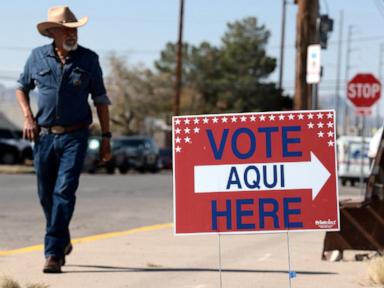
Raw early vote volume is a lagging indicator of partisan enthusiasm; the true predictive signal lies in the compositional shift of low-propensity voters entering the electorate prior to Election Day. When media analysts treat aggregate ballot totals as a direct proxy for electoral momentum, they conflate two distinct operational phenomena: the cannibalization of Election Day turnout by high-propensity partisans and the net expansion of the electorate through marginal voter mobilization. Evaluating the 2026 midterm early voting windows in Texas and Georgia requires isolating these variables to separate structural noise from genuine shifts in baseline partisan energy.
The Three-Variable Framework of Early Vote Composition
Standard political reporting typically relies on raw ballot counts or simple year-over-year volume comparisons to infer campaign health. In Texas, over 4.5 million residents cast ballots during the opening week of early voting in late October 2026, while Georgia surpassed 2.1 million early ballots over a comparable window. Viewed in isolation, these figures merely confirm high systemic engagement. To extract actionable strategic intelligence from pre-Election Day returns, analysts must decompose the electorate across three primary dimensions:
- Vote History Stratification (Propensity Tiers): Voters are segmented by their participation across the preceding four federal election cycles. High-propensity voters (4-of-4 or 3-of-4 participants) represent fixed partisan inventory; their early appearance alters the timing of the vote, not the final margin. Low-propensity and intermittent voters (0-of-4, 1-of-4, or 2-of-4 participants) represent net electorate expansion.
- Partisan Modeling vs. Primary History: Because neither Texas nor Georgia registers voters by political party, analysts rely on two mechanisms to infer partisan lean: historical primary ballot selection and commercial consumer-data modeling. Primary history offers high certainty for core partisans, whereas modeled partisanship introduces probabilistic variance among newly registered or primary-abstaining cohorts.
- Temporal Front-Loading Curves: The daily rate of ballot accumulation reveals whether a party is exhausting its high-propensity base early or sustaining a steady acquisition rate of marginal voters throughout the early voting period.
Deconstructing the Texas Early Vote Signal
Texas operates an early voting infrastructure characterized by extended in-person windows and strict mail-in ballot eligibility requirements. Because mail-in voting is largely restricted to voters aged 65 and older, individuals with disabilities, or those out of the county during the voting period, early in-person turnout serves as the primary mechanism for mass mobilization.
During the first seven days of the 2026 early voting period, Texas recorded 23.4% turnout among registered voters, outpacing the 2022 midterm trajectory while tracking slightly behind the 24.3% benchmark established during the high-salience 2018 Senate cycle. Surface-level comparisons between 2022 and 2026 fail to account for structural changes in the electoral environment. In 2022, Democrats held the White House, creating a classic midterm thermostatic backlash that depressed Democratic marginal turnout. In 2026, with Republicans controlling both chambers of Congress and the presidency, the thermostatic pressure reversed.
The operational anomaly in the 2026 Texas early vote was not the aggregate total, but the partisan composition of the opening week. Voters with a history of participating in Democratic primaries outpaced Republican primary voters during the initial seven-day window—a departure from standard Texas early vote baselines where Republican primary voters historically establish an early numerical advantage.
The Cannibalization vs. Expansion Mechanism in Texas
To evaluate whether this early Democratic lead signaled a structural realignment or merely a shift in voting habits, one must examine the mechanics of voter conversion:
- GOP Habitual Shift: Following years of elite messaging skeptical of pre-Election Day voting, Republican campaign infrastructure in 2026 aggressively pushed "bank the vote" initiatives. When Republicans vote early, they frequently cannibalize their own Election Day pool. If a 4-of-4 Republican voter casts a ballot on Tuesday of early voting instead of the first Tuesday in November, the net partisan margin of the election changes by zero.
- Democratic Base Consolidation: Conversely, when Democratic primary voters outpace Republican primary voters in a state with a structural GOP registration advantage, it indicates asymmetric mobilization speed. Democrats successfully compressed their reliable base into the early window, freeing field operations to reallocate contact resources toward lower-propensity targets in the final week.
The primary limitation of using primary history in Texas is the growing cohort of unaffiliated or non-primary voters in rapidly expanding suburban counties (such as Tarrant, Collin, and Williamson). A voter who skips March primaries but votes in November general elections leaves no official partisan paper trail in Texas state files, forcing campaigns to rely entirely on probabilistic modeling to assess suburban persuasion trends.
Georgia and the Low-Propensity Mobilization Delta
Georgia presents a distinct analytical case because its electorate is heavily polarized along racial and geographic lines, and its commercial voter file modeling exhibits lower variance than that of Texas. In Georgia, the critical diagnostic metric one week out from Election Day is not aggregate volume—which exceeded 2.1 million ballots—but the partisan split within the 2-of-4 vote history tier (voters who participated in exactly two of the previous four federal elections).
In the 2026 early voting window, modeled Democrats accounted for 56% of early voters within this intermittent 2-of-4 cohort, compared to 24% for modeled Republicans. Comparing this ratio against the identical point in the 2022 midterm cycle exposes the underlying shift in enthusiasm: in 2022, that same intermittent tier split 54% modeled Democratic to 35% modeled Republican.
Cause-and-Effect in Intermittent Voter Turnout
The widening of the Democratic advantage within Georgia's intermittent voter tier—from a 19-point edge in 2022 to a 32-point edge in 2026—demonstrates two compounding causal mechanisms:
- Asymmetric Demobilization of Marginal Republicans: The drop in Republican share among intermittent early voters (from 35% down to 24%) reflects the classic midterm penalty experienced by the party in power. Marginal Republican voters, lacking the existential urgency of an opposition cycle, exhibit higher friction costs when deciding whether to visit an early voting precinct.
- Targeted Field Efficiency: For Democratic campaigns defending a competitive Senate seat and contesting statewide executive offices, every intermittent voter captured before Election Day removes an expensive, high-risk target from the final 72-hour Get-Out-The-Vote (GOTV) universe. Because intermittent voters are disproportionately sensitive to weather, work schedules, and polling site congestion on Election Day, banking their ballots early permanently locks in their contribution to the final margin.
Structural Blind Spots in Early Vote Forecasting
Relying on early vote data one week prior to Election Day carries severe analytical hazards. Treating pre-Election Day composition as a linear predictor of final election outcomes ignores three major sources of distortion:
- The Election Day Residual Pool: Early voting data cannot measure the size or partisan intensity of the electorate waiting to vote on Election Day. In states like Texas and Georgia, rural and exurban Republican coalitions retain a strong cultural preference for Election Day voting. A 15-point Democratic advantage in early voting can be entirely erased if Republican Election Day turnout exceeds historical baselines by 4% to 5%.
- The Denominator Fallacy: Calculating partisan share of the early vote (e.g., 56% Democratic vs. 24% Republican in a specific tier) obscures the absolute size of the denominator. If total turnout within that tier is depressed overall, a high percentage share may yield fewer raw net votes than a smaller percentage share in a higher-turnout cycle.
- Ecological Fallacy in Modeled Data: Modeled partisanship assigns a probability score (ranging from 0 to 100) to individual voters based on demographics, precinct history, and consumer behavior. When analysts aggregate these scores into binary "Democratic" or "Republican" buckets, they mask the behavior of true swing voters—particularly college-educated suburbanites whose past demographic profiles suggested Republican leanings, or non-college-educated minority voters experiencing partisan dealignment.
Operational Playbook for Late-Cycle Resource Allocation
Campaign strategists and data directors cannot treat early vote returns as a scoreboard; they must treat them as a dynamic inventory management system. When early returns mirror the 2026 patterns in Texas and Georgia—characterized by accelerated Democratic base banking and elevated intermittent Democratic turnout—operational execution in the final seven days must adjust accordingly:
- Purge Banked Voters Daily: Every voter who appears on the daily Secretary of State early vote file must be immediately suppressed from all paid digital, direct mail, and canvassing universes. Continuing to spend acquisition dollars on banked voters is pure capital destruction.
- Reallocate Field Capital Down-Tier: As high-propensity (4-of-4 and 3-of-4) partisans clear the early vote pipeline ahead of schedule, redeploy field organizers and paid canvassers exclusively toward 1-of-4 and 0-of-4 modeled partisans. The marginal cost per vote rises sharply in the final week, requiring hyper-concentrated contact frequency on unbanked targets.
- Audit Precinct-Level Bottlenecks: Compare real-time early vote throughput against precinct registration totals to identify anomalous drops in high-value geographies. Where early voting sites are consolidated or relocated, deploy relational organizing and transit logistics immediately rather than waiting for Election Day line congestion to suppress low-propensity turnout.
- Calibrate Election Day Turnout Thresholds: Establish precise precinct-by-precinct Election Day vote targets required to defend or overcome the early vote margin. Campaigns must model multiple Election Day turnout scenarios—ranging from historical midterm baselines to high-surge partisan waves—to avoid misinterpreting a front-loaded early lead as an insurmountable structural advantage.