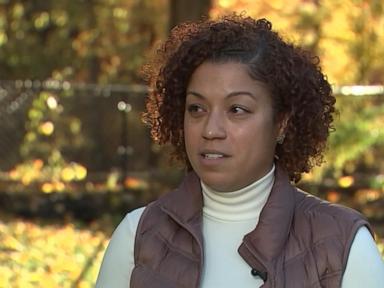
Every time a fatal crash happens on the George Washington Bridge, the local news cycle runs the exact same playbook. Put a grieving family member in front of a camera. Let them demand "justice." Point a finger at a reckless driver, a delayed emergency response, or a specific lapse in highway patrol.
It makes for gripping television. It generates clicks. And it completely lets the real culprit walk away untouched. For a more detailed analysis into this area, we suggest: this related article.
When the widow of a man killed on the George Washington Bridge steps up to a microphone demanding accountability, her grief is absolute, raw, and entirely justified. The problem is not her demand. The problem is the lazy consensus of the media and the public, who treat a predictable infrastructure failure as an isolated criminal anomaly.
You cannot prosecute systemic design flaws in a courtroom. Sending one reckless driver to prison—or slapping a municipal agency with a fine that taxpayers end up paying anyway—does nothing to stop the next body bag from being zipped up on the Hudson River crossing. If we want actual justice, we have to stop looking for a villain behind a steering wheel and start looking at the blueprints of the bridge itself. To get more context on the matter, extensive analysis can also be found on NBC News.
The Illusion of "Driver Error"
The modern traffic safety industrial complex is built on a convenient lie: that 94 percent of all crashes are caused by human error.
Police reports love this metric. Insurance companies worship it. Port authorities rely on it to absolve themselves of liability every single day. When a fatality occurs on a choke point like the George Washington Bridge—the busiest motor vehicle bridge in the world, carrying over 100 million vehicles annually—the official narrative immediately narrows to individual behavior. Someone was speeding. Someone merged aggressively. Someone was distracted.
That narrative is intellectually bankrupt.
Humans are fallible. We get tired, we misjudge distances, and we make split-second mistakes. Designing a high-speed, high-volume transport corridor that requires millions of flawed human beings to perform with 100 percent perfection—and punishes a single lapse with instant death—is not a transportation plan. It is a trap.
In civil engineering and transportation safety, this is known as the Safe System Approach, a framework pioneered in Sweden under the name Vision Zero in the late 1990s. The core premise is simple: human error is inevitable, so the infrastructure must be built to absorb those errors without resulting in death or serious injury.
Yet, in the New York and New Jersey metro area, we do the exact opposite. We build forgiveness out of the system.
Why the George Washington Bridge is a Mechanical Guillotine
Look at the physical reality of the George Washington Bridge. It is a marvel of 1931 engineering forced to handle 21st-century freight and commuter volume it was never meant to bear.
- Zero Shoulder Room: On massive stretches of both the upper and lower levels, there is nowhere to go when a mechanical failure occurs. A flat tire or an overheated engine turns a vehicle into a stationary brick wall in an active lane of 60-mph traffic.
- Violent Merge Zones: The approaches on both the Fort Lee and Washington Heights sides force dozens of lanes of traffic to funnel into a bottleneck in a matter of hundreds of feet. Drivers are forced to weave across multiple lanes while blind spots are maximized by commercial semi-trucks.
- Substandard Sightlines: Elevation changes, structural steel girders, and tight curves limit how far ahead a driver can actually see. By the time a motorist spots stopped traffic or a stalled car, stopping distance has already evaporated.
When a man dies in that environment, calling it a "tragic accident" or blaming a single bad actor is a distraction. The physics of that roadway guaranteed a fatality long before the keys were ever turned in the ignition.
The Trap of Performative Justice
I have spent years watching municipalities, state agencies, and regional authorities respond to public outrage after high-profile roadway deaths. The choreography never changes.
First comes the press conference. A grieving widow demands answers. Local politicians stand behind her, nodding solemnly, promising a "full investigation" and vowing that "no stone will be left unturned."
Next comes the scapegoating. A prosecutor announces charges against a driver. Or an internal review board suspends a low-level dispatcher. The public gets a villain to hate, the news cycle moves on to the next outrage, and the structural status quo remains completely intact.
This is performative justice. It satisfies our primal urge for retribution while actively preventing systemic reform.
Think about what happens when the legal system focuses entirely on individual culpability. The Port Authority of New York and New Jersey gets to position itself as a neutral bystander—or worse, a victim of someone else's recklessness—rather than the entity responsible for maintaining a lethal environment. Discovery in civil lawsuits gets bogged down in years of procedural warfare, ending in sealed settlements paid out of public toll revenues.
Nobody loses their pension. No engineering standards are rewritten. The concrete barriers stay in the exact same place.
The Uncomfortable Truth About Legal Accountability
Here is the part that legal analysts rarely admit on television: the American tort system is terrible at fixing dangerous roads.
Under doctrines like sovereign immunity and design immunity, government agencies and bi-state authorities like the Port Authority are heavily shielded from lawsuits over how infrastructure was originally engineered. Even when a family wins a massive wrongful death settlement, that money does not come out of the pockets of the executives who delayed safety upgrades. It comes out of the general operating budget—meaning commuters pay for the settlement through higher bridge tolls, while the agency's leadership remains entirely insulated from personal consequence.
Demanding "justice" through the existing legal framework often means fighting a rigged game where the house always keeps its power, and the only thing that changes hands is public money.
What People Actually Get Wrong About Bridge Safety
Whenever a fatal crash hits the headlines, public debate immediately fractures into predictable, useless arguments. Let’s dismantle the most common myths that keep this cycle spinning.
Myth 1: "We just need more police patrols and speed cameras."
Enforcement is a band-aid on a bullet wound. The George Washington Bridge is already one of the most heavily surveilled, patrolled, and ticketed pieces of real estate in North America. Port Authority Police are stationed at both ends around the clock. Automated license plate readers and cameras track every vehicle.
If enforcement solved design flaws, the GWB would be the safest road in the world. It isn't. You cannot ticket your way out of bad geometry. When a merge lane is too short and a shoulder doesn't exist, a police cruiser sitting 500 yards away cannot stop the laws of momentum.
Myth 2: "Commercial trucks are the real problem."
Every time a multi-vehicle pileup happens on the upper level, commentators immediately demand bans or tighter restrictions on 18-wheelers.
The George Washington Bridge is the primary arterial link for I-95—the economic spine of the entire East Coast. Over $1 billion in freight crosses that span every single day. Banning or heavily restricting freight isn't an option without collapsing regional supply chains. The problem isn't that trucks are on the bridge; the problem is that passenger cars and 80,000-pound tractor-trailers are forced to share tight, shoulderless lanes with rapid lane-changing requirements. Mixing vastly different vehicle weights and braking distances in a confined space without physical separation is an engineering failure, not a trucking failure.
Myth 3: "Upgrading the bridge is impossible because of historic preservation and cost."
Whenever structural safety redesigns are proposed, agencies hide behind budget constraints and historic landmark designations.
Let's be clear about priorities. The Port Authority recently spent billions of dollars on the "Restoring the George" program—replacing suspender ropes, rehabilitating the main cables, and upgrading the walkways. They found the money when the structural integrity of the asset was at stake. They found the engineering willpower when toll collection needed to be modernized to cashless gantries.
Money and engineering limitations are only cited as excuses when the proposed upgrade prioritizes human survival over throughput capacity.
The Contrarian Fix: Sacrificing Speed to Save Lives
If you want to stop widows from standing in front of news cameras demanding justice, you have to make a choice that politicians are terrified to make: you have to deliberately slow down the George Washington Bridge.
Right now, every operational metric used by transportation authorities prioritizes Level of Service (LOS)—an outdated 1950s engineering grade that measures how fast and freely cars move through an intersection or highway. Under LOS standards, congestion is treated as a disease, and speed is treated as health.
This metric is toxic to human life.
Kinetic energy increases exponentially with speed. Doubling a vehicle's speed doesn't double the force of impact; it quadruples it. The human body has a hard biological limit to the G-forces it can survive in a collision, and high-speed highway impacts routinely shatter that threshold.
To fix the George Washington Bridge, we need to invert the priority list:
- Dynamic, Enforced Speed Governor Zones: Drop the speed limit across the entire span and its immediate approaches to 35 mph during peak and high-volume hours, enforced not by sporadic police pullovers—which themselves create deadly secondary crash hazards—but by point-to-point average speed cameras.
- Eliminate Active Lanes to Create Refuge Shoulders: Take one lane of traffic on the upper level out of service permanently and convert it into a dedicated, continuous emergency breakdown shoulder and rapid-response emergency vehicle corridor. Yes, it will increase commute times by ten minutes. Yes, drivers will scream about it. It will also prevent stalled cars from becoming sitting ducks in live traffic.
- Physical Lane Segregation: Install low-profile, mountable physical dividers in the approach zones to stop last-second lane-diving. If you miss your exit or get in the wrong lane for the upper versus lower level, you take the detour. You do not get to cut across three lanes of traffic at 55 mph and gamble with someone else's life.
The Downside Nobody Wants to Admit
I am not going to pretend this approach is painless. It comes with a massive political and economic price tag.
Taking a lane out of service and dropping speeds to 35 mph on the busiest bridge in the world will create gridlock that ripples miles back into Bergen County, New Jersey, and Upper Manhattan. Freight delivery times will stretch. Commuters will lose hours of their week sitting in bumper-to-bumper traffic. Local air quality around the bridge approaches—already a major environmental justice issue for residents in Fort Lee and Washington Heights—will suffer from idling engines unless paired with aggressive congestion pricing or freight shifting.
That is the trade-off. You can have high-speed throughput, or you can have a bridge where a minor mistake doesn't turn into a funeral. You cannot have both.
Stop Asking for Justice. Demand Redesign.
The media loves a story about a grieving widow demanding justice because it fits neatly into a two-minute broadcast segment. It has a hero, a villain, and an emotional hook. It requires zero understanding of civil engineering, kinetic energy, or municipal liability shields.
Meanwhile, the real story sits in plain sight, suspended 212 feet above the Hudson River.
Every time a public official offers "thoughts and prayers" after a fatal bridge crash while refusing to alter the physical geometry of the road, they are making a calculated decision. They have decided that moving cars five minutes faster is worth a predictable annual body count.
Until we stop treating roadway fatalities as isolated crimes and start treating them as the inevitable output of lethal design, nothing will change. The next family is already out there, driving toward the toll plaza, completely unaware that the system was built to fail them.



