A fitness app should not be a national security threat. Yet, for years, the digital shadows cast by the jogging routes of bodyguards and intelligence officers have mapped out the precise locations of presidents, dictators, and clandestine military outposts. The investigation into what has been dubbed StravaLeaks reveals a systemic failure of digital hygiene at the highest levels of global power. It is a crisis born of a simple, human desire to track a morning run, clashing violently with the requirements of high-stakes protective detail.
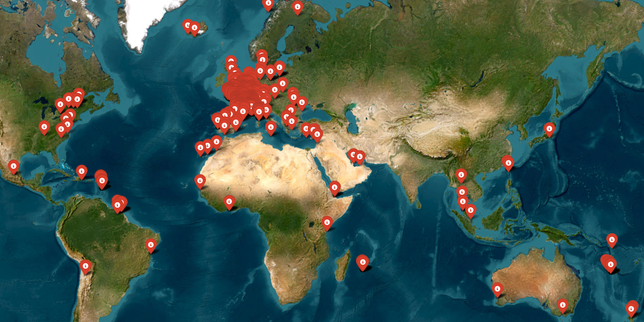
The core of the issue is the heatmap and the public profile. When a member of a specialized security team, such as the French GSPR or the US Secret Service, uses a GPS-enabled wearable to track their exercise, they are creating a permanent, searchable record of their movements. By cross-referencing these public exercise logs with known diplomatic schedules, investigators have been able to identify the exact hotels where world leaders stay, the private villas they frequent, and even the internal layouts of secure military bases.
This is not a theoretical vulnerability. It is a live broadcast of movements that were meant to be invisible.
The Illusion of Individual Privacy in a Connected Web
Modern security protocols are designed to harden the physical environment. We see the armored limousines, the signal jammers, and the perimeter fencing. However, the greatest leak in the modern era is the one voluntarily strapped to the wrist of the protector. The "StravaLeaks" revelations demonstrate that even the most elite units are prone to the "privacy paradox," where individuals assume their small, personal data points are insignificant in the grand scheme of an organization’s security.
They are wrong.
When a bodyguard starts a "Running" activity at the gates of a secret base in the Sahel and stops it twenty minutes later, they have just provided a GPS coordinate that satellite imagery might not have flagged as significant. When that same bodyguard follows a head of state to a "discreet" meeting at a luxury resort, the synchronization of their watch with the Strava cloud confirms the presence of the principal more effectively than any paparazzi lens.
The data is aggregated. It is searchable. And for an adversary with basic data-scraping skills, it is a goldmine.
Mapping the Movements of the Powerful
The mechanics of this breach are embarrassingly simple. Most fitness apps rely on a social-media-style architecture. Users want to compete with friends, share their progress, and see where others are running. Strava’s "Global Heatmap" is a visualization of this collective data. In desolate regions or high-security zones, the heatmap ceases to be a blur of activity and becomes a sharp, distinct line.
Identifying the Protectors
Investigators did not start by looking for presidents. They started by looking for the people who stand next to them. By identifying users who frequently run near official residences—like the Élysée Palace or the White House—and then tracking those same accounts to remote locations at the same time a state visit is occurring, the connection is solidified.
The Persistence of Data
Even if a user deletes their profile today, the historical data that has already been aggregated into the global heatmap remains. This is the "tail" that keeps on wagging. The persistence of digital footprints means that a security detail's location in 2021 can still provide clues about their operational habits and the layouts of the "safe houses" they still use in 2026.
Beyond Strava and into the Wearable Security Crisis
To focus solely on one app is to miss the broader systemic failure. The "StravaLeaks" case is merely the most visible symptom of a wider wearable security crisis. Every fitness tracker, every smartwatch, and even some "smart" headphones are potential tracking devices. The data collected by these devices is rarely stored in the country where it is generated. It is processed in the cloud, often by third-party contractors, and subject to the legal jurisdictions where those companies are headquartered.
The "digital exhaust" of a modern human is a security nightmare.
Consider the military implications. In 2018, the US Department of Defense revised its policies on GPS-enabled devices in operational areas. Yet, here we are, years later, and the same patterns are emerging in the civilian protection world. The reason is a fundamental misunderstanding of the "private" vs. "public" settings.
The Problem with Default Privacy
Many users assume that "Private" means "Invisible." On many platforms, "Private" simply means your profile isn't public, but your anonymized data still contributes to the global heatmap. For a bodyguard in a crowd of thousands in Paris, this is irrelevant. For a bodyguard in a remote village in Africa where they are the only person using a $500 Garmin watch, they are as visible as a flare in the night sky.
The Cultural Resistance to Digital Discipline
The real challenge isn't technical; it is cultural. We have built a world where personal health and wellness are intrinsically linked to digital validation. The officers tasked with protecting the leaders of the free world are no different. They want to track their heart rate, their pace, and their progress.
Telling an elite soldier or a high-level bodyguard that they cannot use their favorite piece of personal technology is a hard sell. It is seen as an overreach of their personal life. But the reality is that their personal data has become a professional liability. The "StravaLeaks" investigation has forced a reckoning that should have happened a decade ago.
The Institutional Failure of Modern Security Services
The blame does not lie with the individual officer alone. It lies with the institutions that failed to anticipate the evolution of digital surveillance. For decades, security agencies have focused on signals intelligence (SIGINT) and human intelligence (HUMINT). They have been slow to realize that open-source intelligence (OSINT), fueled by consumer apps, is often more effective at mapping their movements than a sophisticated spy network.
The response from the agencies involved has been a mix of denial and quiet policy shifts. There is no easy fix. You cannot simply "turn off" the data that has already been harvested.
The Difficulty of a Clean Slate
If a security service mandates that all officers delete their Strava accounts today, the damage is already done. The historical data has been scraped by researchers, and likely by foreign intelligence services. The "baselines" have been established. An adversary now knows exactly where the secondary entrances are, where the "secure" perimeter ends, and where the guards go for their coffee.
The Requirement for Absolute Digital Disconnection
The only foolproof solution is absolute digital disconnection for those in high-security roles. This means no GPS-enabled devices during work hours, or even during personal time for those with access to sensitive information. It sounds draconian, but in an era where data is the most valuable weapon, it is the only way to ensure the principal’s safety.
A New Era of Targeted OSINT
The "StravaLeaks" investigation is a blueprint for the future of investigative journalism and intelligence gathering. We are moving into an era where the most sensitive secrets are not hidden in classified documents, but are scattered across the terms-of-service agreements and public APIs of consumer apps.
The investigative team at Le Monde used tools that are available to anyone with an internet connection. They didn't need a whistleblower; they just needed to understand how data flows. This is the new reality of the 21st century. The digital world is not a separate realm; it is a mirror of our physical movements, and it is a mirror that never stops recording.
The "why" is simple: convenience and the ego of the user. The "how" is more complex: the systematic scraping and cross-referencing of seemingly benign data points to build a picture of state-level movements.
The world’s most powerful people are being betrayed by the very technology that was supposed to make their lives easier. The jog through the park has become a breadcrumb trail leading straight to the seat of power. If the guardians of our leaders cannot manage their own digital footprints, they are failing in their primary mission.
The security gap is wide, and it is paved with miles of recorded morning runs. It is time for the agencies to wake up to the fact that their greatest enemy isn't a sniper in a window, but a fitness tracker in a pocket. The "StravaLeaks" affair is the final warning. The next leak won't just be an article; it will be an invitation to an assassination or a coup. The data is out there, and once it’s in the cloud, it belongs to the world.