The decision by Beijing's leadership to execute a high-stakes bilateral summit with Washington while conspicuously omitting a physical appearance at the United Nations General Assembly is a masterclass in modern diplomatic prioritization. Observers prone to viewing international relations through the lens of protocol often mistake physical absence for a retreat from global governance. This interpretation fundamentally misreads the underlying cost-benefit calculus governing contemporary great power competition. Direct negotiations between dominant economies operate on an entirely different operational frequency than multilateral pageantry. When bilateral bargaining yields immediate structural outcomes, the multilateral assembly ceases to be a functional instrument and risks becoming a venue for costly performative posturing.
The Asymmetry of Great Power Bargaining
To understand why a bilateral meeting eclipses a multilateral gathering, one must examine the mechanics of bilateral leverage. A summit between Washington and Beijing is a zero-sum theater where each side seeks tangible concessions on trade, technological restrictions, and territorial boundaries. Every minute spent across a bilateral negotiating table carries an immediate conversion rate into policy changes, tariff adjustments, or security assurances. If you enjoyed this post, you might want to read: this related article.
Conversely, the United Nations General Assembly is a distributed network featuring nearly two hundred actors, each possessing distinct regional priorities and domestic vulnerabilities. For a primary power, addressing the General Assembly is largely an exercise in mass communication rather than transactional diplomacy. The audience is fractured, the agenda is crowded with disparate grievances ranging from climate finance to regional conflicts, and the capacity to extract hard strategic concessions is near zero. When constrained by finite political capital and physical endurance, leadership prioritizes high-yield bilateral concentration over low-yield multilateral dissemination.
The mechanics of this choice reflect an institutional efficiency frontier. A bilateral summit allows principals to control the agenda entirely. There are no procedural interruptions from minor states, no forced compromises on consensus declarations that carry no binding weight, and no requirement to share the diplomatic spotlight with actors whose domestic economic leverage is negligible. By bypassing New York, Beijing signals that its primary diplomatic interlocutor is the United States, and that global governance is increasingly managed through a directorate of major powers rather than universalist assemblies. For another angle on this development, see the recent update from NBC News.
Institutional Cost Functions at the United Nations
The modern United Nations architecture presents specific structural frictions for an authoritarian superpower seeking to expand its global footprint without submitting to Western-dominated legalistic frameworks. While the UN Security Council remains a vital arena where veto power provides an absolute defensive shield, the General Assembly functions through majoritarian voting dynamics. In this broader chamber, Beijing frequently faces coalitions organized around human rights, maritime sovereignty, and economic transparency that challenge its core domestic and regional objectives.
Participating in the General Assembly requires a sustained diplomatic defense against concerted criticism. Even if such criticism carries no enforcement mechanism, it imposes a narrative cost. It forces state media and diplomatic apparatuses into a reactive posture, defending policies in a forum where the rules of engagement were largely codified by post-World War Two Western liberal democracies. By declining to attend in person, the leadership avoids the ritualistic obligation of standing before an assembly where its model of governance faces systemic skepticism.
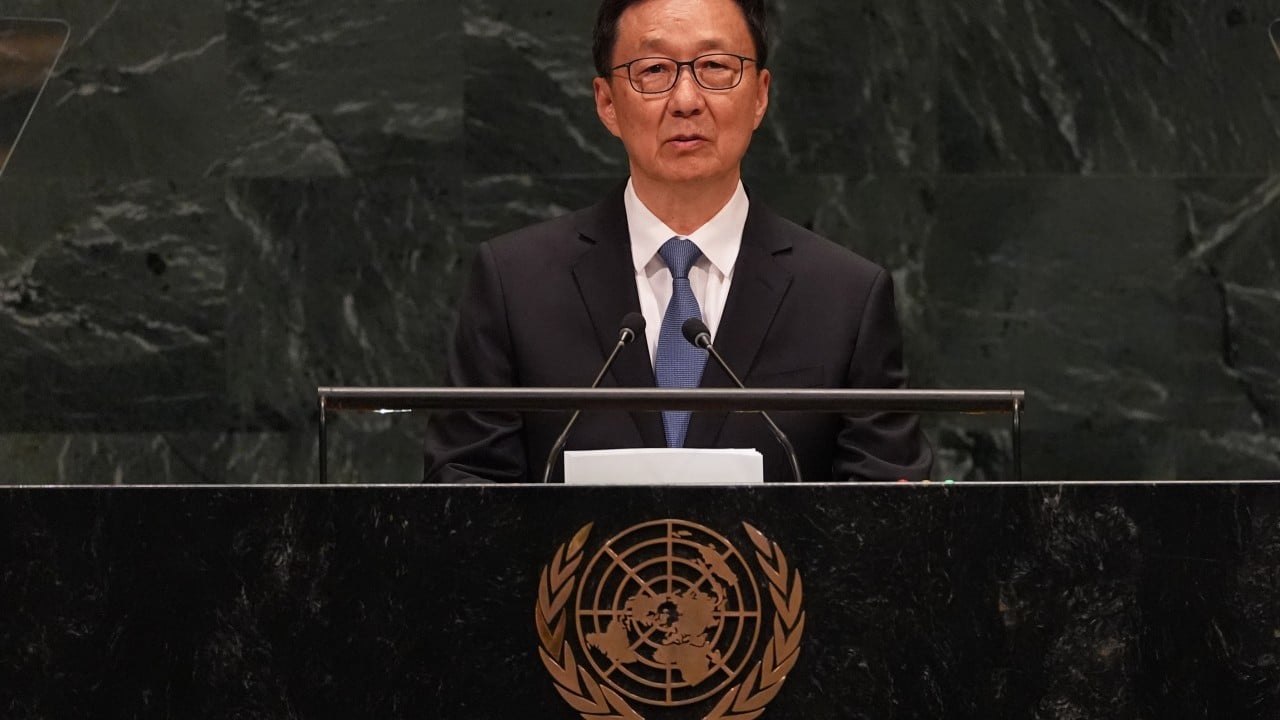
Instead of physical attendance, Beijing deploys secondary leadership tiers or specialized diplomatic delegations to manage UN engagements. This delegation strategy achieves three distinct objectives:
- It maintains baseline institutional participation, preventing any perception of total withdrawal or diplomatic isolation.
- It insulates the supreme leader from direct confrontation or uncomfortable diplomatic staging alongside adversarial heads of state.
- It channels state resources toward specialized UN agencies—such as telecommunications, aviation, and agricultural bodies—where technical standard-setting yields far greater long-term strategic advantage than high-profile political debates in the General Assembly hall.
Domestic Political Economy and Audience Cost Optimization
Foreign policy is invariably an extension of domestic political imperatives. For the apex leadership in Beijing, every international movement is scrutinized by internal party elites, military factions, and a digitally connected citizenry acutely sensitive to national dignity. Traveling to Western capitals for bilateral summits with a primary geopolitical rival can be framed domestically as a sign of great power parity—two titans meeting to carve out the parameters of global stability.
An appearance at the United Nations, however, introduces unpredictable domestic audience costs. The UN is a stage populated by dissidents, smaller nations with competing territorial claims, and Western leaders eager to stage symbolic rebukes. Exposing leadership to an environment where protocol cannot be entirely scripted creates unnecessary vulnerability. If a multilateral speech fails to resonate or provokes coordinated pushback, the domestic narrative of unassailable strength suffers.
Furthermore, the physical stamina and time investment required for an international tour must be weighed against urgent domestic economic restructuring. Property sector corrections, local government debt management, and technological self-sufficiency drives demand intense administrative focus from the top executive. Every day spent attending peripheral multilateral sessions is a day diverted from internal economic management. The decision to truncate an overseas itinerary by dropping the UN stop is an explicit prioritization of domestic stabilization over diplomatic tourism.
Operational Sequencing in US China Relations
The timing of the bilateral summit relative to the UN calendar reveals a deliberate tactical sequencing. By scheduling the bilateral engagement precisely as the global diplomatic community gathers in New York, Beijing effectively hijacks the international news cycle. The global media apparatus is forced to split its attention or abandon UN proceedings altogether to cover the high-stakes friction between the world's two largest economies.
This dynamic alters the bargaining environment. It demonstrates that the core trajectory of international security and trade is determined in private rooms between Washington and Beijing, not through the parliamentary votes of the General Assembly. For smaller nations observing from the sidelines, the message is unambiguous: multilateral institutions are consultative, but great power bilateralism is decisive.
This operational approach exposes the limitations of traditional multilateralism in an era of deepening bipolar rivalry. When the structural distance between the primary superpowers grows, universal organizations struggle to maintain relevance on hard security and economic matters. They risk devolving into forums for humanitarian advocacy while real-world arrangements are forged through direct, bilateral coercion and compromise.
The Structural Shift in Global Governance Architectures
The normalization of skipping the UN General Assembly by key world leaders points to a broader transformation in the architecture of international relations. The post-war ideal of a centralized, universal parliament where all nations meet as formal equals is increasingly overshadowed by flexible, transactional minilateralism and bilateral summits.
Major powers prefer forums where outcomes can be pre-negotiated and enforced through asymmetric economic or military weight. The United Nations remains useful as a humanitarian clearinghouse and a source of nominal international legitimacy, but it is no longer the primary engine of great power diplomacy.
By declining to participate in the UN theatrical display while securing a direct audience with the American president, Beijing optimizes its diplomatic output. It extracts the maximum media and strategic value from its presence in the United States while minimizing exposure to hostile multilateral scrutiny. As international relations continue to crystallize around great power competition, this selective engagement model will likely become the standard operating procedure for leaders who view universalist institutions as relics of a bygone geopolitical era.