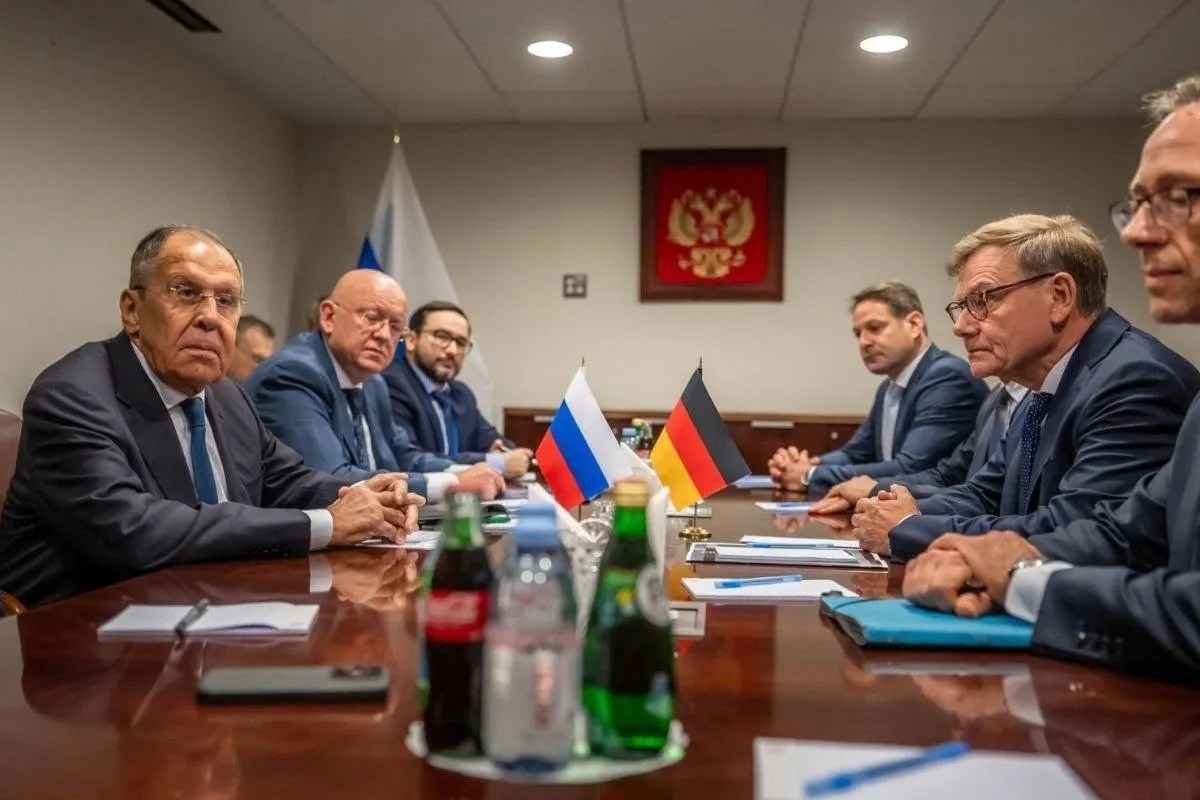
The meeting between German Foreign Minister Johann Wadephul and Russian Foreign Minister Sergey Lavrov on the sidelines of the United Nations General Assembly marks a critical inflection point in European security architecture. Occurring for the first time since the 2022 full-scale invasion of Ukraine, this dialogue functions less as a reconciliation channel and more as a stress test for remaining diplomatic communication lines between Moscow and Berlin.
The Divergence of Strategic Objectives
Diplomatic engagement under asymmetric security conditions rarely yields immediate convergence. Instead, it serves distinct signaling functions for domestic and international audiences. The structural motivations driving both states diverge across fundamentally incompatible parameters.
- The German Calculus: Berlin operates under the constraint of maintaining European Union unity and NATO solidarity while managing domestic economic fallout, energy vulnerabilities, and infrastructure security. German engagement aims to explicitly communicate red lines—specifically regarding hybrid warfare, critical infrastructure sabotage, and regional escalation—while upholding a posture of deterrence.
- The Russian Calculus: Moscow approaches bilateral interactions through the lens of attrition, seeking to test the endurance of Western sanctions coalitions, fracture European consensus, and project strategic inevitability. Lavrov’s subsequent framing at the General Assembly, targeting Germany's militarization and historical precedents, demonstrates an intent to mobilize historical narratives to counter Berlin's support for Kyiv.
Operational Constraints and Red Lines
The utility of high-level diplomatic exchanges during active hostilities is bounded by the specific grievances introduced during the conflict. The agenda between Wadephul and Lavrov highlighted systemic operational friction points that preclude substantive normalization.
- Infrastructure and Hybrid Operations: Recent incidents, including disruptions linked to infrastructure and security breaches such as the Leipzig airport drone incident, have shifted Berlin's threshold for tolerance. Diplomatic dialogue functions as a formal mechanism for issuing warnings regarding sovereign violations rather than exploring cooperative security frameworks.
- Global Resource Chokepoints: Discussions regarding Black Sea shipping lanes and agricultural export security illustrate how localized military campaigns weaponize global supply chains. Germany’s insistence on unimpeded grain transit addresses pressures felt across the Global South, while Russia utilizes maritime access as a transactional lever in broader negotiations.
Institutional Gridlock at the Multilateral Level
The setting of the United Nations General Assembly underscores the structural paralysis affecting international governance mechanisms. While bilateral channels provide a medium for direct messaging, systemic reforms or resolutions remain gridlocked due to opposing veto-wielding interests. Lavrov’s explicit opposition to permanent Security Council expansion for nations like Germany and Japan reflects a broader institutional contest over the post-war international order. As long as structural reform proposals are met with reciprocal veto threats, multilateral bodies will remain forums for rhetorical positioning rather than conflict resolution.
Strategic Forecast
Direct communication channels will likely remain episodic, constrained by the ongoing trajectory of the conflict in Eastern Europe and the hardening of sanctions regimes. Future interactions will not signal a thaw in diplomatic relations, but rather tactical calibration to prevent accidental escalation between nuclear-backed alliances and Moscow. Intelligence sharing and defensive posture adjustments within NATO will continue to dictate Berlin's operational approach, rendering high-level political talks an instrument of crisis management rather than a pathway to sustainable peace.