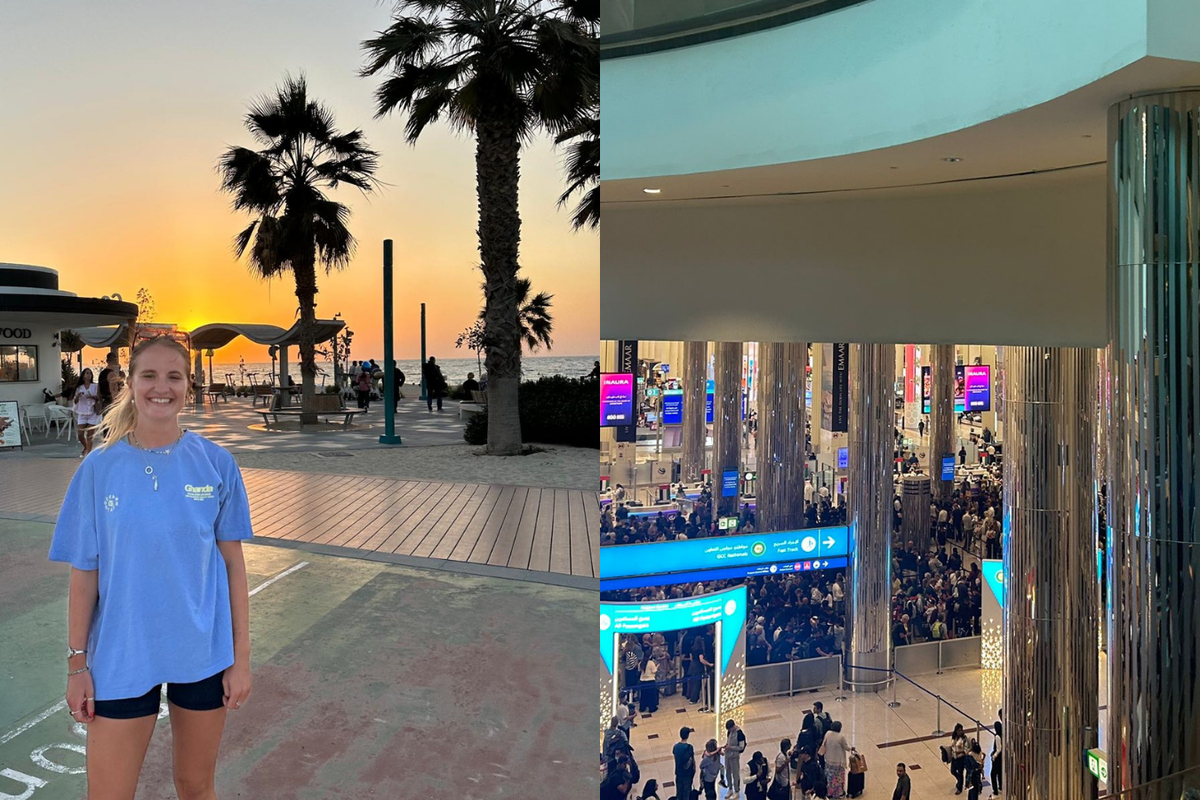
The images of private jets bobbing like rubber ducks in the floodwaters of Dubai International Airport (DXB) were more than just a viral spectacle. They represented a total systemic collapse of the "super-connector" aviation model. While stranded British tourists compared the ordeal to the isolation of the 2020 lockdowns, the reality was far more chaotic. During the pandemic, the world stopped by design. This week, the world stopped because of a fragile dependency on a single desert geographical point that proved it cannot handle the climate realities of 2026.
Over 1,200 flights were scrubbed. Tens of thousands of passengers found themselves sleeping on terminal floors, not for hours, but for days. The immediate cause was a record-shattering deluge—nearly 10 inches of rain in 24 hours—but the actual crisis was a failure of data, drainage, and basic human logistics. When you build a global transit machine designed to process 90 million people a year, you create a system with zero margin for error. One bad afternoon in the Gulf doesn’t just delay a flight to London; it breaks the connection between Sydney and New York.
The Mirage of Modern Infrastructure
Dubai’s rise as a global crossroads relied on the assumption that the desert is a static environment. It is not. The city's rapid expansion prioritized vertical density and polished glass over the invisible necessities of urban survival: drainage and runoff management. Most of the city’s transit arteries were built on the premise that heavy rain is a once-in-a-generation fluke.
When the sky opened, the asphalt became a river. Ground crews couldn't reach planes. Catering trucks were submerged. Fueling operations ceased because of lightning risks. But the true breakdown happened in the digital layers of the operation. The automated rebooking systems, often touted as the pinnacle of travel technology, buckled under the volume.
Passengers reported a total "information vacuum." This is the hallmark of a system that has optimized for efficiency at the expense of resilience. In a lean operation, there are no "spare" staff members to hand out blankets or provide manual updates. When the algorithm fails, the human element is too thin to pick up the slack. This left families trapped in a gilded cage, surrounded by luxury duty-free shops but unable to find a bottle of water or a clear answer about when they might see home.
Why the Hub Model is High Stakes Gambling
The aviation industry has spent two decades moving toward the "Hub and Spoke" system, with Dubai, Doha, and Singapore acting as the world's primary engines. It is a brilliant business strategy until it isn't. By funneling massive amounts of traffic through a single needle-eye, airlines like Emirates achieve incredible economies of scale. However, this creates a "single point of failure" risk that the industry has ignored for too long.
Consider the ripple effect. A plane stuck in Dubai is a plane that isn't at Heathrow to pick up passengers heading to Bangkok. The crew scheduled to fly that second leg is now out of legal working hours. The hotel rooms in the transit city are already full. It is a kinetic chain reaction of misery.
The "point-to-point" model—flying directly from smaller cities to other smaller cities—is often criticized for being less fuel-efficient or more expensive for the carrier. Yet, in the face of increasing weather volatility, the point-to-point model offers something the hub model cannot: containment. If an airport in Manchester floods, the rest of the global network continues to move. When Dubai floods, the heartbeat of international travel skips.
The Hidden Cost of Premium Transit
For the British traveler, Dubai is often the default choice for reaching the Maldives, Australia, or India. It is marketed as a seamless, high-end experience. But the recent "travel chaos" exposed a brutal class divide in how crises are managed.
While first-class passengers were occasionally spirited away to five-star hotels that still had road access, the vast majority of economy travelers were left to fend for themselves. Reports surfaced of passengers being told to find their own accommodation in a city where the roads were impassable and taxis were non-existent. This isn't just a customer service blunder; it is a breach of the fundamental contract between a carrier and a passenger.
The Cloud Seeding Controversy
In the immediate aftermath, social media was flooded with claims that "cloud seeding"—the process of injecting chemicals into clouds to induce rain—had caused the disaster. Meteorological experts have largely dismissed this, pointing out that the storm system was a massive, well-forecasted regional event. However, the obsession with cloud seeding misses a deeper truth.
Whether or not human intervention intensified this specific storm, the region's climate is shifting. Higher temperatures in the Persian Gulf lead to more moisture in the atmosphere. When that moisture hits a cold front, the resulting rainfall is no longer a "shower"; it is a deluge. The aviation industry is currently ill-prepared for this shift. De-icing equipment is standard in Northern Europe; massive-scale pumping and drainage systems must now become the standard in the Middle East.
Beyond the Terminal Floor
The "Covid comparison" made by travelers isn't just about the duration of the wait. It’s about the feeling of being trapped by forces beyond one's control, with no clear exit strategy from the authorities. During the pandemic, the enemy was a virus. In Dubai, the enemy was a lack of transparency.
Airlines hesitated to cancel flights early, hoping for a window of opportunity that never came. This kept thousands of people flowing into an airport that was already at a breaking point. A more honest approach would have been to shut down the airspace 24 hours in advance, keeping travelers in their origin cities where they had support networks. Instead, the "show must go on" mentality of the hub led to a humanitarian mess inside the terminal.
The Financial Fallout
The cost of this disruption will run into the hundreds of millions. Beyond the immediate refunds and compensation claims, there is the long-term damage to the "Dubai Brand." The city markets itself as a place where everything works perfectly, all the time. Seeing the world's busiest international airport paralyzed by a rainstorm shatters that illusion of total control.
Investors and insurers are likely to look at the "super-hub" model with fresh skepticism. Risk assessments for long-haul routes may start to favor carriers that offer more diverse routing options. If a traveler knows that a single storm can leave them stranded on a terminal floor for three days, the $200 they saved by booking a connection through the Gulf suddenly looks like a very bad deal.
Lessons from the Mud
Resilience is expensive. It requires redundancy, extra staffing, and infrastructure that sits idle 99% of the time. But as weather patterns become more extreme, that 1% becomes the difference between a minor delay and a global headlines-grabbing disaster.
The "travel chaos" in Dubai should serve as a wake-up call for the entire industry. We have built a global transit system that is optimized for sunshine and calm winds. We are now living in a world that offers neither. Passengers must start demanding more than just a low fare and a fancy lounge; they need to know what happens when the wheels stop turning.
If you are planning long-haul travel in the next 12 months, look at the weather patterns of your transit hub, not just your destination. Check the airline’s policy on "force majeure" events. Most importantly, carry enough essential medication and supplies in your hand luggage to last 72 hours. The era of the "seamless" connection is over; the era of the prepared traveler has begun.
The water will eventually recede from the runways of DXB, and the gold-plated escalators will start moving again. But the psychological impact on the thousands of Brits and other nationalities who felt abandoned in the desert will linger. They were told they were flying through the future. They found themselves stuck in a very damp, very disorganized past.
Airlines must now decide if they will invest in the "boring" parts of operations—drainage, manual contingency plans, and boots-on-the-ground communication—or if they will continue to gamble that the sun will always shine on their hubs.