The wind in the Indus Valley does not just blow. It carries weight. It carries the scent of sun-baked silt, the ghost of ancient brick, and a heat so thick you can almost lean against it. Most people look at the map of Sindh and see a corridor of transit—a way to get from the sea to the mountains. They see the statistics of agriculture or the lines of a railway. They are looking at the skin of the place, missing the pulse entirely.
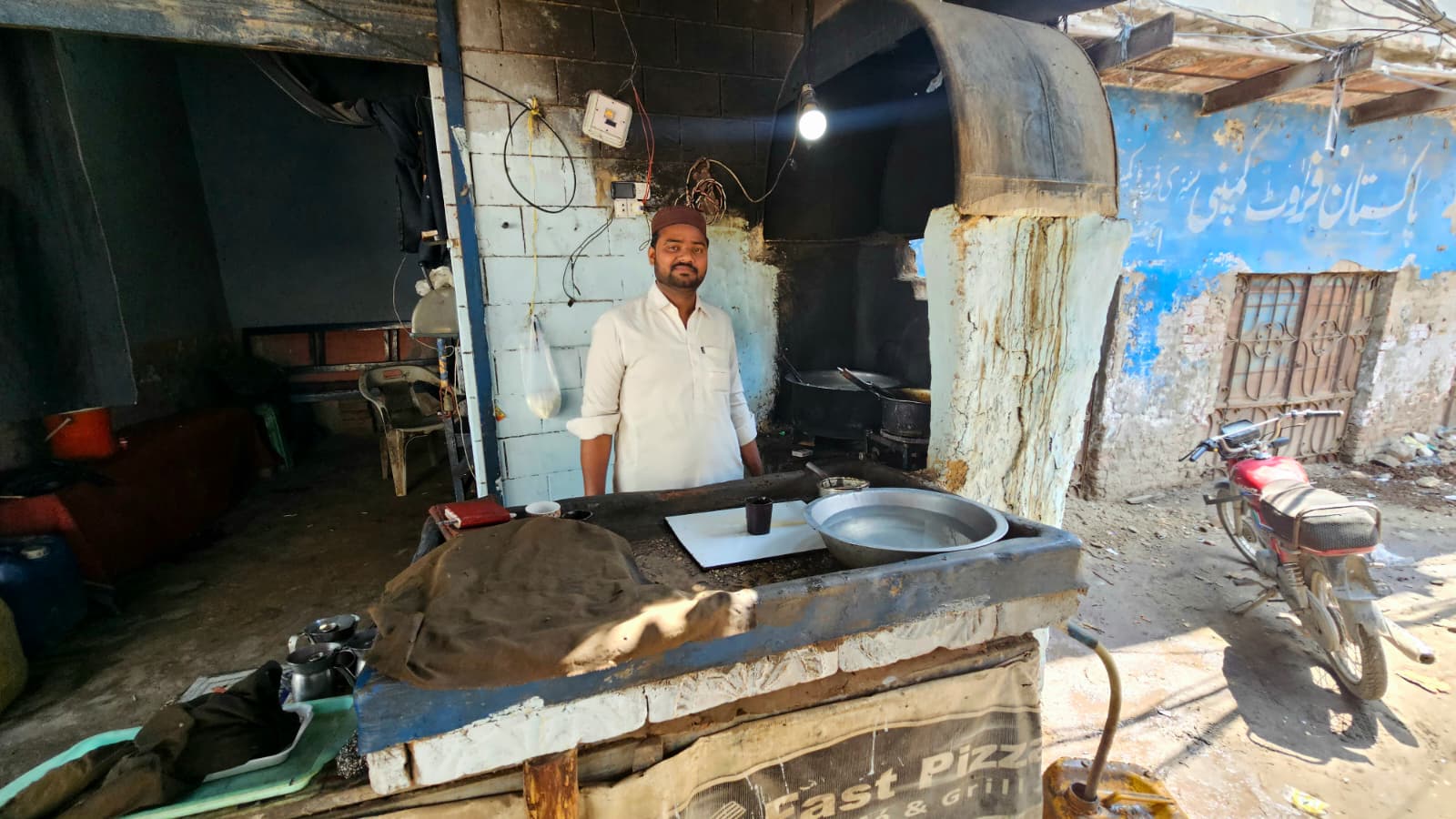
To understand Sindh, you have to sit on a charpai under a neem tree when the temperature hits 45°C. You have to watch a stranger, someone who has perhaps ten rupees to his name, drop everything to ensure your glass is never empty.
The Unspoken Law of the Guest
In the West, hospitality is an industry. It is a transaction measured in star ratings and crisp linens. In the villages stretching from Karachi up to the ruins of Mohenjo-Daro, hospitality is a sacred obligation. It is a survival mechanism etched into the DNA of a desert people.
Consider a man named Javed. He is a hypothetical composite of a dozen men I have met between the salt flats and the river. Javed lives in a house made of mud and straw. His wealth is measured in goats and the health of his children. When a traveler breaks down on the road near his home, Javed does not see an inconvenience. He sees a mandate.
He will kill his best chicken. He will send his son miles on a motorbike to fetch ice. He will sleep on the floor so the stranger can have the only bed. If you try to pay him, he will look at you with a confusion that borders on offense. To Javed, the guest is Mehman-e-Khuda—the Guest of God. To mistreat a guest is to invite a spiritual famine.
This isn't just "being nice." It is a complex social architecture that has held this region together for five millennia. While empires collapsed and borders were redrawn in blood, the law of the open door remained. It is the invisible glue of a multicultural society where Sufi shrines and Hindu temples often share the same dusty horizon.
A Confluence of Spirits
Sindh is not a monolith. It is a chaotic, beautiful collision of identities. You feel it in the air at the shrine of Lal Shahbaz Qalandar in Sehwan.
The air there is heavy with the smoke of dhamaal—a rhythmic, trance-like dance fueled by the beat of giant dhol drums. Here, the distinctions between "us" and "them" evaporate. You will see a devotee in a saffron robe dancing next to a businessman in a tailored kameez. You will see Muslims and Hindus bowing at the same threshold.
This pluralism isn't a modern political invention. It is the legacy of the Sufi saints who realized long ago that in a land this harsh, dogmatism is a luxury no one can afford. The poetry of Shah Abdul Latif Bhittai, the Shakespeare of Sindh, doesn't preach. It aches. It speaks of the desert wind, the yearning of the soul, and the universal human condition.
When you read Latif, you realize that the "multiculturalism" people talk about in brochures is actually a shared vocabulary of suffering and celebration. The Sindhi language itself is a river, picking up Persian nouns, Sanskrit verbs, and Arabic sighs as it flows toward the Arabian Sea.
The Architecture of Endurance
We often mistake poverty for a lack of sophistication. This is a mistake.
Walk through the streets of Shikarpur or the old quarters of Hyderabad. Look at the wind catchers—the manghs—perched on the roofs. These are ancient air conditioning systems, angled precisely to catch the prevailing breeze and funnel it down into the living quarters.
They are symbols of a people who have learned to negotiate with their environment rather than try to conquer it. The same logic applies to their crafts. The Ajrak, that iconic block-printed cloth of deep indigo and madder red, is more than a fashion choice. Each pattern is a geometric map of the stars and the earth.
The process of making a single Ajrak takes weeks. It involves steaming, washing, and multiple stages of dyeing using natural elements like lime, mustard oil, and camel dung. It is a slow, methodical defiance of the modern "fast fashion" world. When a Sindhi drapes an Ajrak over your shoulders, they aren't just giving you a souvenir. They are wrapping you in their history. They are saying, "You are covered. You are protected. You are one of us."
The Shadow in the Sunlight
It would be a lie to say that everything is a sun-drenched idyll. To love Sindh is to be frustrated by it. The same river that gives life—the mighty Indus—is a source of constant anxiety.
The infrastructure is often crumbling. The schools are sometimes empty. The political landscape is a tangled web of feudal loyalties that can feel impossible to navigate. There is a specific kind of melancholy that hangs over the province, a sense of a glorious past struggling to find its footing in a jagged present.
Yet, even in the struggle, the human element remains stubbornly bright. I remember sitting in a small tea shop in Sukkur, watching the sunset hit the Lansdowne Bridge. The bridge is a Victorian relic of iron and rivets, looking like something out of a steampunk fantasy.
An old man sat next to me, sipping tea from a saucer. He didn't speak English, and my Sindhi was a collection of broken fragments. But he noticed I was squinting at the sun. Without a word, he shifted his position, tilting his large umbrella just enough to shade my face. He didn't look at me for a thank you. He just kept watching the river.
That small movement—the silent adjustment of an umbrella—is the essence of the region. It is a culture of anticipation. They see your need before you even feel it.
The Texture of the Everyday
If you visit, do not stay in the air-conditioned bubbles of the high-end hotels for too long. Go to the markets.
Smell the mounds of red chili in Kunri. Watch the fishermen on Lake Manchar, living in boats that look like they haven't changed design since the Bronze Age. Listen to the sound of the alghoza—the twin flutes played by a single musician—as the notes spiral up into the night air.
The stakes here are high because the world is changing. Global warming is making the summers longer and the floods more frequent. Modernity is pulling the youth toward the cities, away from the crafts of their ancestors. There is a risk that this profound brand of hospitality will be diluted into a performance for tourists.
But then you see a group of young people in Karachi, tech-savvy and globalized, still wearing their Sindhi caps with a fierce, quiet pride. You realize that the identity isn't held in the objects, but in the attitude.
Sindh is a lesson in perspective. It teaches you that wealth has nothing to do with what is in your bank account and everything to do with how much of yourself you are willing to give to a stranger. It is a place that demands you slow down, sweat, and listen.
The dust will eventually settle on your clothes and in your hair. You will try to brush it off, but a part of it stays. It is the grit of a civilization that refuses to be forgotten, a place where the tea is always sweet, the hearts are always open, and the door is never, ever locked.
The sun dips below the horizon, turning the Indus into a ribbon of liquid bronze. Somewhere in the distance, a temple bell rings at the same time a muezzin begins the call to prayer. The sounds don't clash. They bleed into each other, forming a single, haunting chord that hangs over the dark, warm earth.