The air in Islamabad has a specific weight this time of year. It is a thick, humid pressure that settles over the Margalla Hills, a stillness that feels like a collective indrawn breath. Somewhere in the sprawling complex of the city’s diplomatic enclave, folders are being opened. Tea is being poured. But the steam rising from those cups carries the scent of a much larger, much hotter fire burning hundreds of miles to the west.
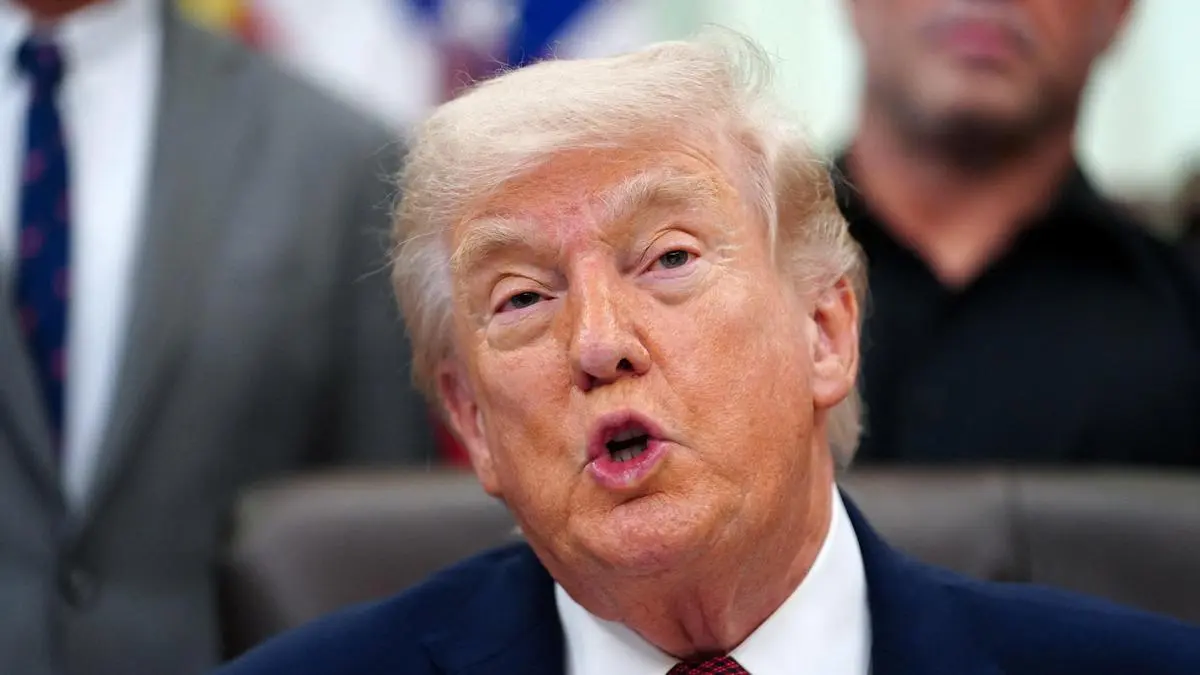
Donald Trump calls it winning.
From the podium in Washington, the narrative is sharp, linear, and definitive. The rhetoric suggests a scoreboard where the numbers are tilting heavily in favor of the United States, fueled by a "maximum pressure" campaign that has squeezed the Iranian economy until the pips squeak. To the administration, the upcoming talks in Islamabad aren't just a diplomatic meeting. They are a victory lap.
But go down to the street level, away from the teleprompters.
Consider a merchant in a bazaar, let’s call him Abbas. He isn't a politician. He doesn't care about the intricacies of centrifugal enrichment or the nuances of the JCPOA. What he cares about is the price of saffron and the fact that the trade routes snaking through the Iranian plateau are becoming increasingly choked by the static of war. For Abbas, "winning" looks like a closed border. It looks like a currency that loses value while he sleeps. It looks like the slow-motion collapse of a regional ecosystem that has existed since the Silk Road was a new idea.
This is the human friction that the headlines often miss. When a President claims a win, he is talking about leverage. He is talking about the cold, mathematical reality of oil exports dropping to near zero and the Iranian rial tumbling into the abyss. He is right, in a strictly clinical sense. The pressure is working. The gears are grinding.
The problem is that gears don't grind in a vacuum. They grind against people.
The Geography of Anxiety
Islamabad sits at the crossroads of this tension for a reason. Pakistan is the silent witness to this rivalry, a country that shares a thousand-kilometer border with Iran and a complicated, multi-decade "it’s complicated" status with the United States. For the Pakistani leadership, these talks are an exercise in walking a high-wire made of razor wire.
If the U.S. is "winning," then the regional balance is shifting. And in a part of the world where balance is the only thing preventing total kinetic chaos, a shift is a terrifying prospect.
The American strategy is built on a singular, bold gamble: that if you make life difficult enough for a regime, they will eventually trade their pride for a lifeline. It is a strategy of exhaustion. Trump’s confidence ahead of these talks stems from a belief that the Iranian leadership is finally tired. He sees a nation whose shadow looms over Iraq, Syria, and Lebanon, and he believes he has finally found the leash.
But history suggests that pride is a stubborn thing.
Imagine a room in Tehran. The lights are low to save electricity. The men sitting around the table are veterans of a revolution that was forged in the fire of an eight-year war with Iraq. They have spent forty years learning how to live in the cracks of the international system. When they hear the word "winning" coming from the White House, they don't see a scorecard. They see a challenge to their very existence.
They don't view the Islamabad talks as a surrender. They view them as a tactical maneuver in a long game that Washington, with its four-year election cycles, might not have the patience to play.
The Invisible Stakes
Why does a meeting in a Pakistani capital matter to a family in Ohio or a worker in Manchester?
Because the "win" Trump describes is actually a high-stakes auction for the future of global energy and security. If the U.S. successfully forces Iran into a corner, the reward is a more stable Middle East where the threat of a nuclear-armed Tehran is neutralized. That is the dream. That is the outcome that justifies the sanctions, the carrier strike groups, and the fiery rhetoric.
The cost, however, is the volatility of the desperate.
A cornered power rarely sits still. It lashes out. It uses proxies. It creates friction in the Strait of Hormuz, the world’s most important oil artery. We have seen this play out in the sudden, mysterious attacks on tankers and the downed drones that briefly pushed the world to the brink of a hot war.
The victory Trump claims is a fragile one. It is held together by the hope that the Iranian leadership values the survival of their economy more than the survival of their ideology.
During the Islamabad talks, the American delegation will likely lean into this. They will point to the empty shelves in Iranian shops. They will point to the protests in the streets of Tehran and Isfahan. They will say, "Look, the pressure is working. You have no choice."
It is a logical argument. It is also a dangerous one.
Logically, a man with no food should trade his gun for a sandwich. But if that man believes the sandwich is poisoned, or that giving up the gun means he will never be allowed to eat again, he will keep the gun. He might even use it.
The Ghost at the Table
There is a third party in these talks who doesn't have a seat but whose presence is felt in every exchange: China.
As the U.S. pulls the noose tighter around the Iranian economy, Beijing is waiting with a checkbook. For China, the American "win" is an opportunity. Every time a Western company pulls out of an Iranian oil field to avoid sanctions, a Chinese state-owned enterprise is there to fill the void.
This is the irony of the maximum pressure campaign. By successfully isolating Iran from the Western financial system, the U.S. may be inadvertently pushing Tehran into a permanent alliance with its greatest global rival.
The win in the short term—a crippled Iranian economy—might lead to a loss in the long term—a Middle East where American influence is replaced by the "Belt and Road."
The diplomats in Islamabad know this. They see the map not as a static board, but as a shifting sea. They know that every action in Washington has a reaction in Beijing, Moscow, and Riyadh. They are trying to find a path through the storm that doesn't involve their own house being blown down.
The Human Cost of the Scorecard
We talk about "regimes" and "administrations," but those are just masks for people.
Think about a young doctor in Shiraz. She has spent ten years in school. She wants to heal people. But because of the sanctions that are part of this "winning" strategy, she can’t get the specific cancer drugs her patients need. She watches people die of treatable illnesses because the banking system won’t allow the transaction to go through.
Does she blame her own government for their stubbornness? Or does she blame the superpower across the ocean that is intentionally strangling her country’s resources?
The answer is usually both. And that duality is the breeding ground for the next generation of resentment.
The American strategy assumes that if you break the system, the people will rise up and build a better one. But trauma doesn't always lead to democracy. Often, it leads to a harder, more radicalized version of what came before.
The "win" that is being touted is a victory of leverage, but it is not yet a victory of peace.
The Islamabad Silence
As the delegates gather in Islamabad, the city will be locked down. The red zone will be a fortress of concrete barriers and armed guards. Inside, the language will be polite. There will be talk of "mutual interests" and "regional stability."
But the subtext will be a scream.
The U.S. is betting that its sheer economic might can rewrite the rules of the Middle East. It is a bold, quintessentially American vision. It is a belief that the world can be bent to our will if we just apply enough force.
Trump is going into these talks with the confidence of a man who has seen his opponent’s cards and knows he has the better hand. He is playing for all the chips.
The Iranians, however, are playing a different game. They aren't playing poker; they are playing a game of endurance. They are betting that they can outlast the pressure, that the American public will eventually tire of the cost of empire, and that the "win" will eventually turn into a stalemate.
The talks in Islamabad won't provide a final answer. There won't be a signed treaty that ends the decades of enmity. Instead, there will be more folders, more tea, and more careful statements.
But the stakes couldn't be higher.
Beyond the grandstanding and the tweets, there are millions of people whose lives are being traded in this high-stakes game of geopolitical chess. There are merchants like Abbas and doctors in Shiraz who are waiting to see if they will be allowed to breathe again.
Winning is a relative term. In the world of high diplomacy, one side’s victory is often the seeds of the next generation’s war.
As the sun sets over the Margalla Hills, the city of Islamabad glows with a pale, amber light. It is a beautiful view, if you don't look too closely at the shadows. But in those shadows, the real story is being written—not in the ink of treaties, but in the quiet, desperate hope of a region that just wants the ground to stop shaking.
The President says we are winning. We will find out soon enough what that victory actually costs.