You’ve probably seen the glossy travel brochures for private island getaways. White sand, swaying palms, and total seclusion. It sounds like a dream until you realize that some of the world’s most isolated patches of land are empty for a reason. These aren't just quiet spots. They’re places where the soil is literally soaked in history, chemicals, or something much darker.
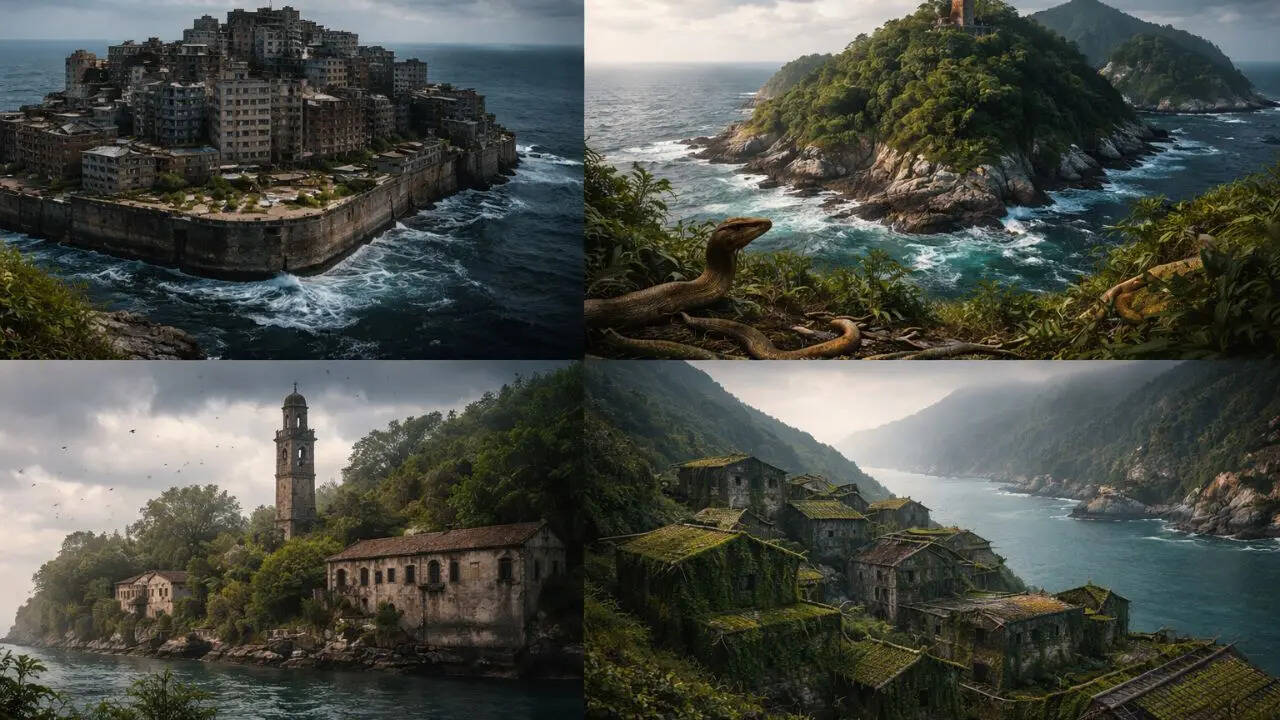
Most people think an island becomes abandoned because of a bad economy or a lack of fresh water. That’s rarely the whole story. Often, it’s about a specific event—a choice made by a government or a disaster that turned a thriving community into a ghost town overnight. If you're looking for the real reasons why these 10 abandoned islands remain empty, you have to look past the overgrown vines.
The Toxic Legacy of Gruinard Island
Let’s start with a place you couldn't even step on for nearly half a century without a hazmat suit. Gruinard Island, located off the coast of Scotland, looks like any other rugged Highland outcrop. But during World War II, the British government decided it was the perfect place to test biological weapons. Specifically, anthrax.
They dropped bombs filled with Bacillus anthracis spores to see how effective they’d be. The results were terrifying. The sheep they brought to the island died in days. The ground became so contaminated that the government had to quarantine the entire island. It stayed that way for 48 years.
Even though they eventually soaked the soil in hundreds of tons of seawater and formaldehyde in the late 1980s, locals are still skeptical. It was declared "safe" in 1990, but nobody is rushing to build a summer home there. Would you? Anthrax spores are famously resilient. They can sleep in the dirt for decades. One bad storm or a deep dig could theoretically bring something nasty back to the surface. It’s a stark reminder that once we break nature, we can’t always fix it with a few chemicals.
Poveglia and the Ghost of the Plague
If Gruinard is a scientific nightmare, Poveglia is a psychological one. This small island in the Venetian Lagoon has a reputation that makes even the bravest Italians steer clear. During the Black Death, Venice used it as a dumping ground for the sick and the dead. If you showed symptoms, you were sent to Poveglia to die.
Later, in the early 20th century, a mental hospital was built on the island. Local lore says a doctor there performed twisted experiments on patients before eventually losing his mind and jumping from the bell tower. Whether you believe in ghosts or not, the history is heavy. It’s estimated that over 100,000 people died on this tiny patch of land.
The soil is supposedly 50% human ash. That’s not a marketing gimmick; it’s a grim reality of how they handled mass casualties in the 1300s. Today, the buildings are rotting. The Italian government tried to auction off a long-term lease for the island a few years ago to turn it into a luxury hotel. Nobody took the bait. The "vibe" isn't just bad—it’s historically oppressive.
The Sinking Skyscrapers of Hashima Island
You might recognize Hashima Island from the James Bond movie Skyfall. Locally known as Gunkanjima, or "Battleship Island," it sits off the coast of Nagasaki, Japan. In the mid-1900s, it was the most densely populated place on Earth. Thousands of coal miners and their families lived in massive concrete apartment blocks, packed like sardines.
Then, the world shifted to petroleum. The coal ran out. In 1974, Mitsubishi closed the facility. The residents left so fast they left dishes on the tables and toys in the hallways. Now, it’s a crumbling concrete forest.
The reason nobody lives there now isn't just about the lack of jobs. The buildings are structurally terrifying. Decades of salt air have eaten the rebar. The concrete is literally exploding from the inside out. It’s a UNESCO World Heritage site now, but you can only visit small, reinforced sections. Stepping off the path means risking a floor collapsing under you. It’s a monument to industrial greed and how quickly nature reclaims what we build.
North Brother Island is New Yorks Secret
Right in the middle of the East River, between the Bronx and Rikers Island, sits North Brother Island. Millions of New Yorkers pass it every year without realizing what it is. In the late 1800s, it was the site of Riverside Hospital, a place to quarantine people with infectious diseases like smallpox and typhoid.
This is where the famous "Typhoid Mary" Mallon was forcibly confined for years until her death. After the hospital closed, it became a rehab center for heroin addicts, which eventually failed due to corruption and poor management.
Today, it’s a bird sanctuary. You can’t go there without a permit from the Parks Department, and they rarely give them out. The forest has swallowed the morgues and the dormitories. It’s an island of sorrow sitting in the shadows of the world’s most famous skyline. It stays empty because the city prefers the birds to the ghosts of its public health failures.
The Nuclear Silence of Bikini Atoll
We’ve all heard of the bikini swimsuit, but fewer people remember that it was named after a nuclear test site. Between 1946 and 1958, the United States detonated 23 nuclear weapons at Bikini Atoll in the Marshall Islands. One of them, the Castle Bravo test, was 1,000 times more powerful than the Hiroshima bomb.
The locals were moved "for the good of mankind" and told they could return soon. They couldn't. The radiation soaked into the coconut trees and the soil. Even today, while the background radiation on the island has dropped, the food is the problem. If you live there and eat the local fruit or fish, you're ingesting cesium-137.
It’s a paradise you can’t eat. Scientists monitor it constantly, but the traditional way of life for the Marshallese—living off the land—is impossible there. It remains a beautiful, palm-fringed graveyard of the Cold War.
Why Ilha da Queimada Grande is a Death Sentence
Off the coast of Brazil lies an island where the "chilling reason" for abandonment is very much alive. Ilha da Queimada Grande, or Snake Island, is the only home of the Golden Lancehead viper. This isn't your average garden snake. Its venom is designed to melt bird flesh instantly so they can’t fly away.
Legend says there are five snakes for every square meter. That’s an exaggeration, but experts suggest it’s closer to one snake per square meter in some areas. The Brazilian Navy closed the island to the public decades ago.
The last people to live there were a lighthouse keeper and his family. Stories say they were killed when snakes crawled through the windows. Now, the lighthouse is automated. Unless you’re a researcher with a team of doctors and a lot of antivenom, you aren't allowed to set foot on the shore. It’s one of the few places where humans didn't leave because of a disaster; we were simply out-competed by a superior predator.
Okunoshima and the Rabbit Distraction
Japan’s Okunoshima is famous on TikTok as "Rabbit Island." Thousands of cute, fluffy bunnies run up to tourists for snacks. It’s adorable. It’s also a cover-up.
During the early 20th century, this island was a secret chemical weapons factory. Japan produced tons of mustard gas and tear gas here, completely off the books. They even wiped the island from official maps. The rabbits? They were originally brought in as test subjects to see if the gas was leaking.
When the war ended, the factory was burned, and the rabbits were supposedly "dealt with," but many believe the current population descended from those lab animals or were released by schoolkids later. Either way, the island still has "hot spots" of arsenic and gas residue. The bunnies are a cute distraction from a very dark, toxic history.
The Sunken Ruins of Ross Island
Ross Island in the Andamans was once the "Paris of the East." It was the administrative headquarters for the British in India. They built grand ballrooms, bakeries, and swimming pools. They also built a brutal penal colony where Indian convicts were treated with unimaginable cruelty.
In 1941, an earthquake hit. Then the Japanese invaded during World War II. By the time the British took it back, they realized it wasn't worth the effort to rebuild. They walked away.
Today, the roots of massive Ficus trees have literally strangled the Victorian buildings. You can see a church with no roof, held up by the very trees that are tearing it apart. It’s a haunting visual of how quickly "civilization" can be erased when the people in charge stop caring.
Suakin is an Island Made of Coral
In the Red Sea, off the coast of Sudan, lies Suakin. It was once a vital port for trade and pilgrims heading to Mecca. What makes it unique is that the buildings were constructed out of coral. For centuries, it was a wealthy, shimmering white city.
As modern shipping took over and Port Sudan was built nearby, Suakin lost its purpose. The coral began to crumble. Coral is a finicky building material; without constant maintenance, it literally turns back into dust and salt.
The island is now a collection of skeletal white ruins. It’s a ghost city of calcium. People still live on the mainland nearby, but the island itself is left to the elements. It’s too expensive to save and too fragile to inhabit.
San Giorgio in Alga
Back in Venice, there’s another island that doesn't get the tourist headlines like Poveglia. San Giorgio in Alga was once a center of reform and learning, a monastery where future popes studied. Then it became a political prison. During World War II, it was used by German frogmen as a secret base to plant mines.
Now? It’s a pile of rubble in the lagoon. The Italian government has tried to sell it, but the cost of restoration is astronomical. It’s an island caught between its holy past and its violent military history.
The Reality of These Empty Places
These islands stay abandoned because the cost of "fixing" them—whether that means cleaning up radiation, de-mining the soil, or restoring ancient masonry—is higher than the value of the land. We like to think of them as mysterious or haunted, but usually, they’re just expensive mistakes.
If you’re fascinated by these spots, your next step shouldn't be booking a flight—most are illegal to visit anyway. Instead, look into the "Urban Exploration" or "Dark Tourism" communities that document these sites legally. Many of these islands have digital archives and photo collections maintained by historians. Start with the UNESCO reports on Hashima Island or the UK National Archives' files on Gruinard. The real history is always more interesting than the ghost stories.