Egypt's parliament voted unanimously in closed session to authorize deploying armed forces outside the country's borders to defend Egyptian national security, a constitutional rubber stamp aimed directly at countering Houthi cross-border drone and missile strikes against Saudi Arabia while preserving Cairo's leverage in the Red Sea. Under Article 152 of the Egyptian constitution, the president cannot declare war or send troops abroad without legislative approval and consultation with the National Defense Council. Yet framing this parliamentary vote purely as an act of brotherly Gulf solidarity misses the real story. Cairo is not rushing headlong into another Yemen quagmire; it is executing a calculated geopolitical hedge to protect its single most critical economic artery, secure Gulf financial lifelines, and reassert military primacy in the Arab world.
To understand what happened in that closed chamber in Cairo, you have to strip away the official diplomatic communiqué. The wording of the resolution was intentionally broad, authorizing deployments to combat "criminal militias" and "foreign terrorist elements" on the "strategic western front"—a clear nod to Libya—as well as other fronts threatening Arab national security, which diplomats in both Cairo and Riyadh quietly confirmed encompasses the Bab el-Mandeb Strait and Saudi territory under Houthi fire.
Egypt has ghosts in Yemen. Every senior general sitting in Cairo's Ministry of Defense knows the history of the 1962–1967 North Yemen Civil War, often called "Egypt's Vietnam." Gamal Abdel Nasser sent tens of thousands of troops into those rugged mountains, bleeding the Egyptian treasury dry and leaving his military exhausted right before the catastrophic 1967 war with Israel. No Egyptian commander wants to repeat that mistake.
The Bab el-Mandeb Chokepoint and the Suez Lifeline
Follow the money, and the military posturing makes immediate sense. Egypt's economy survives on a handful of hard-currency inflows, and the Suez Canal sits at the top of that list. Every single container ship, oil tanker, and bulk carrier passing through the Suez Canal must first transit the Bab el-Mandeb Strait, the narrow 18-mile-wide waterway wedged between Yemen on the Arabian Peninsula and Djibouti and Eritrea on the Horn of Africa.
When Houthi forces launch explosive-laden drone boats, anti-ship missiles, or aerial drones from Yemen's Red Sea coast, they are not just threatening Saudi oil terminals in Jeddah or Jizan. They are holding a blade to the throat of the Egyptian economy.
Maritime insurers react to missile strikes with brutal speed. When war-risk premiums spike in the southern Red Sea, shipping conglomerates reroute vessels around the Cape of Good Hope in South Africa. Each diverted ship is a direct hit to Cairo's state budget, depriving the Central Bank of Egypt of the US dollars it desperately needs to service external debt and subsidize basic commodities like wheat and fuel for over 100 million citizens.
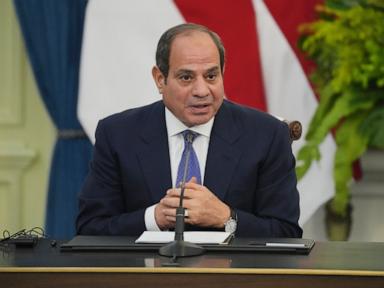
By securing parliamentary authorization to deploy air defense assets, naval vessels, and specialized intelligence units to Saudi Arabia and the Red Sea theater, President Abdel Fattah el-Sisi is buying an insurance policy for the Suez Canal. Cairo cannot outsource the security of the southern Red Sea entirely to Washington or Riyadh. If the Bab el-Mandeb closes or becomes uninsurable, Egypt faces immediate fiscal asphyxiation.
The Unspoken Ledger Between Cairo and Riyadh
Diplomacy between Egypt and Saudi Arabia is rarely sentimental, despite the endless stream of press releases celebrating "historic fraternal ties." It is transactional. Always has been.
Since 2013, Saudi Arabia and its Gulf allies have injected tens of billions of dollars into Egypt through central bank deposits, discounted petroleum shipments, and direct investments. That financial backing kept the Egyptian state afloat during periods of severe currency shortages and painful International Monetary Fund (IMF) structural reforms. When Riyadh comes under sustained aerial bombardment from Houthi ballistic missiles and loitering munitions, Crown Prince Mohammed bin Salman expects a tangible return on that investment.
Yet for years, Riyadh grew quietly frustrated with Cairo's reluctance to commit ground troops to the Saudi-led coalition in Yemen. Egypt contributed naval vessels to blockade Yemeni ports and participated in early air operations, but Sisi steadfastly refused to send infantry into the Yemeni highlands.
Parliamentary authorization solves a delicate political problem for Sisi. It gives Riyadh a loud, unmistakable public signal of Egyptian military backing at a moment when Saudi defenses are stretched thin, without actually committing Egyptian conscripts to offensive ground combat inside Yemen.
- Defensive Posture Only: Egyptian deployments tied to Saudi security focus heavily on air defense batteries, radar integration, coastal surveillance, and naval patrols.
- Intelligence Sharing: Cairo maintains deep historical intelligence networks across the Horn of Africa and Yemen that Riyadh lacks.
- Deterrence Value: The mere legal clearance for troop deployment raises the perceived cost of escalation for Tehran and its Houthi proxies.
Why Air Defense Matters More Than Infantry
Modern warfare on the Arabian Peninsula does not look like the tank battles of the twentieth century. The Houthi movement, backed by Iranian technical expertise and smuggled components, has mastered asymmetric aerial warfare. Cheap, low-flying drones and long-range ballistic missiles bypass traditional perimeter defenses to strike refineries, airports, and desalination plants deep inside Saudi territory.
Saudi Arabia possesses some of the most expensive Western hardware on earth, including American-made Patriot missile batteries. Yet burning through multi-million-dollar interceptor missiles to shoot down drones built for a few thousand dollars is an unsustainable war of attrition. Furthermore, shifting geopolitical priorities in Washington—including the periodic redeployment of US air defense assets out of the Gulf—left Riyadh feeling exposed.
Egypt brings a different kind of military architecture to the table. Over the past decade, Cairo embarked on one of the most aggressive military modernization and diversification sprees in the world. Rather than relying solely on Washington, Egypt acquired advanced air defense systems from Russia, France, and Germany, alongside its existing American arsenal.
Integrating Egyptian radar operators, electronic warfare specialists, and layered air defense doctrine into the Saudi security umbrella fills critical blind spots. Egyptian forces have spent years dealing with low-altitude threats and drone smuggling in the Sinai Peninsula. That hard-won operational experience is far more valuable to Riyadh than a battalion of infantry sitting in a desert garrison.
The Multi-Front Trap Stretching Cairo Thin
Look at a map of Egypt's borders, and the sheer scale of the strategic gamble becomes clear. Cairo is not operating in a vacuum. The parliamentary vote comes at a moment when the Egyptian military is simultaneously managing crises on nearly every compass point.
To the west, the civil war in Libya threatens to spill across a porous 700-mile desert border, forcing Cairo to mass armor and air power to prevent Turkish-backed militias from consolidating control over eastern Libya. To the south, the Grand Ethiopian Renaissance Dam (GERD) represents an existential threat to Egypt's Nile water supply, locking Cairo in a bitter diplomatic standoff with Addis Ababa that periodically edges toward military brinksmanship. In the northeast, counterinsurgency operations in North Sinai continue to tie down specialized troops and intelligence assets.
Stretching an armed force across four distinct theaters simultaneously violates the most basic rule of military strategy: concentration of force. Even with one of the largest standing armies in the Middle East, Egypt faces severe logistical and financial constraints. Every frigate deployed to the Red Sea and every air defense unit stationed in Saudi Arabia is an asset unavailable for contingencies in the eastern Mediterranean or along the Nile basin.
This explains why the parliamentary resolution was drafted with deliberate ambiguity. By bundling the Saudi-Yemen theater with threats on other borders, the Egyptian leadership retained total operational flexibility. Sisi can dial the deployment up or down depending on how much financial support flows from Riyadh, how aggressively the Houthis strike, and how quickly crises in Libya or Ethiopia escalate.
What Competitors Missed About Tehran's Role
Surface-level coverage of the parliamentary vote frames the conflict as a bilateral clash between Saudi Arabia and the Houthis, with Egypt stepping in as a supportive neighbor. That framing ignores the broader regional chessboard.
Cairo views the Houthi campaign through the prism of Iranian regional expansion. For decades, Egypt and Iran have maintained a cold, deeply suspicious relationship, marked by severed diplomatic ties since the 1979 Islamic Revolution. Egyptian security planners view the encirclement of the Arabian Peninsula by Iranian-aligned proxies—Hezbollah in Lebanon, militias in Iraq and Syria, and the Houthis in Yemen—as a direct threat to the stability of the Sunni Arab state system.
If the Houthis succeed in forcing Riyadh into a humiliating settlement or crippling Saudi oil infrastructure, the balance of power across the Middle East tilts decisively toward Tehran. For Cairo, allowing Saudi Arabia to absorb sustained strategic blows without visible Arab military backing risks inviting similar proxy pressure closer to Egyptian borders, particularly in Gaza and the Red Sea littoral.
The Domestic Calculus Behind Closed Doors
Holding the parliamentary vote behind closed doors was not an accident. While Egypt's parliament is overwhelmingly loyal to the executive branch, sending Egyptian soldiers abroad remains a sensitive topic on the streets of Cairo and Alexandria.
Public memory of foreign military interventions is sharp, and economic anxiety runs high. Ordinary Egyptians dealing with inflation and subsidy cuts are quick to question why state resources are being spent on foreign deployments when domestic economic pressures remain acute. By framing the authorization strictly around Egyptian national security—linking Houthi attacks directly to the safety of the Suez Canal and the livelihoods of Egyptian workers—the government pre-empted domestic backlash.
The closed-door format also prevented opposition lawmakers from turning the floor debate into a public spectacle over the financial terms of the arrangement with Riyadh. In Cairo, everyone knows Gulf aid underpins the economy, yet no leader wants to be seen publicly trading soldiers for sovereign deposits.
The Operational Reality on the Ground
Despite the dramatic headlines generated by the parliamentary vote, observers should not expect sudden footage of Egyptian armored columns rolling across the Saudi-Yemeni border. Modern coalition warfare in the Gulf relies on quiet, incremental integration rather than grand theatrical invasions.
If and when Egyptian personnel deploy under this mandate, their footprint will be tightly controlled:
- Command and Control Liaison: Senior Egyptian officers embedded directly within joint operations centers in Riyadh to coordinate maritime and aerial intelligence.
- Maritime Interdiction: Expanded patrols by the Egyptian Navy's Southern Fleet, headquartered in Safaga, working alongside Saudi naval forces to monitor shipping lanes and intercept weapons smuggling dhows in the Red Sea.
- Point Defense: Specialized engineering, radar, and air defense detachments tasked with protecting critical Saudi infrastructure near the Red Sea coast, far away from cross-border guerrilla skirmishes.
This is a calibrated deployment designed to maximize diplomatic leverage while minimizing body bags.
The Uncomfortable Truth About Regional Security
The real takeaway from Egypt's parliamentary authorization is not that an invincible Arab military alliance has suddenly materialized to crush the Houthi insurgency. Years of inconclusive aerial bombardment have already proven that superior conventional hardware cannot easily defeat a decentralized, entrenched guerrilla movement fighting on its own terrain.
Instead, the vote exposes a fundamental shift in Middle Eastern security architecture. With the United States steadily pivoting its strategic focus toward the Indo-Pacific and domestic priorities, regional powers like Saudi Arabia and Egypt are being forced to construct ad-hoc, self-reliant security arrangements on the fly.
Those arrangements are messy, expensive, and fraught with diverging national interests. Riyadh wants decisive protection for its cities and oil fields; Cairo wants to keep the Suez Canal open, keep Gulf capital flowing into its central bank, and keep its troops out of Yemen's lethal mountain valleys. The parliamentary vote in Cairo bridges those competing priorities on paper, setting the stage for a delicate, high-stakes balancing act in the Red Sea where a single miscalculation by a drone operator in Yemen could pull Egypt's military into a war it has spent half a century trying to avoid.


