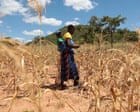
Acute food insecurity driven by meteorological phenomena is not merely a humanitarian crisis; it is a systemic failure of supply chain resilience and sovereign risk management. When surface temperatures in the central and eastern tropical Pacific Ocean rise, the resulting climatic shift known as the El Nino Southern Oscillation triggers cascading agricultural shocks across multiple continents. Standard media reporting frames these events through episodic casualties and broad population estimates, missing the underlying transmission mechanisms that convert a weather anomaly into regional famine. Analyzing this phenomenon requires shifting away from emotive narratives and examining the structural vulnerabilities of global caloric production, trade flow bottlenecks, and local currency depreciation in import-dependent economies.
The Transmission Matrix of Climatic Shocks
The primary limitation of standard economic assessments of El Nino is their reliance on lagging indicators. Analysts typically wait for crop harvest reports to quantify damage, ignoring the predictive value of meteorological thresholds. The transmission mechanism operates across three distinct tiers: precipitation deficits in tropical agricultural zones, subsequent yield reductions in staple grains, and macro-level fiscal shocks in emerging markets. Learn more on a connected subject: this related article.
In the agricultural production tier, phase shifts in the Walker circulation disrupt monsoon patterns in South Asia, alter rainfall distributions across Sub-Saharan Africa, and induce prolonged drought conditions in the northern regions of South America. These disruptions do not affect all crops equally. Maize, rice, and wheat exhibit high price elasticity and acute sensitivity to water stress during specific phenological stages, particularly flowering and grain-filling periods. When rainfall deviates more than two standard deviations below the historical mean during these windows, yield loss is non-linear. A twenty percent reduction in precipitation can result in a forty percent contraction in harvest volume depending on soil retention capacities and irrigation infrastructure.
The secondary tier involves the propagation of these supply shocks through international trade networks. Major agricultural exporters such as India, Vietnam, and Brazil frequently implement export restrictions, domestic price controls, and strategic reserve releases to insulate local populations from inflation. While rational from a domestic political perspective, these protective measures create severe supply restrictions on the global market. Importing nations, particularly across North Africa and the Middle East, face immediate procurement challenges. The structural flaw in global grain reserves is their geographical concentration and the absence of an automated coordination mechanism to stabilize spot prices during supply contractions. Further analysis by The Washington Post delves into related perspectives on this issue.
The tertiary tier is financial. Developing economies dependent on food imports must service external debt denominated in foreign currencies while simultaneously facing higher import bills for staple commodities. As domestic food prices spike, local currency purchasing power collapses. Central banks are forced to choose between raising interest rates to defend currency values or allowing hyperinflation to erode urban food security. This macroeconomic squeeze destroys the purchasing power of vulnerable populations long before absolute physical scarcity materializes in local markets.
Yield Volatility and the Elasticity Trap
Quantifying the impact of climate anomalies on food systems demands a rigorous evaluation of supply elasticity. Agricultural markets operate under long production cycles. Farmers must commit capital, seed, and fertilizer months before harvest without knowing the prevailing climatic conditions during the growth phase.
When an El Nino event intensifies, input costs often rise concurrently with weather-induced yield declines. Fertilizer prices, heavily correlated with natural gas inputs and global energy logistics, spike when energy demand surges during extreme weather anomalies. Farmers face a dual margin compression: lower output volume combined with higher operational expenditure per unit harvested. This economic reality discourages smallholder reinvestment, leading to structurally depressed baseline production for subsequent cycles.
The urban-rural dynamic further complicates the economic profile of food insecurity. Traditional economic models assume that rural agricultural communities are insulated from market shocks because they produce their own sustenance. In practice, smallholder farmers in developing regions are often net buyers of food for a significant portion of the year. They sell their harvest immediately post-season to service debt or purchase non-agricultural goods, and subsequently repurchase staple foods at peak market prices later in the season. When an El Nino event destroys the initial harvest, these households face simultaneous asset depletion and extreme market prices, eliminating their coping mechanisms within weeks of the initial shock.
Geopolitical Vulnerabilities in Trade Corridors
Logistical chokepoints amplify agricultural supply shocks. Global grain transit relies heavily on specific maritime routes and inland waterways that are directly vulnerable to meteorological volatility. Low water levels in the Panama Canal restrict the transit of bulk carriers moving grain from the US Gulf Coast to Asian markets, forcing longer routing around Cape Horn or the Cape of Good Hope. This adds weeks to transit times and increases fuel surcharges, compounding the delivered cost of basic foodstuffs.
Similarly, inland river transport systems in South America and North America experience severe draught restrictions during strong El Nino phases. Barges operating on the Mississippi River or the Parana River must reduce cargo loads to navigate shallower channels, effectively cutting transport capacity by thirty to fifty percent. This modal shift creates severe regional bottlenecks, stranding grain in interior storage facilities while coastal export terminals face vessel queues and demurrage costs.
Governments attempting to navigate these structural constraints frequently exacerbate the problem through fragmented regulatory interventions. Panic buying by state procurement agencies triggers artificial spikes in futures markets, pricing out private grain traders who maintain the day-to-day liquidity of international supply chains. The absence of transparent, real-time inventory tracking across major producing nations prevents accurate pricing, leading to speculative bubbles that disproportionately harm import-dependent developing economies.
Strategic Allocation of Resilience Capital
Mitigating future systemic shocks requires a fundamental redesign of how international institutions allocate capital for agricultural resilience. Traditional emergency aid models remain reactive, deploying resources only after acute malnutrition metrics cross critical thresholds. This approach incurs high logistical costs and fails to prevent the permanent loss of productive assets among affected populations.
A more effective framework requires shifting capital allocation toward predictive infrastructure and financial risk-transfer mechanisms. Index-based agricultural insurance programs, which automatically disburse funds to farmers based on satellite rainfall data or soil moisture indices rather than loss verification inspections, provide immediate liquidity without administrative delay. These instruments enable farmers to purchase replacement inputs or secure alternative livelihoods before total asset liquidation occurs.
Concurrently, sovereign debt structures must incorporate climate-linked repayment pauses or debt-for-resilience swaps. When an extreme weather event causes a systemic agricultural collapse, forcing a developing nation to choose between debt service and food imports creates avoidable humanitarian and economic degradation. Transitioning toward shock-responsive fiscal frameworks allows vulnerable states to maintain baseline caloric imports without triggering balance-of-payments crises.
Tactical Execution for Supply Chain Stabilizers
Targeted interventions must prioritize structural chokepoints rather than broad humanitarian distributions.
- Diversify import procurement vectors away from single-source nations vulnerable to regional climate anomalies.
- Establish bilateral long-term supply agreements with non-traditional exporters to hedge against sudden export bans by major agricultural producers.
- Expand decentralized physical grain storage infrastructure at the regional municipal level to buffer against transport corridor disruptions.
- Implement digital inventory tracking systems to provide real-time visibility into domestic grain reserves and prevent speculative panic.