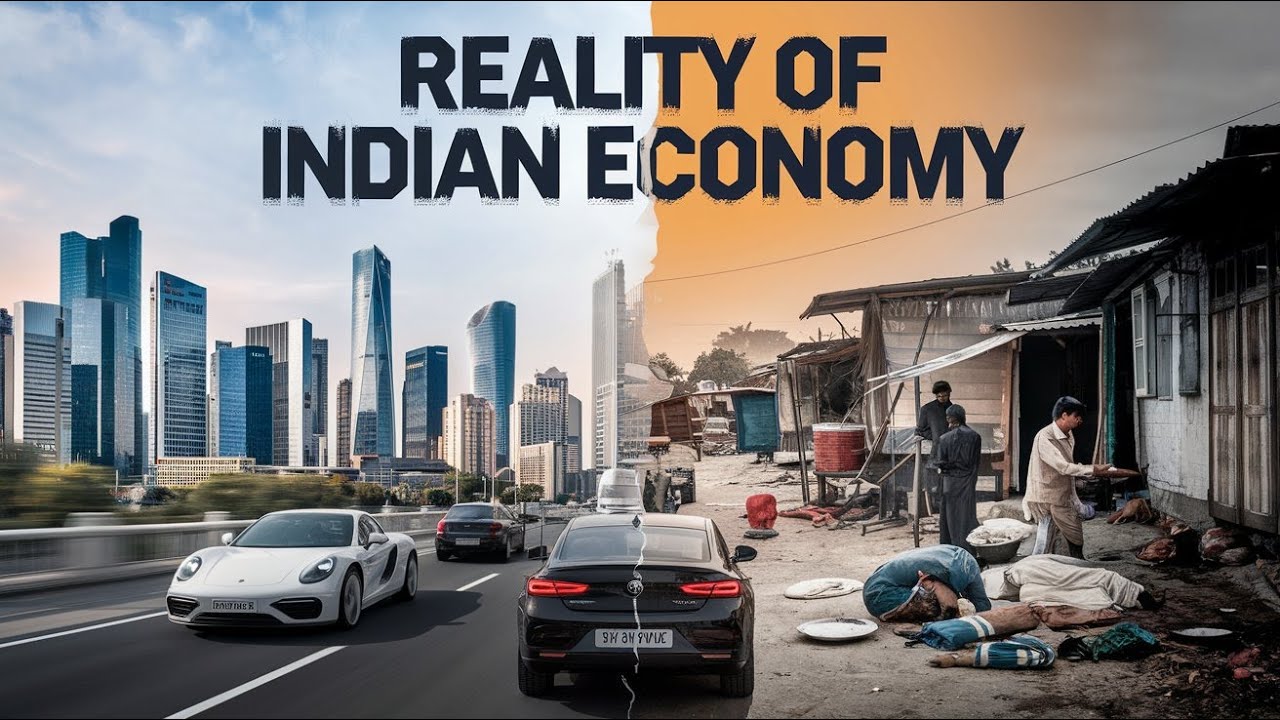
The cyclical nature of geopolitical dominance often masks a uncomfortable truth for those currently sitting at the top of the food chain. History suggests that centralized control, whether dressed in the robes of monarchy or the machinery of a modern totalitarian state, possesses a built-in expiration date. Recent rhetoric from diplomatic quarters, specifically regarding India and Poland, underscores a stark reality that observers in Washington and Beijing frequently ignore. Military might and rigid command structures do not produce enduring stability; they merely create a brittle foundation that eventually cracks under the weight of human ambition.
The observation that India and Poland successfully outlasted historical empires highlights the failure of state-enforced uniformity. India, having navigated the transition from colonial subjugation to a sovereign democracy, and Poland, which fought through decades of ideological iron-fisted rule to reclaim its national identity, offer a masterclass in societal resilience. Their trajectories demonstrate that when a government attempts to crush the innate desire for autonomy, it inadvertently creates the very friction that will eventually spark its own combustion.
The Illusion of Absolute Control
Totalitarianism relies on the assumption that individuals are merely components of a larger machine. If you adjust the components, the machine functions according to the blueprint. This is where the error lies. A state can build walls, curate information, and deploy forces to monitor every street corner, yet it cannot govern the intangible space where belief resides.
Look at the collapse of the Eastern Bloc. Analysts of that era often pointed to economic mismanagement as the primary trigger. That view is incomplete. The underlying tension was not merely about shortages of bread or consumer goods; it was about the psychological toll of existing within a system that demanded total conformity. When the cost of submission became higher than the risk of defiance, the structures dissolved. The state’s monopoly on power was not broken by a stronger army, but by the slow, irreversible accumulation of individual dissent.
India presents a different, equally compelling case. The sheer diversity of its population—its religious, linguistic, and cultural patchwork—defies the logic of authoritarian rule. Any attempt to impose a singular, top-down identity on such a civilization would inevitably incite chaos. Instead, the nation’s survival as a democratic entity rests on its capacity to manage this chaos through negotiation, debate, and the messy, slow process of compromise. This is not a weakness; it is a mechanism of survival. Rigid systems snap under pressure. Flexible systems absorb the shock.
The Cost of Military Overreach
Global powers often fall into the trap of believing that military reach equals geopolitical weight. We see this today in the way nations approach their neighbors. There is an obsession with spheres of influence, military alliances, and the projection of power. This strategy misses the pivot point of modern relevance. Influence is no longer just about the capacity to destroy or defend; it is about the capacity to attract.
When a superpower prioritizes its military output over its internal cohesion, it creates a hollowed-out version of itself. This is the imperial overstretch that historians like Paul Kennedy identified decades ago. Resources flow toward maintaining an external posture that bears no relation to the needs of the population. Eventually, the bill comes due. The citizens notice. When the government spends more on the illusion of grandeur than on the reality of domestic prosperity, the loyalty of the populace begins to erode.
Consider the hypothetical scenario of a nation that doubles its naval spending while its domestic educational and industrial base stagnates. On paper, it looks stronger. In practice, it has become a glass cannon. It may possess the ability to strike, but it lacks the internal structural integrity to withstand a prolonged crisis. If the population loses its belief in the state’s purpose, the military hardware serves only to guard a void.
Where Freedom Becomes a Strategic Asset
The yearning for freedom is not a romantic abstraction. It is a functional requirement for any society that hopes to thrive in the twenty-first century. Innovation, the engine of modern power, requires a degree of cognitive liberty. People who are restricted, monitored, or forced to echo state narratives are less likely to produce, invent, or solve the complex problems that define our time.
In Poland, the movement that challenged the status quo was fundamentally rooted in the protection of the private sphere—the ability of people to organize, think, and associate without the state’s permission. By reclaiming this space, they unlocked an dormant potential that the totalitarian system had stifled. They did not just win a political victory; they reclaimed their status as economic and intellectual agents.
The same applies to the global stage. Nations that lean into individual agency gain a massive advantage over those that demand absolute obedience. It is easier to suppress a population than it is to inspire one. However, suppressed populations are essentially static. They do not evolve unless the state forces them to, and state-mandated evolution is rarely efficient. An inspired population, operating within a framework of legal rights and personal responsibility, is a dynamic force that can navigate disruption without needing a central committee to dictate every move.
The Unseen Fragility of Order
There is a prevalent misconception that authoritarian regimes are inherently more stable because they can make quick decisions without the interference of public opinion or legislative delays. While it is true that they can move fast, they often move in the wrong direction. Without the feedback loops of a free press and an open political system, leaders operate in a vacuum. They become insulated from their own failures.
This is the feedback loop deficit. In a functioning republic, the government receives constant, often painful, data about what is not working. Citizens complain, the media investigates, and opponents push back. This allows for mid-course corrections. A totalitarian government treats all feedback as a threat. By silencing critics and suppressing negative data, it ensures that when it finally makes a mistake, it will be a catastrophic one.
History is littered with empires that believed they had perfected the science of control. They built vast bureaucratic and military architectures designed to ensure eternal dominance. Yet, they all eventually faced the same inevitable conclusion. The world changes faster than a central authority can track. The people, in their messy, unpredictable, and decentralized collective, are the only ones capable of responding to that change.
The current global climate, marked by shifting alliances and escalating conflicts, serves as a stress test for every major power. Those clinging to the belief that top-down, command-oriented structures are the key to longevity are setting themselves up for a painful lesson. True power is not something held; it is something that is granted by the confidence and participation of the governed. When that confidence is lost, the most advanced military in the world cannot save the state. The empires that truly endure are not the ones that conquer the most territory, but the ones that create an environment where the human spirit is allowed to function. We are currently witnessing the limitations of power that has forgotten this fundamental truth.