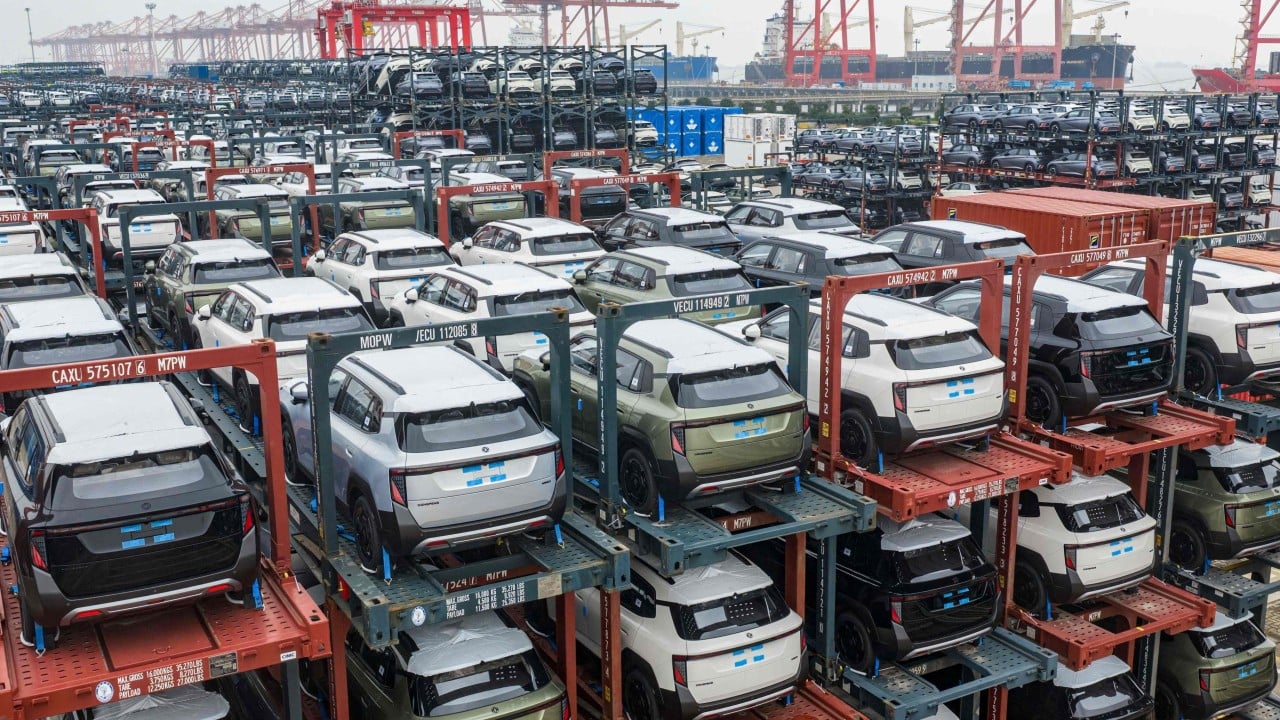
Brussels and Beijing spent months pretending they could talk their way out of a collision. That illusion is dead.
The fragile EU-China trade truce—built on temporary negotiation pauses, technical working groups, and polite diplomatic communiqués—is cracking under the weight of industrial overcapacity, retaliatory tariffs, and a widening geopolitical rift. If you're running a European supply chain, managing Asian procurement, or watching global equity markets, you can't treat this like standard diplomatic posturing anymore. Both sides are actively preparing for a protracted trade war, and the fallout will hit everything from electric vehicles to cognac and pork.
Here's the uncomfortable reality most mainstream trade coverage misses. Neither side actually wants an all-out tariff spiral, yet neither side can afford to back down politically.
How the EU-China Trade Truce Actually Broke Down
To understand why the truce is failing, you have to look at what broke the old economic bargain. For twenty years, the deal was simple. Europe bought cheap Chinese consumer goods and industrial inputs, while China bought high-end European machinery, luxury cars, and chemicals. Everybody made money.
That model died when China moved aggressively up the value chain.
Today, Beijing isn't just making toys and textiles; it's dominating clean tech, battery manufacturing, solar panels, and electric vehicles. When the European Commission launched its anti-subsidy investigation into Chinese battery-electric vehicles (BEVs) and subsequently rolled out countervailing duties of up to 35.3% on top of the standard 10% import tariff, the truce was effectively put on life support. Brussels argued—backed by mountains of procurement and state-lending data—that Chinese automakers were benefiting from unfair state subsidies that threatened to hollow out Europe's core automotive manufacturing base.
Beijing didn't just protest. It went straight for Europe's political soft spots.
Instead of hitting German carmakers immediately—which would have alienated Berlin, Beijing's loudest advocate inside the European Council—China's Ministry of Commerce (MOFCOM) opened anti-dumping probes into European brandy, pork, and dairy products. It was surgical. Targeting cognac hit France right where it hurts, punishing Paris for pushing the EV tariffs forward. Targeting pork hit Spain and Denmark. Targeting dairy hit Ireland, the Netherlands, and Belgium.
By late 2024 and rolling straight through 2025 and 2026, the "truce" became a slow-motion hostage exchange. Both sides kept talking about price undertakings—a mechanism where Chinese EV makers would agree to minimum import prices in Europe instead of paying tariffs—while simultaneously loading up new trade defense instruments.
The Structural Trap Nobody Wants to Admit
You'll hear pundits say a compromise is just one summit away. Don't buy it.
The core problem isn't a single tariff rate on BYD or SAIC Motor. It's macroeconomic math. China's domestic real estate slump left a massive hole in its economic growth model, and Beijing's answer has been to pour state capital into advanced manufacturing. When domestic Chinese consumers aren't buying enough to absorb that factory output, those goods have to go somewhere.
With the United States maintaining steep Section 301 tariffs—including 100% duties on Chinese EVs—the European Union became the largest open, high-income market left on the planet.
Brussels knows this. If the EU drops its trade defenses without binding, verifiable caps on subsidized exports, European industrial capacity gets wiped out. Look at what happened to the European solar panel manufacturing industry a decade ago. Within a few years, cheap Chinese imports captured over 90% of the EU market, bankrupting almost every domestic European producer. European policymakers swore they wouldn't let that repeat with electric vehicles, wind turbines, or medical devices.
And Beijing knows it can't easily turn off the industrial spigot without triggering domestic unemployment and social instability at home. So you get a deadlock. Brussels demands structural reforms to China's subsidy regime; Beijing views those demands as an attack on its sovereign economic model.
Where the Retaliation Hits Next
If you think this fight stays confined to cars and brandy, you aren't paying attention to the trade defense dockets in Brussels and Beijing. Both sides have built legal arsenals specifically designed for asymmetric economic warfare.
The European Playbook
The European Commission isn't just relying on traditional anti-dumping tariffs anymore. Over the past two years, Brussels operationalized a much sharper set of tools:
- The Foreign Subsidies Regulation (FSR): This lets the EU block foreign-subsidized companies from bidding on public procurement contracts or acquiring European firms. Brussels has already used it to probe Chinese train makers, solar bidders, and wind turbine suppliers.
- The International Procurement Instrument (IPI): Designed to shut Chinese companies out of EU public tenders if Beijing refuses to give European firms fair access to Chinese government contracts. Medical devices have been a prime target here.
- Anti-Coercion Instrument (ACI): Often called the EU's "trade bazooka," this allows Brussels to restrict trade in services, intellectual property rights, and foreign direct investment if a third country uses economic blackmail to force policy changes.
Beijing's Counter-Leverage
China has fewer imports from Europe to tariff, which is a classic problem in asymmetric trade disputes. You can't match dollar-for-dollar tariffs when you run a massive trade surplus. So Beijing uses regulatory friction and supply chain chokepoints instead.
- Critical Raw Materials: China controls the vast majority of global refining capacity for gallium, germanium, graphite, and rare earth elements. Beijing has already introduced export licensing regimes on several of these materials. It doesn't need a total ban to cause chaos; simply slowing down export licenses for European defense, semiconductor, and green-tech firms sends shockwaves through procurement departments.
- Large-Engine Vehicles: Beijing has repeatedly dangled higher tariffs on imported internal combustion vehicles with engines larger than 2.5 liters. That is a direct threat aimed squarely at Mercedes-Benz, BMW, and Porsche—a calculated move to force German Chancellor-level pressure onto Brussels.
- Customs and Regulatory Delays: Any foreign company operating in mainland China knows how fast "routine" customs inspections, tax audits, or environmental compliance checks can suddenly stall shipments at the port when political temperatures rise.
Why European Unity Is Cracking Under Pressure
One of the biggest reasons Beijing feels confident pushing back is that Europe doesn't speak with one voice. Trade policy is technically an exclusive competence of the European Commission, meaning Brussels negotiates on behalf of all 27 member states. In practice, national politics dictate everything.
Germany is terrified of a trade war. German automakers still make a huge share of their global profits in China, even as their market share there shrinks against local competitors like BYD, Nio, and Geely. Berlin voted against the EU's EV tariffs, lobbying hard behind the scenes to water them down. Hungary went even further, actively courting Chinese EV and battery factories to set up shop on Hungarian soil—giving Chinese manufacturers a tariff-free backdoor right inside the EU single market.
France, Italy, and Poland sit on the opposite side. They have less exposure to the Chinese luxury car market and far more to lose from cheap imports flooding Europe's mass-market auto sector. Paris pushed hard for aggressive tariffs, arguing that European strategic autonomy means nothing if you hand over your industrial base to state-backed foreign rivals.
Beijing exploits these divisions ruthlessly. Chinese officials routinely bypass Brussels to host bilateral dinners with individual European leaders, offering investment deals to countries that break ranks and threatening agricultural exports from countries that toe the Commission's line.
What Most Businesses Get Wrong About Trade Wars
I've watched companies navigate tariff regimes from the 2018 US-China disputes through today's European flashpoints, and most mid-sized firms make the exact same mistakes.
First, they assume tariffs are temporary. Executives treat a 25% or 35% duty like bad weather—something you absorb in your margins for two quarters until politicians "sort it out." That's a fast way to go broke. Once trade barriers go up in strategic sectors, they rarely come back down. Even when governments change, tariffs become entrenched revenue sources and political third rails.
Second, companies confuse "China Plus One" with actual resilience. Moving final assembly from Shenzhen to Vietnam, Thailand, or Hungary doesn't shield you if 80% of your sub-components, battery cells, or processed minerals still originate in mainland China. Both Washington and Brussels have tightened rules-of-origin enforcement dramatically. Customs authorities are actively auditing supply chains to catch tariff circumvention, and getting caught with mislabeled origin declarations carries massive retroactive penalties.
Third, firms underestimate non-tariff barriers. Everyone watches the tariff headlines, yet customs delays, sudden technical standard changes, and export license bottlenecks kill delivery schedules much faster than a 15% duty.
Practical Moves You Should Make Right Now
If your business touches European or Chinese supply chains, waiting for a diplomatic breakthrough isn't a strategy. You need to insulate your operations before the next round of retaliatory measures drops.
- Audit your Tier-2 and Tier-3 suppliers immediately. Don't stop at your direct vendor. Map where your raw materials, specialty chemicals, and electronic components are actually refined or fabricated. If you rely on Chinese-processed graphite, rare earths, or specific active pharmaceutical ingredients, qualify an alternative supplier now—even if they cost 12% more.
- Rewrite your force majeure and tariff-sharing clauses. Standard commercial contracts often leave importers holding the entire bag when sudden countervailing duties hit goods already on the water. Update your supplier and customer agreements to explicitly define who absorbs new tariffs, export license delays, and regulatory holds.
- Stress-test your rules-of-origin documentation. If you are sourcing from Southeast Asia or Eastern Europe to avoid EU-China friction, verify that your products meet substantial transformation thresholds under EU customs law. Keep auditable bills of materials ready before customs asks for them.
- Watch the sector-specific dockets, not just the headlines. Keep a close eye on the European Commission's trade defense register and China's MOFCOM announcements for chemicals, medical devices, steel, and agricultural goods. Those sectors are next in line for tit-for-tat investigations.
The era of frictionless globalization between Europe and China is over. Brussels is prioritizing industrial survival, Beijing is prioritizing export-led growth, and neither side is blinking. Build your margins and your supply chain for permanent friction, because that's the only reality on the table.