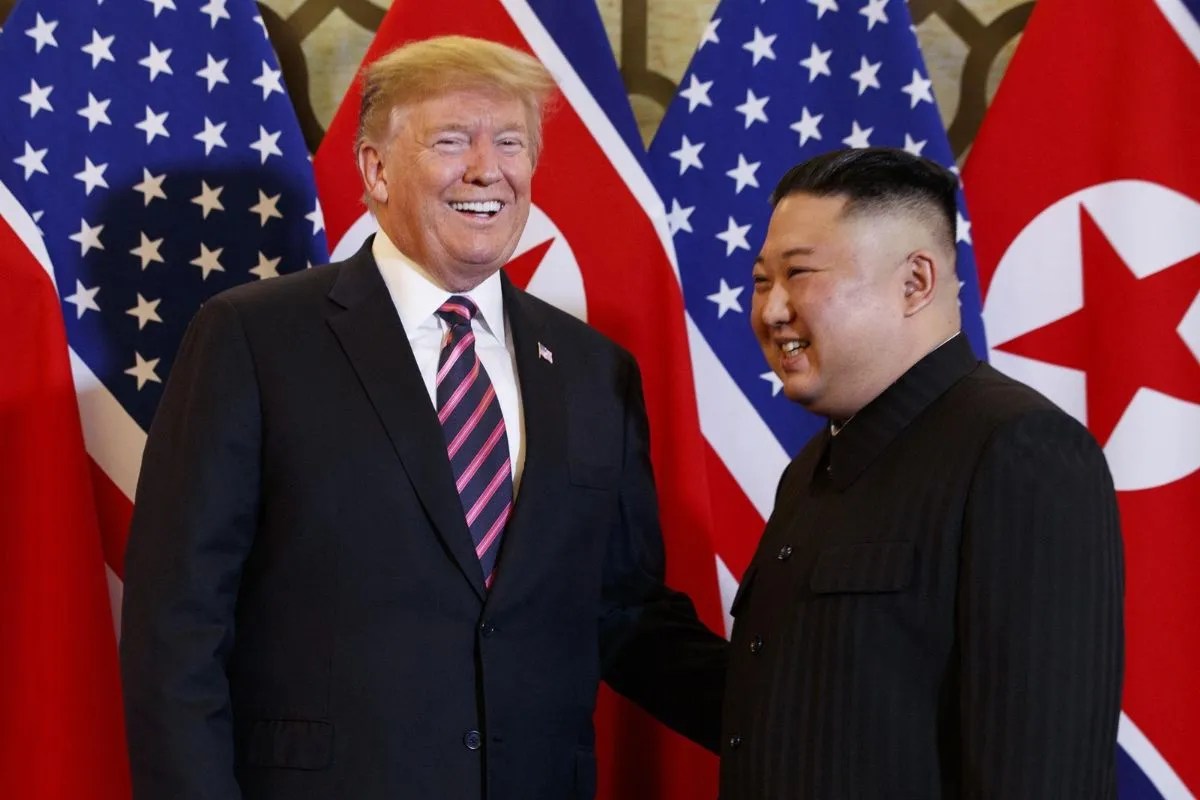
Foreign policy commentary resembles professional wrestling. Analysts dissect scripted beefs, cheer for their favorite authoritarian heels, and treat every diplomatic photo-op like a heavyweight title fight. The lazy consensus surrounding Donald Trump and North Korea follows this exact exhausting script. Mainstream coverage treats leadership summits as either historic breakthroughs or dangerous normalization, completely missing the structural reality of what is actually happening.
I have watched corporate media and think-tank pundits burn millions of dollars generating breathless hot takes about personal diplomacy while ignoring the cold, unyielding machinery of geopolitical leverage. They treat statecraft like a reality TV casting call. They ask who likes whom, who prefers which leader, and whether a presidential bromance can rewrite the nuclear ledger. It is a profoundly unserious framework built to manufacture clicks rather than explain power.
Let us correct the common misunderstanding right now. Statecraft does not run on personal affection or playground popularity contests. Dictators do not alter nuclear proliferation doctrines because a foreign leader flatters them on a social media platform or sends a friendly letter. When former presidents like Barack Obama or Joe Biden refused high-level summits without preconditions, they were not defending democratic principles with heroic rigor. They were executing a policy of strategic asphyxiation known as strategic patience. That strategy achieved precisely nothing except giving Pyongyang years to expand its fissile material stockpile away from the glare of international cameras.
When Trump short-circuited that diplomatic quarantine and flew to Singapore and Hanoi, the pundit class lost its collective mind. They shrieked about legitimacy and protocol. They failed to understand the basic mechanics of negotiation leverage. Sitting across the table from an adversary does not mean you endorse their labor camps or missile tests. It means you recognize that conventional diplomatic stagnation is a failed strategy that benefits only the regime building the warheads.
Imagine a scenario where a corporate CEO refuses to speak with a hostile board member because of bad manners, while that same board member quietly locks down a hostile takeover. That is what institutional foreign policy looked like for decades. Refusing to talk doesn't make you morally superior; it makes you irrelevant.
The conventional narrative focuses entirely on the superficial personality cult. The real story centers on institutional desperation and structural isolation. North Korea operates a command economy on life support, chronically squeezed by sanctions that bite harder than any angry press release from the State Department. Kim Jong Un does not care about personal validation from American politicians. He cares about sanctions relief, regime survival, and international recognition as a de facto nuclear weapons state.
When a leader bypasses traditional diplomatic channels to demand direct talks, the establishment panics because it threatens their gatekeeping monopoly. Think-tank lifers and career bureaucrats despise direct engagement because it exposes how hollow their multi-decade playbooks truly are. They want endless committee meetings, incremental sanctions adjustments, and fifty-page white papers that accomplish nothing.
The contrarian truth is simple. Personalistic diplomacy is messy, erratic, and often cringe-inducing, yet it remains the only mechanism capable of breaking through decades of bureaucratic sclerosis. Whether a prospective summit happens this year or next is largely irrelevant noise. The signal is that state actors on both sides realize the old containment model is dead.
Stop treating foreign affairs like a moral purity test. It is a ruthless poker game played with national security chips. The pundits whining about protocol do not have a better alternative; they just miss the safety of their irrelevance.