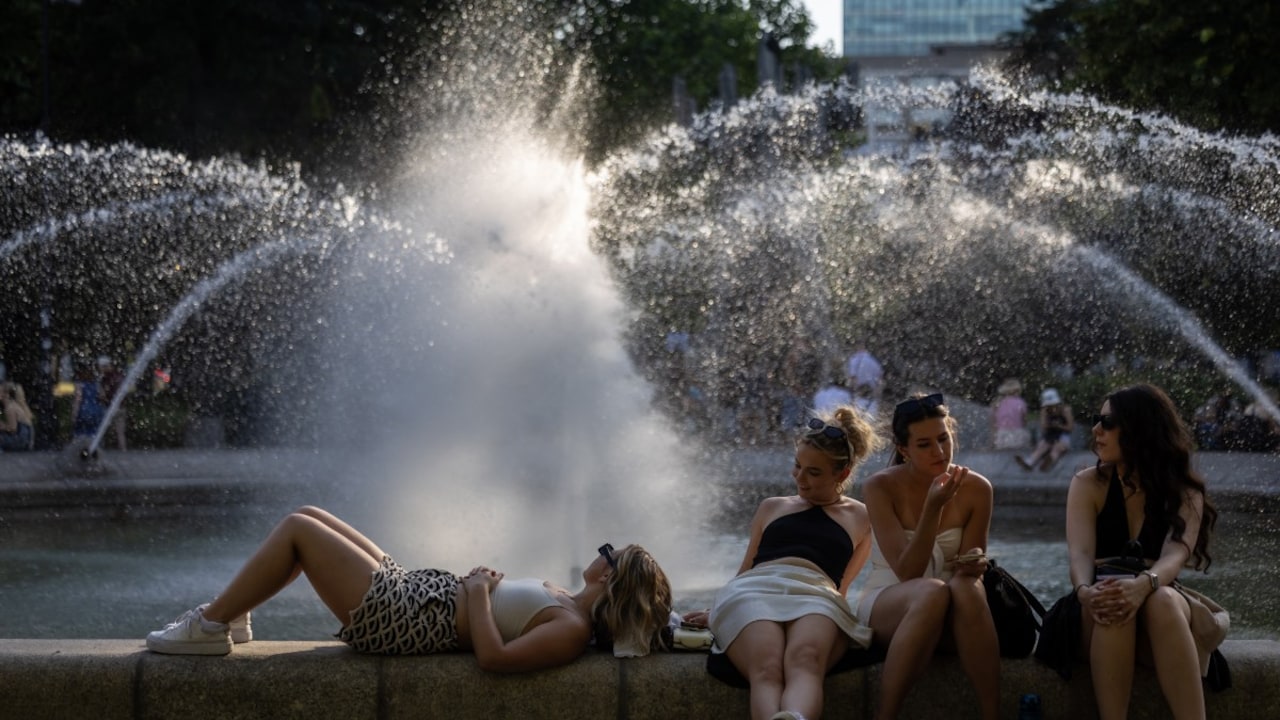
The corporate media is running its favorite seasonal headline. "Deaths Surged 29% In France During Week Of Record Heat." The numbers from Santé publique France look terrifying on a smartphone screen: 2,025 excess deaths in a single week. Emergency rooms overflowing. Mortuaries hitting capacity.
It is classic clickbait designed to induce climate panic. But if you actually analyze the data instead of just screaming at the thermometer, you find a completely different story.
The media wants you to believe that thousands of healthy people are dropping dead from pure heat exposure. That is a lie. The 29% spike in French mortality is not a failure of global climate policy. It is a damning indictment of European infrastructure, systemic medical isolation, and bad statistical modeling.
We are tracking the wrong metric, panic-mongering over the wrong threat, and implementing solutions that actively make the problem worse.
The Harvesting Effect The Media Ignores
To understand why the 29% surge is statistically misleading, you must first understand a core concept in epidemiology: mortality displacement, casually known as the harvesting effect.
During any extreme weather event—whether it is a June heatwave or a January freeze—the initial spike in deaths occurs almost exclusively among the ultra-vulnerable. These are individuals with advanced stage-four cardiovascular disease, severe renal failure, or terminal respiratory conditions.
I have spent years looking at public health registries during crises. When a heatwave hits, it does not magically create new fatal illnesses overnight. It accelerates death by a matter of days or weeks for individuals who were already near the end of their life path.
If you look at the raw data from the June 22 to June 28 period in France, the highest spike did not occur in sun-baked fields or among outdoor workers. The health ministry openly admitted that deaths in private homes jumped by 91%. Deaths in care homes for older people rose by 37%.
Think about that. These people did not die because the sun was too bright. They died inside four walls. They died because of the compounding effects of terrible building insulation and absolute social isolation.
The Air Conditioning Paradox
European architecture is trapped in a romanticized past that is actively killing its elderly citizens.
French media treats air conditioning like an American luxury or an environmental sin. Less than 5% of French residential homes have structural AC. During a record-breaking heatwave where night-time temperatures refuse to drop, a concrete or stone apartment building transforms into an oven. It traps heat and cooks the inhabitants.
The lazy consensus screams that we must lower global carbon emissions to stop these deaths. Great. Let us say we hit every climate goal by 2050. What happens next week when the next high-pressure system parks itself over Paris?
The immediate fix is infrastructure, not long-term diplomacy. If those private homes and care facilities had standardized climate control, that 91% surge inside private residences would plummet to near zero.
But public health agencies refuse to push this. They claim running millions of air conditioners will stress the energy grid and increase emissions. So instead of installing life-saving cooling infrastructure today, they allow vulnerable citizens to die inside insulated brick boxes while handing out useless flyers telling people to drink water. It is a staggering policy failure masked as environmental righteousness.
Dismantling The Ill-Informed Public Inquiries
When a spike like this happens, the public asking the wrong questions only fuels the bad policy loop. Let us dismantle the flawed premises driving the current discourse.
Why does the government not ban outdoor work during heatwaves?
Because outdoor workers are not the ones driving the 29% mortality surge. The data shows the vast majority of excess deaths occur in the 45-and-over demographic, heavily concentrated in the over-85 bracket. Forcing construction sites to shut down looks like decisive political action, but it does absolutely nothing to cool down an 88-year-old woman trapped on the top floor of a Parisian apartment building with no cross-ventilation.
Are hospitals just unprepared for climate change?
Hospitals are unprepared for the wrong reasons. The media highlights crowded emergency departments at institutions like the Paris-Saclay Hospital. But emergency rooms are crowded because the primary care network completely collapses during the summer holidays in France.
When local doctors go on vacation in late June, vulnerable patients have nowhere to go but the ER when their chronic conditions flare up. The heat is merely the catalyst that exposes a fragile, bureaucratic healthcare system.
The Uncomfortable Reality of Loneliness
If you want to know the absolute truth about why France suffers so acutely during heatwaves, look no further than the 2003 disaster that claimed 15,000 lives. The lesson then was exactly the same as it is now: isolation kills far more effectively than ambient temperature.
In traditional French society, August and late June are sacred holiday periods. Families leave the cities en masse, often leaving elderly relatives behind in urban centers. When a heatwave hits, there is no one there to notice that an elderly neighbor has stopped drinking water, or that their apartment has reached a staggering 38°C inside.
A simple, low-tech intervention—a mandatory local registry where volunteers check on vulnerable neighbors during weather alerts—saves infinitely more lives than any sweeping climate mandate. Yet, we ignore the social rot and blame the weather forecast because it is easier to fight an abstract concept like global warming than to admit we are abandoning our elderly.
The Downside of True Adaptation
If we actually want to solve this, we have to accept a difficult truth.
Massively upgrading European infrastructure to include structural cooling and modern ventilation will require billions in capital expenditure. It will temporarily increase localized energy demand. It requires moving away from the aesthetic preservation of ancient, uninsulated buildings and embracing modern, climate-resilient architecture.
It means admitting that our current public health strategy of sending out push notifications and telling citizens to "stay in the shade" is an absolute farce.
Stop buying into the panic metrics. The 29% surge is not an act of nature. It is a measurable consequence of societal neglect, outdated architecture, and a stubborn refusal to implement modern cooling technology. If we keep pretending the thermometer is the sole culprit, the next heatwave will deliver the exact same body count, and the media will run the exact same headline.