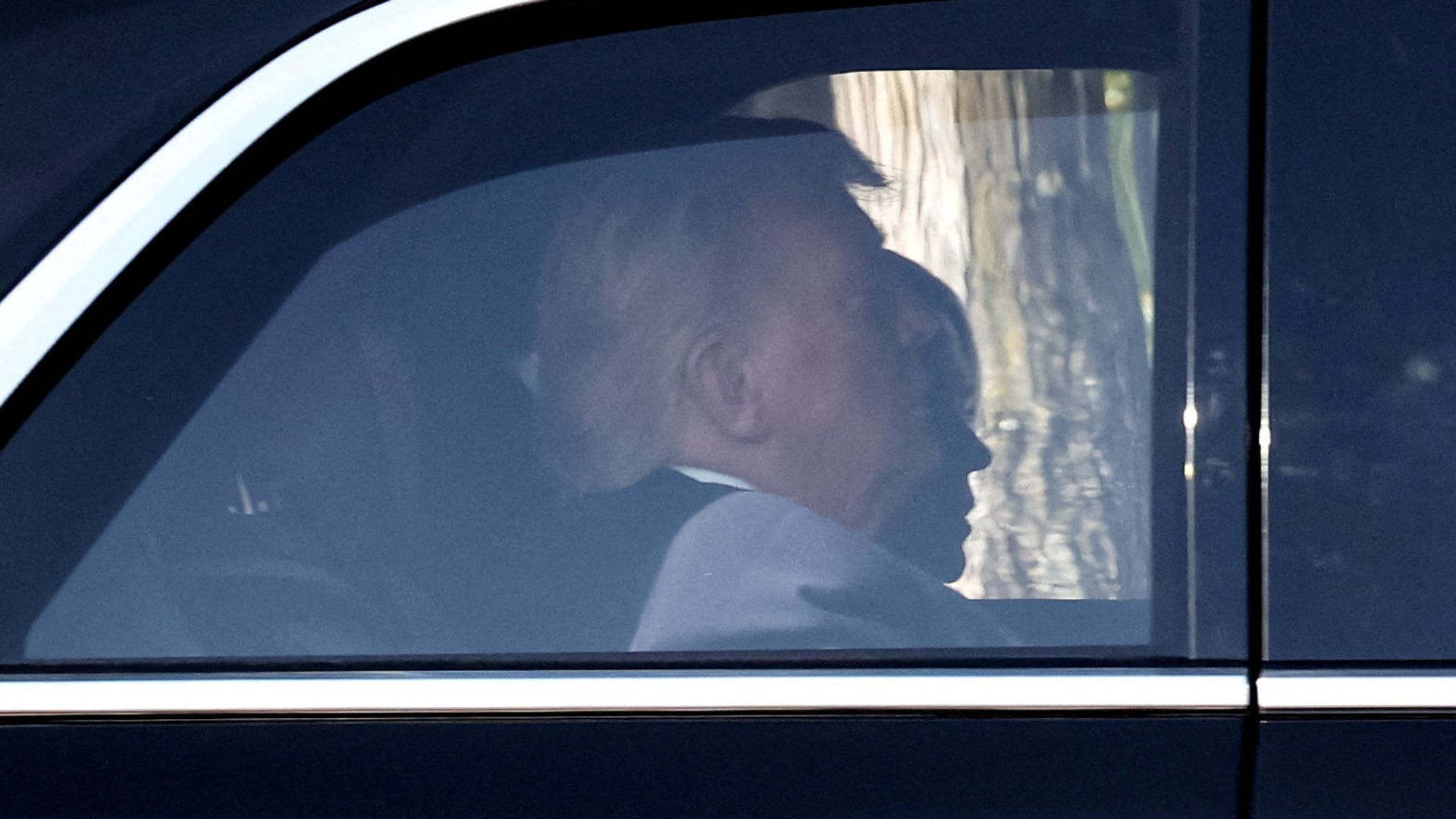
The physical presence of a sitting or former executive at a Supreme Court oral argument transforms a legal proceeding into a theater of political signaling, yet the actual mechanics of the 14th Amendment remain governed by rigid textualist and originalist frameworks. While media narratives focus on the optics of attendance, the structural conflict lies in the tension between the "jurisdiction clause" and the "citizenship clause." This analysis deconstructs the legal vectors currently challenging the 1898 precedent of United States v. Wong Kim Ark, stripping away the performative elements to examine the actual viability of executive-led shifts in birthright jurisprudence.
The Jurisdictional Fault Line
The debate over birthright citizenship hinges on five words in the 14th Amendment: "and subject to the jurisdiction thereof." Legal scholars and challengers to the current status quo split into two camps regarding the definition of "jurisdiction."
- The Territorial Definition: This is the current prevailing standard. It asserts that anyone physically present within U.S. borders (excluding diplomats and invading armies) is subject to the jurisdiction of the United States. Under this framework, the law is a binary of geography.
- The Consensual Definition: This theory posits that "jurisdiction" implies a mutual agreement between the individual and the state. It argues that individuals present without legal authorization do not owe the kind of exclusive allegiance intended by the Reconstruction-era framers.
The shift from a territorial to a consensual model would represent a tectonic realignment of American civil society. It would move the definition of citizenship from an objective geographical fact to a subjective political status determined by the executive branch's enforcement of immigration law.
The Mechanism of Judicial Influence
An executive’s attendance at the Supreme Court functions as a high-stakes deployment of "soft power" intended to influence the "hard power" of judicial interpretation. In a system designed for the separation of powers, this presence serves as a physical reminder of the executive's intent to use the tools of the administrative state to enforce a specific constitutional reading.
The legal strategy involves forcing a re-evaluation of Wong Kim Ark. That 1898 ruling established that a child born in the U.S. to Chinese citizens who had a permanent domicile and were carrying on business was a citizen. Contemporary challengers argue that the status of "permanent domicile" is impossible for those in the country illegally, creating a logical bottleneck that the 1898 court did not have to address. By showing up in person, a political leader signals to the conservative wing of the Court that there is significant political "cover" for a radical departure from stare decisis.
Three Pillars of the Constitutional Challenge
To understand the likelihood of a shift in birthright citizenship, one must evaluate the three pillars upon which any potential ruling would rest.
1. The Originalist Inquiry
The Court’s current majority prioritizes the "original public meaning" of the constitutional text at the time of its adoption (1868). Challengers are currently mining the Congressional Globe records of the 39th Congress to find evidence that Senator Jacob Howard and other architects of the 14th Amendment intended to exclude those who were not "subject to the political jurisdiction" of the U.S. This historical excavation is the primary engine of the legal movement.
2. The Statutory Overlap
The Immigration and Nationality Act (INA) mirrors the language of the 14th Amendment. If the Court determines the Constitution does not mandate birthright citizenship for all, the battle moves immediately to the legislative branch. This creates a secondary risk: a "patchwork citizenship" where the status of a child depends on the specific year of their birth and the administrative rules in place at that time.
3. The Administrative State Proxy
If the Court does not explicitly strike down birthright citizenship, it may instead grant the executive branch "Chevron-style" deference (though the Loper Bright decision has recently curtailed this) to define how citizenship is processed at the bureaucratic level. This would allow an administration to deny Social Security numbers or passports to children of undocumented parents, effectively nullifying citizenship in practice while leaving the legal theory intact.
The Cost Function of Status Reclassification
Any move to limit birthright citizenship introduces massive systemic friction into the American economy and legal infrastructure. The "cost function" of this policy shift includes three primary variables.
- The Verification Tax: Currently, a U.S. birth certificate is the "gold standard" of identity. If birthright citizenship is restricted, every birth certificate becomes a conditional document. Hospitals and state agencies would be forced to verify the legal status of parents, turning healthcare workers into de facto immigration agents.
- The Statelessness Trap: If the U.S. denies citizenship to children born on its soil, and the parents' home country also denies citizenship (due to jus sanguinis laws or lack of registration), a new class of "stateless" individuals is created. These individuals exist in a legal vacuum, unable to work legally, travel, or be deported, as no country is required to accept them.
- Labor Market Volatility: The U.S. economy relies on the predictable replenishment of the labor force. Decoupling birth from citizenship creates a permanent underclass of residents with limited economic mobility, suppressing long-term GDP growth by limiting the human capital development of millions of residents.
Distinguishing Fact from Political Hypothesis
It is essential to separate the current legal reality from the hypothetical outcomes being discussed in the wake of a Supreme Court hearing.
- Fact: The 14th Amendment has been interpreted for over a century to grant citizenship to almost everyone born on U.S. soil.
- Fact: A sitting or former president has no formal role in Supreme Court deliberations once the case is called to order.
- Hypothesis: The presence of a high-profile political figure will "pressure" Justices into a specific ruling. History suggests that the Court, particularly under Chief Justice Roberts, often reacts to such overt pressure by asserting its independence through narrow or unexpected rulings.
- Hypothesis: An executive order alone can end birthright citizenship. Most legal scholars agree that an executive order cannot override a Supreme Court interpretation of the Constitution. Therefore, the executive's attendance is not a prelude to independent action, but a plea for judicial permission.
The Bottleneck of Standing and Ripeness
Before the Court can even rule on the merits of birthright citizenship, a case must satisfy the requirements of "standing" and "ripeness." This is a significant hurdle. To challenge the status quo, a plaintiff must prove they have been directly harmed by the current interpretation. Usually, this would require a government agency to actively deny a benefit to a citizen, who then sues. The current strategy of attending hearings is a way to signal to potential plaintiffs that the executive branch will support their litigation, thereby accelerating the timeline of a "test case."
The complexity of the legal pipeline means that even with executive interest, a final ruling is likely years away. The Court rarely takes up broad constitutional questions in a vacuum; it requires a specific, narrow conflict to resolve.
Strategic Trajectory of Constitutional Litigation
The shift in the legal landscape is not a sudden event but a calculated, long-term campaign. The roadmap for those seeking to end birthright citizenship involves three tactical phases.
- Normalization of the Consensual Theory: Through law review articles, media appearances, and amicus briefs, the idea that "subject to the jurisdiction" requires mutual consent is being moved from the fringe to the mainstream of legal thought.
- The Executive Trigger: An administration issues a directive to federal agencies to stop recognizing the citizenship of children born to undocumented parents.
- The Judicial Resolution: This directive is immediately challenged in lower courts, creating a circuit split that forces the Supreme Court to take the case.
The executive's presence at the Court serves as a catalyst for Phase 1. It signals to the legal community that the "consensual theory" is the official position of a major political faction, incentivizing ambitious lawyers and judges to align their work with this framework.
Operational Realities of Judicial Attendance
When an executive attends a hearing, the security and protocol requirements are immense. This isn't merely "sitting in on a meeting." It involves a coordinated effort between the Marshal of the Court and the Secret Service. This logistical burden underscores the gravity of the event. It is a deliberate expenditure of political and operational capital.
Critics argue this politicizes the Court, but from a strategic standpoint, it is a "signaling mechanism" aimed at the "median justice." In a 6-3 conservative court, the goal is to convince the centrist members that the country is prepared for—and even demanding—a fundamental change in the social contract.
The Path of Maximum Resistance
The most likely outcome of this legal friction is not a total reversal of birthright citizenship, but a "thinning" of its application. The Court may choose to maintain the precedent of Wong Kim Ark for legal residents while creating a carve-out for those whose presence is unlawful. This would satisfy the political objective of the executive while appearing to maintain a degree of judicial continuity.
However, such a "middle ground" would be an administrative nightmare. It would require the federal government to maintain a database of the parental status of every person born in the U.S. to ensure they were "lawfully" born. This would represent the largest expansion of federal oversight into the birth process in American history.
The ultimate strategic play for an executive seeking to change this landscape is not to win the case on the first try, but to move the "Overton Window" of what is legally possible. By forcing the Court to engage with the consensual theory of jurisdiction, they have already won a significant victory. The conversation has moved from "if" birthright citizenship is constitutional to "how" it might be restricted.
The focus must remain on the specific wording of the jurisdiction clause in the subsequent briefs. If the Court requests supplemental briefing on the meaning of "allegiance" as it relates to the 14th Amendment, it will be the clearest indicator that the territorial model of citizenship is under genuine threat. Stakeholders should monitor the Court's "orders list" for any mention of the Citizenship Clause, as this will signal the start of the formal re-evaluation process.