The chalk dust always settled first on the windowsill. By ten in the morning, a faint white film coated the dark mahogany wood, catching the gray light that filtered through tall, arched panes.
In a classroom tucked away in the quieter hills of Hong Kong, Mr. Chan wiped his hands on a blue cotton rag. He looked at the row of wooden desks near the chalkboard. There were twenty-two of them. For years, that number was a fixed point in a shifting universe. It represented the exact tally of local families who had spent sleepless nights worrying about secondary school placements, secondary school bands, and the relentless ticking clock of the Hong Kong Diploma of Secondary Education.
Then came the extra desk.
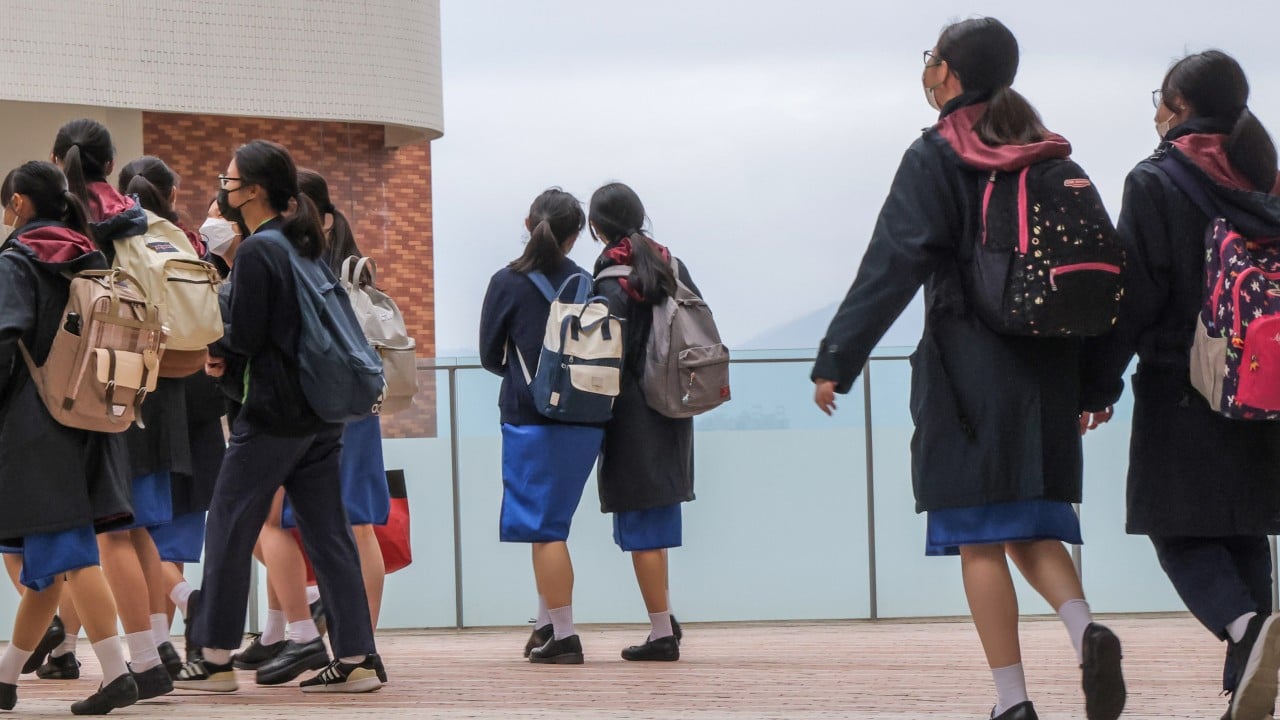
Actually, it wasn't just one desk. It was twenty more of them, squeezed into corridors that previously held only lockers, fitted into corners beneath fire extinguishers, and slotted neatly beside windows overlooking Victoria Harbour.
Behind those desks sit students who crossed oceans to get there.
To understand what happens when a semi-private school expands its non-local student quota, you have to stop looking at the spreadsheets issued by the Education Bureau. You have to look at a pair of sneakers left beside a doorway. You have to listen to the specific, nervous cadence of a teenager trying to explain a chemistry problem in a language they have been studying for less than three years.
Expansion sounds clean on paper. It sounds like ink drying neatly on a policy document. It sounds like progress.
The reality is messier. It smells like damp umbrellas during the monsoon season and anxiety-laced instant coffee from the staff room.
Semi-private institutions in Hong Kong occupy a strange, fascinating middle ground. They are not the multi-million-dollar international academies charging astronomical annual debentures for children of expatriate executives. Nor are they the entirely government-funded public schools bound by strict, district-by-district allocation formulas. They are hybrids. They wear two hats. They serve the local community while keeping one eye on the wider, swirling currents of global education.
When the government adjusted the dial—allowing these schools to admit twenty more non-local students under a targeted expansion scheme—it wasn't just a administrative tweak. It was an invitation.
An invitation to families living in Shenzhen, Guangzhou, and across the wider region who look at Hong Kong’s educational pedigree the way a sailor looks at a lighthouse.
Consider Mei. She is hypothetical, yes, but she is cobbled together from a hundred real interviews and whispered conversations in school canteens. Mei is fourteen. Her parents packed her bags in a bustling mainland tech hub, handing her a laminated transit card and a heavy suitcase. Her father stayed behind, managing a logistics firm; her mother visits every alternate weekend on the high-speed rail.
Mei sits in the second row of that semi-private school. Her Cantonese is getting better, though her tones still stumble when she gets excited. She wants to study biotechnology. She chose Hong Kong because the laboratories here face outward toward the world, bridging two distinct legal and cultural ecosystems.
When she arrived, the classroom felt airtight. Every unspoken social rule was written in an invisible ink she hadn't learned to read. Who sat where during lunch. Which teachers preferred strict silence versus lively debate. The subtle hierarchy of academic scores posted on internal notice boards.
For the local students who had shared sandbox toys and tutorial cram classes since they were four years old, Mei and her peers were a sudden variable in a solved equation.
Friction followed. Not the explosive, cinematic kind. The quiet kind.
It was the hesitation when forming group projects. It was the slight cultural divide during break times when local kids slipped effortlessly between Cantonese and English slang, leaving the newcomers nodding politely without fully understanding the joke.
Change is awkward. Anyone who tells you otherwise is selling a brochure.
But growth lives in the awkwardness.
By the end of the first semester, something subtle shifted. Mei didn't stay isolated in her corner. During a grueling physics practical involving pendulums and friction coefficients, her group hit a wall. Their calculations were off by a factor of ten. The graph looked like a jagged mountain range instead of a smooth curve.
It was a local boy named Marcus—who had spent his entire life three MTR stops away from the campus—who leaned over her notebook. He didn't speak. He just pointed a yellow mechanical pencil at a stray decimal point.
Mei blinked. She corrected the number. The line straightened out.
That was the moment the policy stopped being a government press release. It became human.
The expansion scheme was designed to bolster Hong Kong's status as a regional education hub. That is the official economic argument. Policymakers look at demographic shifts, declining local birth rates, and empty desks in certain tiers of the school system, and they see a mathematical puzzle. Bring in outside talent. Keep the campuses vibrant. Fill the empty chairs. Future-proof the talent pipeline.
All of that is true. All of that is rational.
Yet numbers fail to capture the emotional friction of a city redefining its boundaries. Hong Kong has always been a waystation. A port city built on the energy of people arriving with cardboard suitcases and the fierce determination to build something from nothing.
When we add twenty more students to a school, we are not just filling seats. We are introducing different vocabularies, different childhood memories of rainy afternoons, different ways of laughing at a joke.
We are forcing teenagers to realize that the world does not end at the border of their neighborhood.
There are critics, of course. Parents of local children worry. They look at the competition for university entrance examinations and feel a cold knot in their stomachs. Is every new non-local student taking up a resource that rightfully belongs to a local taxpayer? Will the attention of the teachers be diluted? Will the unique cultural fabric of the school fray at the edges?
These are valid fears. They deserve to be heard, not brushed aside with corporate cheerleading. Resources are finite. Classrooms have physical walls. Time is limited.
Yet the fear of the other is a poor blueprint for the future.
Isolation does not protect a culture; it preserves it in amber, turning it brittle. The schools that thrive in the coming decades will not be the ones that lock their heavy wooden doors and bar the windows. They will be the ones that manage the chaos of integration, turning cultural friction into intellectual spark.
Look back at Mr. Chan’s classroom.
The chalk dust is still there, settling softly on the wooden sill. The bell rings, echoing down the concrete corridors, signaling the start of the geography period.
Twenty-two desks have become forty-two.
The room is louder now. The air is warmer. The accents are a rich, tangled mosaic of local Cantonese cadence and clear, crisp Mandarin tones, all bound together by the shared grammar of academic ambition.
It is noisy. It is complicated. It is occasionally frustrating for everyone involved.
And it is exactly what the future looks like.