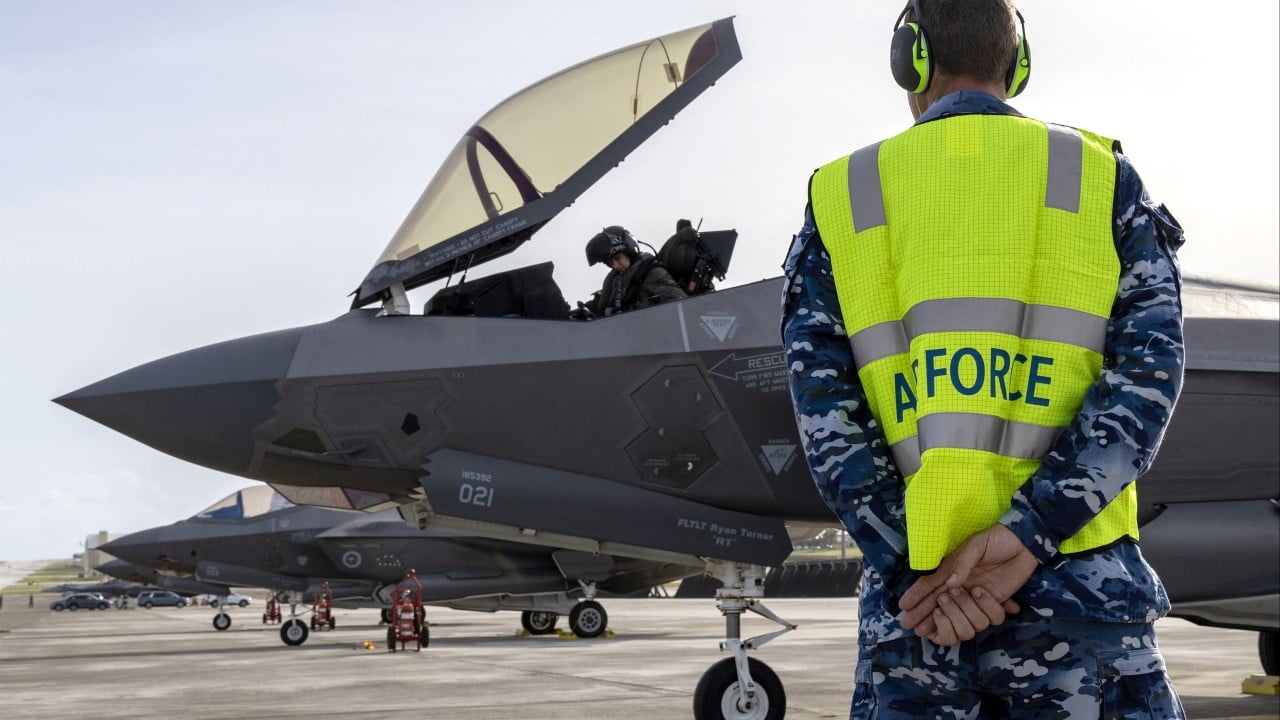
Washington is losing its mind over a routine bureaucratic friction point disguised as an existential security breach. Congress is holding hearings, pundits are clutching their pearls, and defense committees are drafting angry letters because sensitive components of the F-35 joint strike fighter allegedly slipped through commercial logistics channels to Hong Kong. The mainstream narrative treats this as a catastrophic failure of oversight, a rogue loophole exploited by bad actors, and proof that our export controls are leaking like a sieve.
It is none of those things.
This entire panic stems from a profound misunderstanding of how modern manufacturing actually functions. The premise that a multi-nation, twenty-thousand-supplier military-industrial colossus can maintain airtight, sovereign-controlled borders for every single washer, bolt, transceiver, and power management integrated circuit is a fantasy pedanted by people who have never walked a factory floor or audited a tier-four subcontractor in Shenzhen or Singapore.
Stop treating supply chain leakage as a bug. In a globalized economy built on hyper-specialized manufacturing, it is a structural feature.
The Myth of the Sovereign Fortress
For years, politicians have pitched the defense industrial base as a walled garden. The script is familiar. American ingenuity designs the jet, American foundries cast the titanium, and trusted domestic allies assemble the avionics.
I have spent years watching defense primes scramble to meet cost overruns and delivery schedules. The reality on the ground bears zero resemblance to the Washington press release. The F-35 relies on commercial-off-the-shelf components, specialized rare-earth processing that concentrates heavily in Asian markets, and sub-tier suppliers who do not check the geopolitical passport of every company buying standard-issue fasteners or generic microchips.
When a broker in Hong Kong acquires military-adjacent hardware, the knee-jerk congressional reaction assumes a clandestine spy network operating out of a smoky backroom. Let us look at what actually happens. A tier-three supplier in Ohio has excess inventory. They sell it through an authorized broker network to clear warehouse space. That broker flips it to an international distributor. The distributor sells it to a trading firm in Kowloon that services regional electronics repair shops.
Nobody is cracking safes or wearing trench coats. They are using Excel spreadsheets, standard commercial freight forwarders, and standard wire transfers.
The lazy consensus in Washington is that we can simply pass a stiffer penalty bill, hire more compliance officers at the Department of Commerce, and threaten foreign intermediaries with blacklists to seal the borders. That is equivalent to trying to stop water from evaporating with a picket fence. The financial incentives to arbitrage commercial electronic components across international boundaries dwarf the deterrent effect of a regulatory reprimand.
Why Tier Four Makes Your Rules Irrelevant
Let us define the actual architecture of modern aerospace manufacturing to dismantle the baseline confusion.
Prime contractors like Lockheed Martin sit at the top of the pyramid. They manage major assemblies—fuselages, radar arrays, mission computers. But they do not make the resistors. They do not manufacture the ceramic capacitors. Those come from tier three and tier four suppliers who operate in a globalized merchant market.
If a specific voltage regulator is manufactured by a company that sells identical parts to both commercial medical devices and military avionics, that part ceases to be exclusively sovereign the moment it enters commercial distribution.
Imagine a scenario where a defense contractor needs five thousand commercial-grade microchips for a non-flight-critical diagnostic testing rig used during depot maintenance. They source them through an open-market distributor to avoid a forty-week lead time from the primary manufacturer. That distributor sources them from an overstock liquidator. The liquidator bought them from a cancelled telecom project in Southeast Asia.
Along the way, three hundred of those chips find their way into an inventory bin in Hong Kong. Are they "sensitive F-35 parts"? Technically, yes, because they share a part number referenced in a military technical manual. Are they state secrets compromised by foreign intelligence operatives? No. They are commodity electronics packaged in plastic tape on a reel.
The congressional investigation frames this as an intelligence failure because admitting the truth is politically toxic. The truth is that the United States outsourced its foundational industrial capacity decades ago in pursuit of quarterly margins and shareholder value. You cannot hollow out your domestic microelectronics manufacturing base, rely on globalized commercial supply chains for cost efficiency, and then act shocked when commercial goods move fluidly through commercial hubs.
The Cost of Compliance Theater
What happens when lawmakers react to these reports? They double down on compliance theater.
They mandate heavier documentation, require end-user certificates for every single bolt, and demand endless audits from suppliers who are already drowning in bureaucratic overhead. What is the practical result? It does not stop the flow of gray-market parts to resourceful buyers in Asia. Instead, it chokes domestic production.
Small and medium-sized manufacturers drop out of the defense sector entirely. The compliance burden—ITAR registrations, Defense Federal Acquisition Regulation Supplement stipulations, cybersecurity maturity model certifications—costs hundreds of thousands of dollars. When mom-and-pop machine shops look at the legal exposure of accidentally selling a generic bracket that ends up transshipped through Hong Kong, they simply stop bidding on defense contracts.
The result of our crackdown on supply chain leaks is a shrinking industrial base that is even more fragile, less competitive, and more dependent on a consolidated oligopoly of defense primes who pass the exorbitant cost of compliance straight back to the taxpayer at fifty thousand dollars a toilet seat.
We are punishing ourselves for the crime of participating in global commerce.
The Real Fix Nobody Wants to Hear
If Congress genuinely cared about securing the F-35 supply chain, they would stop holding theatrical hearings and start funding hard infrastructure.
That means subsidizing domestic silicon foundries, rebuilding domestic rare-earth processing plants, and accepting that supply chain security requires massive capital expenditure, not angry letters to the Pentagon inspector general. It means recognizing that you cannot run a twenty-first-century military superpower on nineteen-nineties free-market globalization principles while expecting zero leakage into the world's most active commercial entrepôt.
Hong Kong is a water port and a financial clearinghouse. Goods go where demand is highest and friction is lowest. Until domestic manufacturing can supply every single screw, switch, and semiconductor without relying on overseas commercial distribution, parts will leak.
Stop pretending this is an anomaly to be fixed with a new memo. It is the cost of doing business in a world you built.

