Seeing the words "ground stop lifted" on a departure board feels like a green light to head straight to the gate. It isn't. When the Federal Aviation Administration reopened American airspace at 8:15 p.m. Eastern Time on Friday, November 13, 2026, after a nearly five-hour nationwide halt, millions of stranded passengers assumed planes would start pushing back immediately. Instead, the chaos was just entering its second, messier phase.
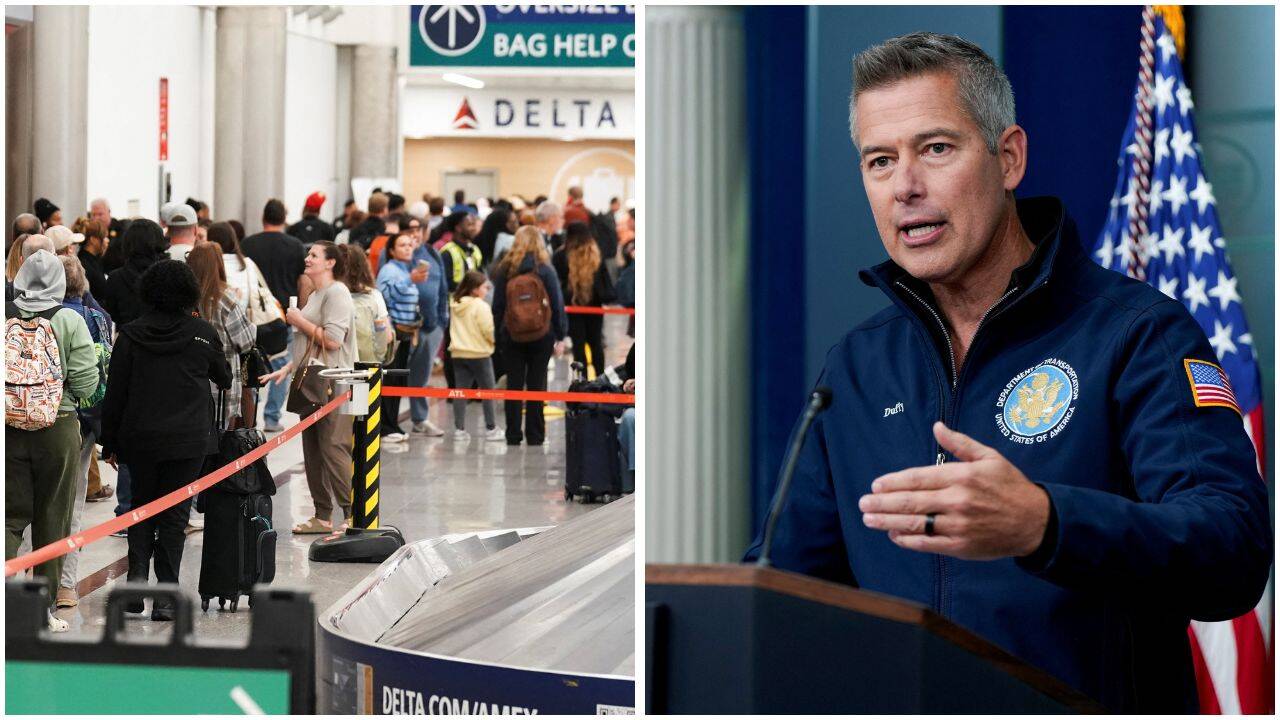
Even Transportation Secretary Sean Duffy admitted as much during a White House briefing right after the airspace reopened. Lifting a nationwide ground stop doesn't magically teleport planes and flight crews back to where they belong. If you're staring at a delayed departure screen right now, or trying to figure out why an hours-long tech glitch cascades into days of cancellations, you need to understand how airline recovery actually works.
Why Reopening the Sky Doesn't Mean Your Plane Takes Off
Airlines operate like a tightly wound clock, not a city bus route. Every aircraft, pilot, and flight attendant is scheduled across multiple legs in a single day, often with zero buffer room. When the FAA froze all U.S. departures at 3:36 p.m. Eastern Time on November 13, that clock shattered.
By the time technicians cleared the halt over four hours later, roughly 11,000 flights carrying more than 1.5 million passengers had already been disrupted. Aviation analytics firm Cirium tracked at least 827 airborne flights that had to divert mid-route. Of those, 670 turned back to their origin airports, while 157 landed in completely different cities.
Think about what that does to an airline's network. A plane supposed to fly you from Chicago to Denver is sitting on a tarmac in Omaha. The captain scheduled to fly it has hit their federally mandated crew rest limit and legally cannot touch the controls until tomorrow morning. Meanwhile, the gate agents in Chicago are dealing with three planes' worth of angry passengers fighting for the same ten open seats.
Secretary Duffy laid out the reality bluntly after the restriction ended. He explained that carriers would try to move whatever flights they had crew capacity for that night, while saving the rest for the next morning. That unwinding process takes days. Anderson Economic Group later estimated that more than 18,000 flights were ultimately canceled across the fallout, costing travelers roughly $1.9 billion in lost time and out-of-pocket expenses.
What Actually Caused the November 2026 FAA Outage
If you want to know whether this will happen again next week, look at the finger-pointing in Washington. The official story from the Trump administration started with a simple explanation and quickly got complicated.
Initially, Duffy posted that a communications issue was hitting all Air Route Traffic Control Centers across the country. At his Friday evening briefing, he pointed the finger at America's aging air traffic control hardware. According to Duffy, outdated switches and routers became overloaded with data, feeding inconsistent radar and communications information to controllers. Rather than risk mid-air blind spots, the FAA shut the whole system down.
He didn't mince words about the state of the equipment. The FAA still relies on computers from decades ago, sometimes buying replacement parts off public auction websites. Just a week before the crash, the agency announced plans to phase out physical floppy disks used for weather and flight data across more than 400 facilities by the end of 2028. Duffy warned Congress that without immediate funding for a massive overhaul, more shutdowns are guaranteed.
The Pushback From Inside the Control Rooms
Here is where things get messy. Almost immediately after Duffy's briefing, air traffic controllers and internal FAA staff began disputing the administration's narrative.
Reports surfaced quoting controllers who flatly rejected the idea that random legacy router overload caused the crash. Later statements from Duffy and FAA Administrator Bryan Bedford narrowed the culprit down to a telecommunications failure triggered right after technicians installed a single new router. Critics on Capitol Hill, including Representative James Walkinshaw of Virginia, accused the administration of glossing over how its own rapid modernization rollout contributed to the failure. Walkinshaw pointed to a September 2026 Government Accountability Office report that explicitly warned the FAA's sprawling, poorly managed tech upgrades could trigger major operational failures.
By the following Wednesday, FAA Administrator Bryan Bedford publicly asked critics to "lay off" Duffy and told lawmakers to blame him instead, framing the outage as a wake-up call to rebuild the system.
Was It a Cyberattack?
Whenever the entire U.S. aviation grid goes dark for the first time since September 11, 2001—aside from a brief NOTAM system glitch in early 2023—people immediately suspect foreign hackers.
Homeland Security Secretary Markwayne Mullin addressed those fears directly during the crisis. He confirmed that federal cyber teams found zero footprints, chatter, or digital evidence of a malicious intrusion or rogue AI interference. While Mullin refused to rule out a cyberattack with 100% certainty while forensics continued, all evidence pointed to a mechanical and telecommunications failure inside the network.
Why Airline Recovery Hits a Wall After a Ground Stop
Most flyers assume airlines hold spare jets and backup pilots at major hubs just in case things go sideways. They don't.
Over the last decade, U.S. carriers stripped away almost all operational slack to keep ticket prices competitive and planes flying at near-total capacity. Paul Hudson, president of the passenger advocacy group FlyersRights, noted after the November halt that modern air travel runs without reserve aircraft or standby crews. When a four-hour freeze hits on a Friday afternoon—the busiest travel window of the week—there is nowhere to absorb the shock.
International carriers feel the squeeze too. Because U.S. gates were locked down for hours, incoming long-haul flights from Europe and Asia had nowhere to park, forcing airlines like Air India to issue rolling travel advisories for knock-on delays days later. Even worse, just days after the FAA crisis, United Airlines suffered its own internal system outage, compounding the misery for travelers heading into the busy November holiday stretch.
What You Should Do Right Now If Your Flight Is Caught in the Mess
Waiting in a two-hour customer service line at the terminal is the worst move you can make. Everyone in that line is fighting over the exact same shrinking pool of open seats.
Check your aircraft's actual location, not just your flight status. Airlines routinely post rolling 30-minute delays while waiting for an incoming plane that hasn't even taken off yet. Pull up a live flight tracker like FlightAware or Flightradar24 and search your flight number. Click the "Where is my plane now?" link. If your inbound jet is still sitting on the ground three states away, you aren't leaving on time—no matter what the gate monitor claims.
Work three rebooking channels at the same time. While standing near the gate, open the airline's mobile app to see if automated rebooking options have populated. Simultaneously, call the airline's customer service line. If the U.S. hold time is over an hour, dial the airline's international support number in Canada, the UK, or Australia using a Wi-Fi calling app. Those agents access the exact same reservation system with a fraction of the wait time.
Know what the law actually owes you. Under federal Department of Transportation rules, an airline must give you a full cash refund—not a travel voucher—if your flight is canceled or significantly delayed and you choose not to travel. However, because the FAA ground stop was an air traffic control failure rather than an airline mechanical issue, carriers classify it as "outside their control." That means airlines are not legally required to pay for your hotel room, Uber rides, or missed cruise connections.
Use your credit card protections before paying out of pocket. If you booked your ticket with a travel rewards card like a Chase Sapphire or Amex Platinum, check your trip delay insurance terms immediately. Many cards reimburse up to $500 per ticket for hotels, meals, and toiletries once a delay crosses six or twelve hours—even when the cause is air traffic control. Keep every single itemized receipt, and screenshot the airline's official delay notification showing the exact reason for the disruption.
Grab a backup seat on a different carrier. If you have a wedding, cruise, or critical meeting you cannot miss, book a fully refundable backup ticket on a rival airline right now before inventory vanishes. You can always cancel the backup for a full refund if your original flight actually pushes back from the gate.
For more context on the federal response, you can watch the Trump administration officials explain the FAA ground stop cause. This full press briefing features Transportation Secretary Sean Duffy and Homeland Security Secretary Markwayne Mullin detailing the router overload and why clearing the flight backlog takes days.