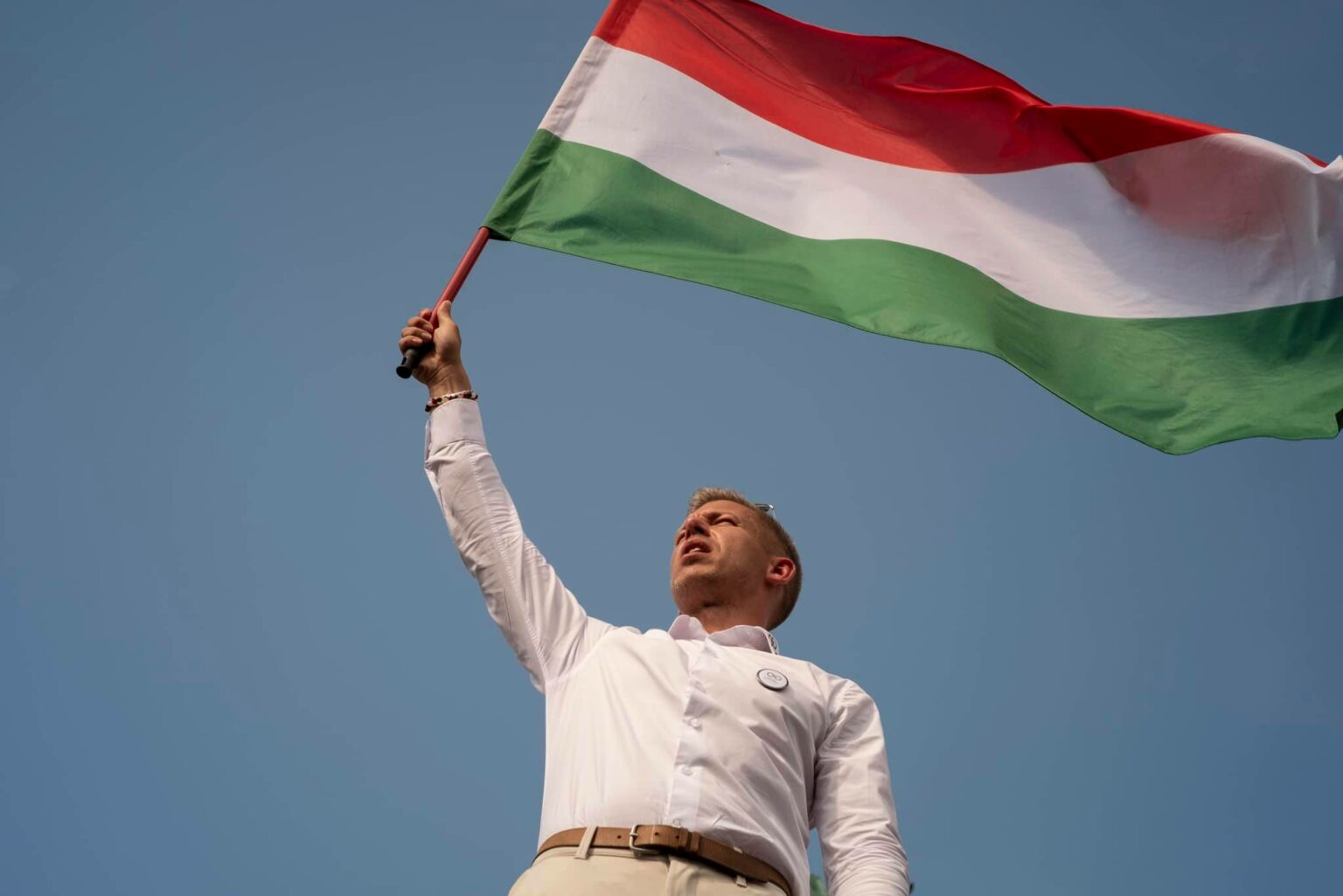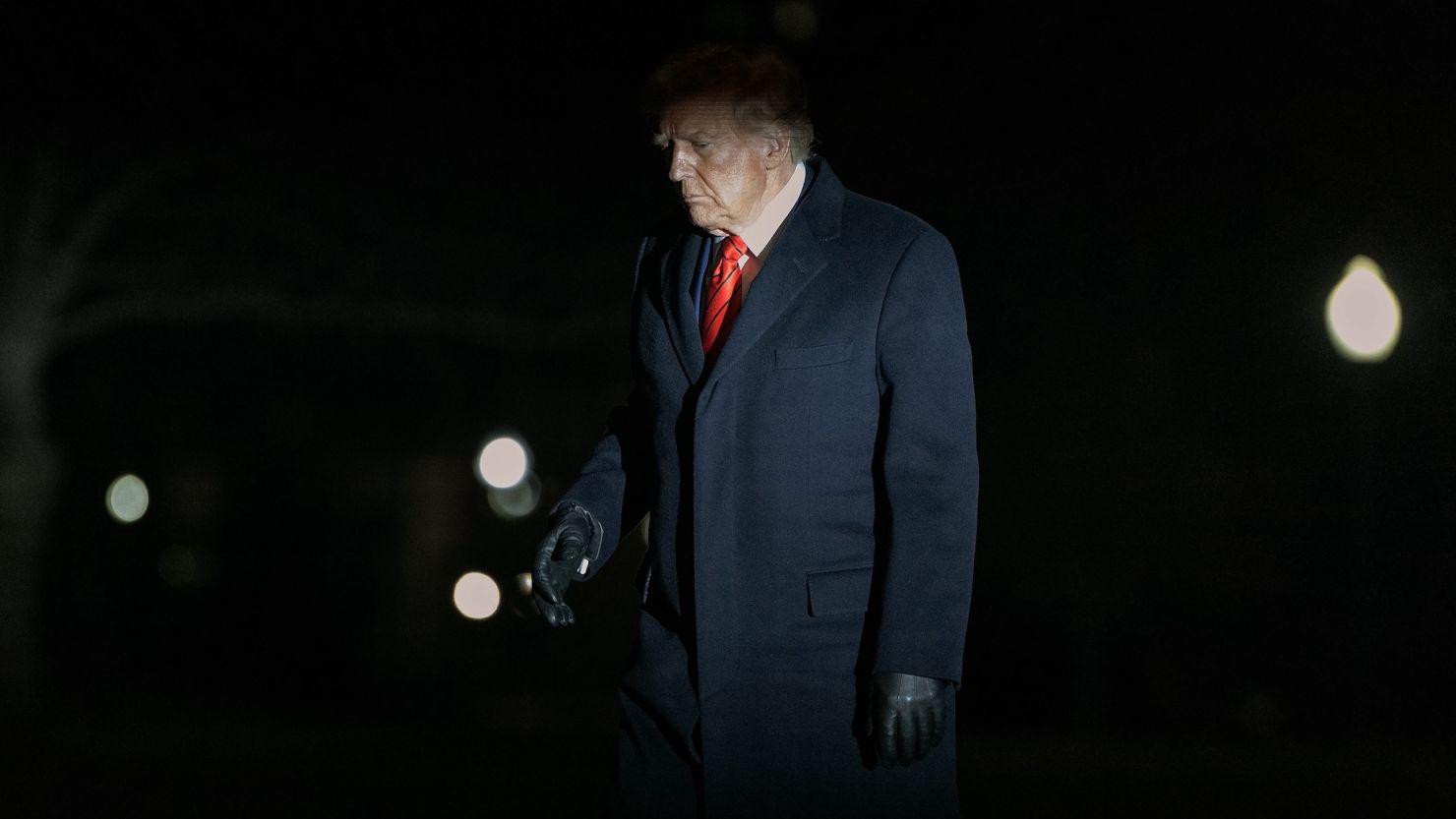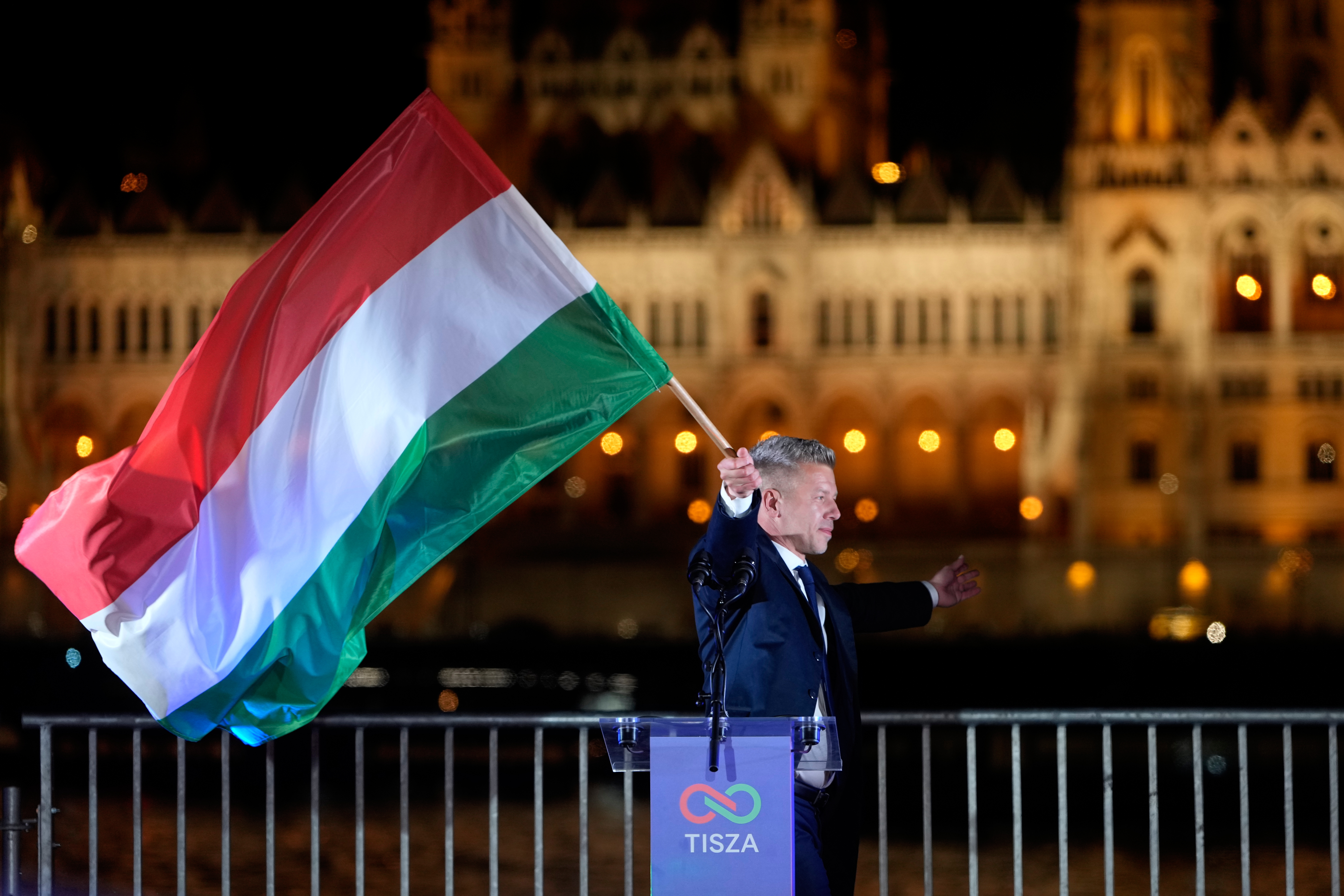
Viktor Orban is finally out. After sixteen years of treating the Hungarian state as a personal fiefdom, the man who pioneered "illiberal democracy" conceded defeat on Sunday night. The center-right Tisza party, led by former insider-turned-nemesis Peter Magyar, didn’t just win; it obliterated the Fidesz machine, securing a projected two-thirds supermajority. This isn't a mere shift in the wind. It is a tectonic collapse of the most successful populist experiment in the West, leaving the European far-right without its North Star and the Kremlin without its favorite spoiler in Brussels.
The speed of the collapse caught the world off guard, but the rot had been visible for years to anyone looking past the state-controlled billboards. Orban’s downfall was not triggered by a single policy failure, but by the very thing he claimed to protect: the integrity of the Hungarian family. When a pedophilia-linked pardon scandal forced the resignation of the President and the Justice Minister in 2024, the facade of "Christian national values" cracked. Into that crack stepped Peter Magyar.
The Insider Who Knew Too Much
Peter Magyar is not a traditional liberal savior. He is a product of the Fidesz system, the ex-husband of the former Justice Minister, and a man who spent years in the high-altitude circles of the Budapest elite. He didn't campaign on abstract European values; he campaigned on the ledger books. He knew where the money was buried because he helped dig the holes.
Magyar’s strategy was to out-populist the populist. He didn't try to appeal to the refined sensibilities of Budapest intellectuals alone. He went to the rural heartlands, Orban’s supposed fortress, and spoke a language of blunt national pride mixed with a searing indictment of systemic theft. He transformed the Tisza party from a footnote into a juggernaut in less than two years by convincing voters that Orban wasn't a patriot—he was just a landlord who stopped fixing the roof.
The Supermajority Trap
The scale of this victory—projected at 138 seats out of 199—is a double-edged sword. A two-thirds majority gives Magyar the power to rewrite the constitution, just as Orban did in 2011. This "constitutional coup" capability is exactly what enabled the backsliding of the last decade. While the European Union and the Renew Europe group are celebrating a "pro-European future," the structural reality in Budapest remains dangerous.
Hungary is currently a "hybrid regime," a term used by the European Parliament to describe an electoral autocracy. The institutions of the state—the courts, the media authority, the central bank—are packed with Orban loyalists who hold long-term mandates. Magyar now faces a choice: does he dismantle the tools of autocracy, or does he simply take the wheel of the machine Orban built?
[Image of the Hungarian Parliament building in Budapest]
A Geopolitical Earthquake
The shockwaves from this election will reach Washington, Moscow, and Kyiv before the week is out. For years, Hungary acted as the sand in the gears of the European Union, blocking aid to Ukraine and vetoing sanctions against Russia. With Orban’s concession, Vladimir Putin loses his most effective "Trojan horse" within the bloc.
For the American right, the loss is equally personal. Figures like J.D. Vance, who visited Budapest just days ago to bolster Orban’s campaign, had held up Hungary as a blueprint for a post-liberal America. They saw a state that successfully used government power to enforce cultural conservatism. That model has now been rejected by the very people it was supposed to serve. The "Hungarian Model" is no longer a success story; it is a cautionary tale about the shelf life of grievance-based politics.
The Cost of the Clean-Up
Magyar’s incoming government inherits a country with a hollowed-out middle class and a fiscal situation that is, at best, precarious. The high voter turnout—reaching nearly 80%—indicates a mandate for radical change, but radical change costs money. Orban’s strategy involved massive state spending to buy loyalty, often fueled by EU funds that were eventually frozen due to rule-of-law violations.
Unlocking those billions from Brussels will require more than just a change in tone. It will require the systemic dismantling of the corruption networks that Magyar once occupied. There are thousands of government contracts, media licenses, and judicial appointments that underpin the old regime. If Magyar moves too slowly, he risks being seen as "Fidesz Lite." If he moves too fast, he risks a total bureaucratic shutdown by the entrenched "Deep State" Orban left behind.
The jubilant crowds in Budapest are celebrating the end of an era, but the real work hasn't even begun. Orban’s concession speech was uncharacteristically brief, but his promise that he would "never give up" should be taken literally. He is moving to the opposition with a massive war chest and a media empire that still covers the majority of the country. He is waiting for the new government to stumble under the weight of the impossible expectations it has created.
The throne in Budapest is no longer occupied, but the crown is still heavy with the rust of sixteen years of one-man rule.