The media obsession with counting bodies during a natural disaster is actively making the world more dangerous.
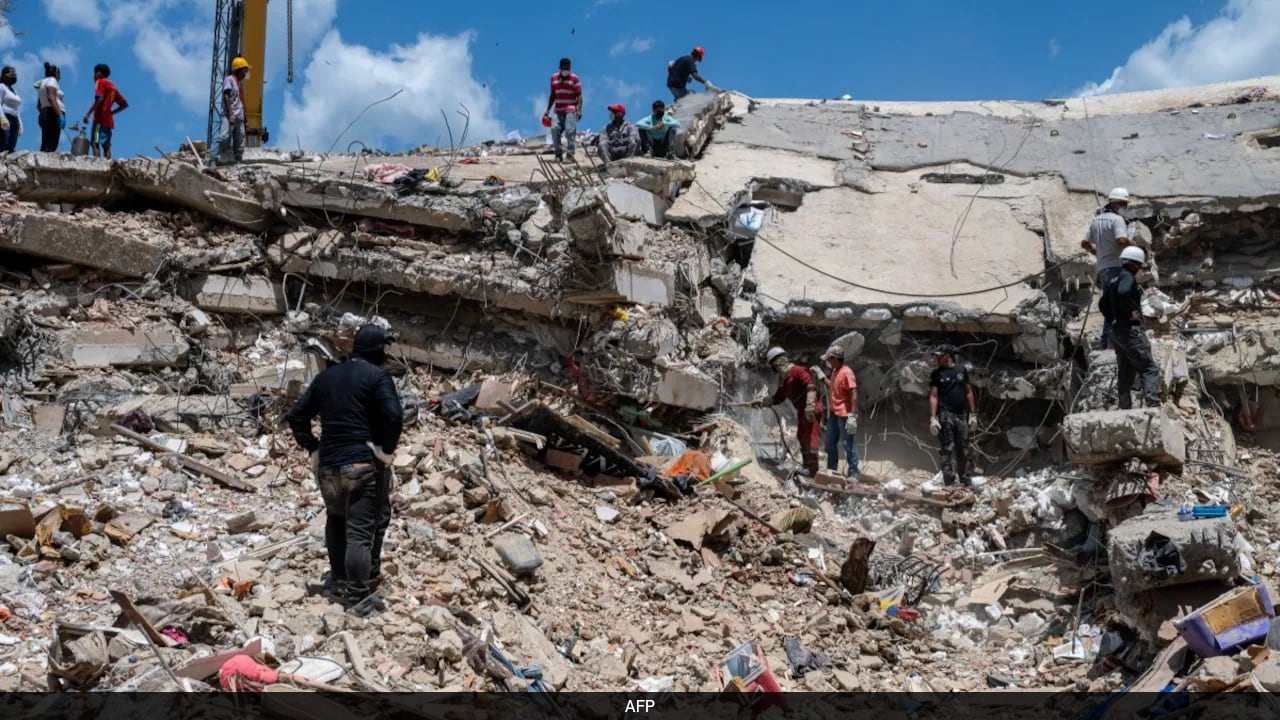
Look at the coverage surrounding the recent seismic activity in Venezuela. Headlines scream about fading hope as the death count nears 2,300. The narrative is always identical: a countdown clock on human survival, a hyper-fixation on the immediate body count, and a collective shrug toward the systemic infrastructure failures that actually caused the deaths.
This is lazy journalism. It treats natural disasters like sports scores—tracking numbers without understanding the mechanics of the game.
The harsh reality? Earthquakes don’t kill people. Bad engineering does. By focusing entirely on the tragic body count, we ignore the corrupt building codes, failed municipal planning, and decades of infrastructure neglect that turned a standard geological event into a mass casualty incident.
The Myth of the Natural Disaster
Calling a catastrophe like this a "natural" disaster is a cop-out. It shifts the blame from human failure to tectonic plates.
Seismologists have pointed out for decades that the energy released by a magnitude 7.0 earthquake is a fixed physical reality. How a city responds to that energy is entirely within human control.
Consider a direct comparison. In 2010, a massive 7.0 magnitude earthquake struck Haiti, killing an estimated 200,000 to 300,000 people. Just weeks later, an 8.8 magnitude earthquake—releasing roughly 500 times more energy—struck Chile. The death toll in Chile? Just over 500.
Chile did not survive because of luck. They survived because they updated and strictly enforced their building codes after a devastating quake in 1960. They engineered their way out of a body count.
When coverage focuses entirely on the search-and-rescue timeline, it lets negligent governments off the hook. The headline shouldn't be that 2,300 people died. The headline should be that thousands of buildings failed because someone pocketed the concrete budget.
The Search and Rescue Illusion
Every major disaster follows the same media script. Cameras follow international rescue teams with high-tech acoustic sensors and trained dogs digging through concrete. It creates a comforting narrative: humanity uniting to save lives against the clock.
It is mostly theater.
Data from global search and rescue operations shows that the vast majority of survivors are pulled from the rubble within the first 24 to 48 hours. More importantly, they are almost always rescued by neighbors and local first responders using bare hands and shovels—not by international teams arriving on cargo planes three days later.
By the time the international community sets up its base camps and schedules press conferences, the window for survival has closed.
Investing millions into reactive, high-tech international rescue teams is a terrible allocation of resources. If those same funds were redirected toward reinforcing local masonry, anchoring foundations, and training neighborhood response teams, the initial collapse would never happen.
We are funding the funeral instead of fixing the foundation.
The Cost of the Contrarian Approach
Shifting the focus from reactive rescue to proactive engineering is not easy, and it is certainly not cheap.
The downside to prioritizing structural resilience is that it requires massive up-front capital with zero immediate political payoff. A politician cannot cut a ribbon on a building that might survive an earthquake twenty years from now. There are no photo opportunities in a properly mixed batch of reinforced concrete.
Furthermore, upgrading informal settlements—where the highest casualties always occur—requires complex land-titling reform and the displacement of vulnerable communities during retrofitting. It is a bureaucratic nightmare.
But the alternative is what we see in Venezuela today: a cycle of predictable destruction, followed by international mourning, followed by rebuilding the exact same poorly engineered structures in the exact same fault zones.
Fix the Code, Stop the Count
Stop tracking the countdown clock on survival. Stop treating 2,300 deaths as an unavoidable act of God.
Demand accountability for the structural integrity of the concrete. Demand to know why the local building inspectors signed off on unreinforced brick walls in a known seismic zone.
Until the coverage shifts from tracking casualties to tracking compliance, the body counts will only grow. Build for the tremor, or bury the dead.