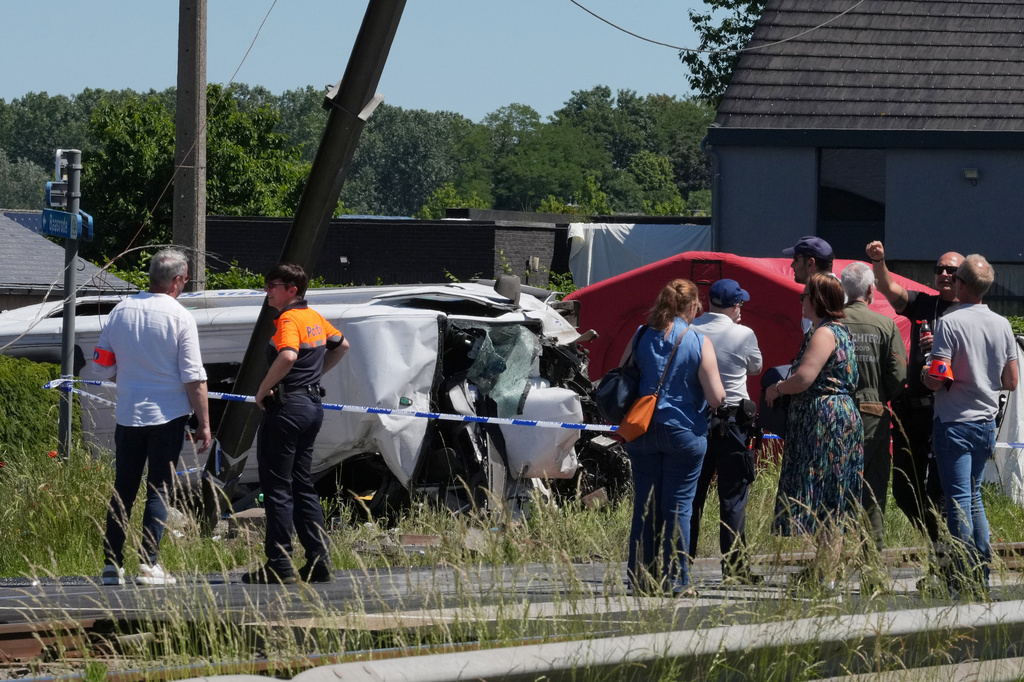
A devastating collision between a train and a school minibus serves as a grim reminder of a systemic crisis in public transit infrastructure. When a locomotive plows into a vehicle carrying children, public outrage understandably centers on immediate human error—the driver who tried to beat the gate or the signal that failed to flash. However, an investigation into rail safety reveals that these tragedies are rarely isolated incidents of bad luck. They are the predictable outcomes of antiquated crossing designs, fragmented regulatory oversight, and a persistent failure to separate public roads from active rail lines.
The immediate aftermath of a rail crossing disaster follows a familiar, tragic script. First responders flood the scene, officials offer condolences, and investigators begin the meticulous process of downloading data recorders. Yet, while the public focuses on the immediate wreckage, the deeper systemic vulnerabilities remain entirely unaddressed.
The Myth of the Automated Safeguard
Active warning systems like flashing lights, bells, and dropping gates are designed to create an absolute barrier between high-speed trains and civilian traffic. The reality is far less reliable. Across thousands of rural and suburban rail corridors, the technology governing these crossings relies on mechanical relays and track circuits that date back decades.
When a school bus or minibus stalls on a track, a terrifying design flaw becomes apparent. Trains cannot stop quickly. A standard passenger or freight train traveling at 60 miles per hour requires up to a mile of track to come to a complete halt after the emergency brakes are applied. The automated gates at a standard crossing typically activate only 20 to 30 seconds before a train arrives. This leaves zero margin for error if a vehicle becomes trapped due to traffic congestion, mechanical failure, or driver panic.
Furthermore, many crossings in rural areas lack active barriers entirely. Passive crossings, marked only by static signs, require drivers to look and listen for oncoming trains. For a driver operating a noisy minibus filled with distracted children, detecting a silent, fast-moving train from a blind approach is a mathematical gamble.
The Jurisdictional Black Hole
Fixing a dangerous intersection should be straightforward, but the governance of rail crossings is a bureaucratic nightmare. The physical tracks belong to private railroad corporations or national transit authorities. The road leading up to and crossing those tracks belongs to local municipalities, county governments, or state highway departments.
This division of ownership creates a severe accountability vacuum. When a local community identifies a dangerous crossing, a protracted game of finger-pointing begins.
- Local governments argue they lack the budget to fund expensive grade-separation projects like overpasses or underpasses.
- Railroad companies claim they are not responsible for the growth of vehicular traffic on local roads.
- Federal oversight bodies provide guidelines but rarely enforce immediate infrastructure overhauls unless forced by high-profile disasters.
While these entities debate financial liability, school buses continue to navigate hazardous crossings daily. The cost to install a basic active warning system can exceed hundreds of thousands of dollars, while constructing a complete overpass can run into the millions. To the bean-counters managing these budgets, the statistical probability of a crash at any single crossing appears low enough to justify delaying upgrades.
Human Factors and the Inadequacy of Driver Training
Blaming the driver of a school vehicle is an easy out for infrastructure managers. While driver error or distraction frequently triggers a crash, the environment often sets those drivers up to fail.
Operating a multi-passenger minibus requires intense concentration. When that task is combined with poor sightlines at a rail crossing, the risk increases exponentially. In many instances, overgrown vegetation, adjacent buildings, or curved track geometry prevent a driver from seeing an oncoming train until it is already too late.
The Danger of Visual Habituation
Drivers who navigate the same route every day develop a dangerous psychological condition known as habituation. If a driver crosses a rail line twice a day for years without ever seeing a train, their brain begins to treat that crossing as effectively dead. The driver stops looking with the same vigilance. This cognitive lapse is exactly when a non-scheduled freight train or a delayed passenger service appears.
Training programs for commercial and school transport drivers emphasize stopping before tracks, opening doors to listen, and checking both directions. But human behavior is imperfect. Expecting flawless execution from underpaid, overworked transport workers operating in poorly designed environments is a flawed strategy for public safety.
Grade Separation is the Only Absolute Solution
The only way to completely eliminate the risk of train-vehicle collisions is grade separation. This means physically isolating the road from the rail line using bridges or tunnels.
[Standard Level Crossing] ---- Road and Rail Intersect (High Risk)
[Grade-Separated Crossing] -- Road Passes Under/Over Rail (Zero Risk)
In areas where grade separation is financially impossible in the short term, technology must step in to bridge the gap. Modern solutions exist that could drastically reduce the frequency of these accidents.
- Four-Quadrant Gates: Standard crossing gates only block the entering lanes of traffic, allowing desperate or confused drivers to weave around the barriers. Four-quadrant gates block the entire road, preventing any attempt to bypass the system.
- Obstacle Detection Systems: Radar and laser sensors can scan a crossing when the gates activate. If a stalled vehicle is detected, the system can instantly transmit an automated warning to the oncoming train's cabin, giving the engineer precious extra seconds to apply the brakes.
- Connected Vehicle Technology: GPS-linked transponders inside school buses and emergency vehicles can alert drivers to oncoming trains miles before they reach the crossing, removing reliance on visual cues alone.
Implementing these upgrades requires shifting from a reactive safety model to a proactive one. Waiting for a tragedy to occur before auditing a crossing is a policy written in blood. National transport budgets must prioritize the immediate elimination of passive crossings on designated school bus routes. Local school districts must actively map routes to minimize rail interactions, even if it adds time to the morning commute. The protection of vulnerable passengers demands an aggressive overhaul of where our roads meet the rails.