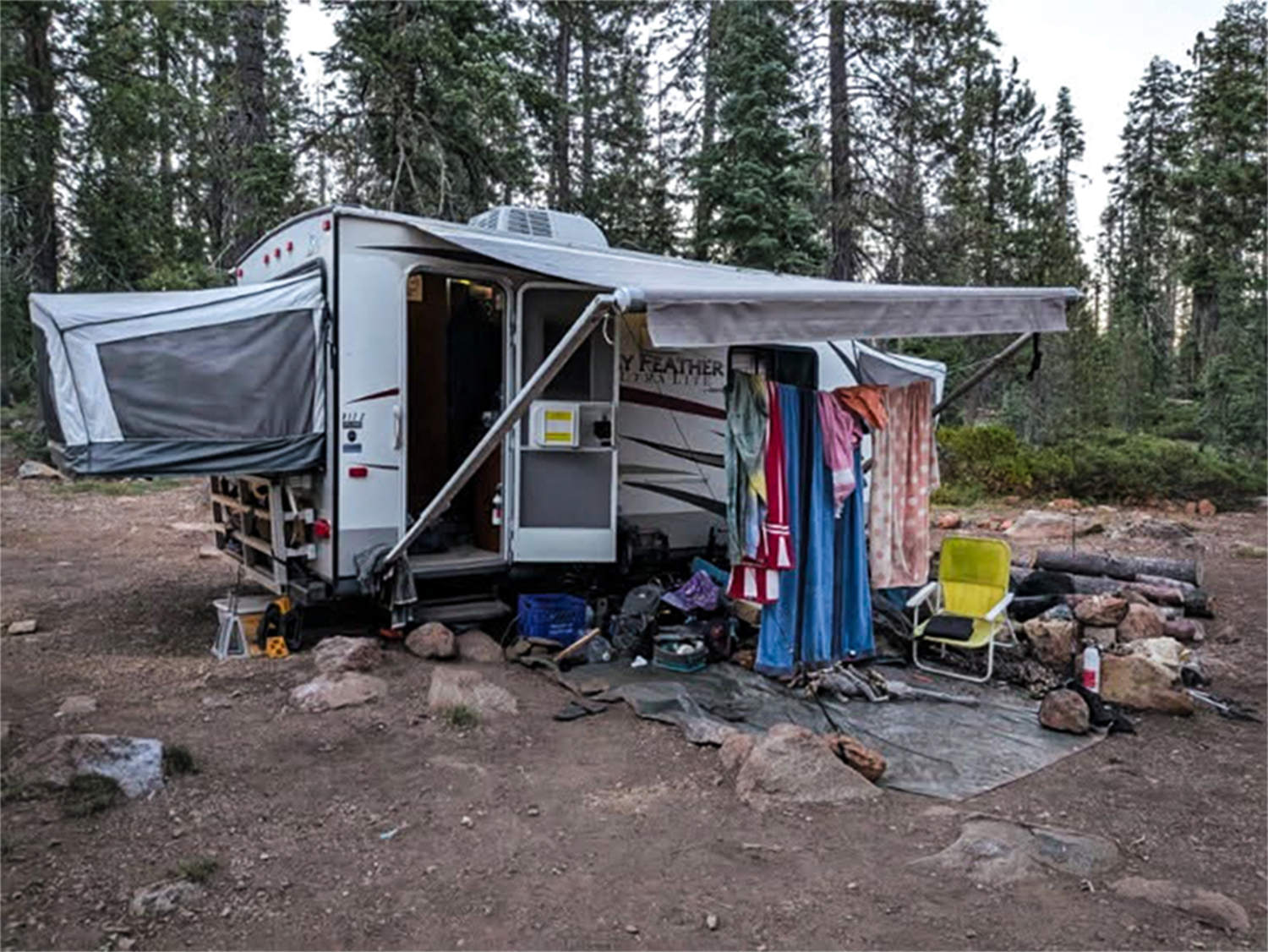
Federal employees in isolated sectors of the American backcountry face escalating hostility as violent confrontations redefine public land management. A father facing federal charges for abducting two United States Forest Service workers alongside his son highlights a grim reality across rural districts. Public lands are increasingly viewed through a lens of suspicion, hostility, and outright danger by individuals radicalized against government oversight.
When a routine field assignment turns into a hostage scenario, the systemic vulnerabilities of the Forest Service and the Bureau of Land Management are laid bare. These agencies operate under a dual mandate of resource protection and public access, yet their staff frequently patrol alone across vast, cell-dead landscapes. The recent charges filed against the father-son duo pull back the curtain on a quiet emergency. Field personnel are confronting a rising tide of anti-authority aggression without the immediate backup available to traditional municipal law enforcement.
The Anatomy of a Backcountry Kidnapping
Remote operations carry inherent risks. Weather, rugged terrain, and wildlife hazards have always defined the job description for federal field workers. Human malice, however, represents a volatile variable that standard safety protocols struggle to accommodate.
The incident involving the Forest Service employees unfolded far from urban infrastructure. When armed citizens choose to detain federal personnel, they exploit the extreme isolation that characterizes millions of acres of protected federal property. Communication blackout zones mean that an abduction can occur hours before anyone realizes a team has missed a check-in call.
Law enforcement affidavits reveal a terrifying sequence of events where authority was usurped at gunpoint. The perpetrators did not merely commit a random crime of opportunity. They targeted the uniform. They targeted the federal presence itself. This distinction matters because it separates standard criminal behavior from ideological hostility directed at state and federal institutions.
For decades, tensions have simmered between rural residents and federal agencies over land use, grazing rights, timber harvesting, and conservation mandates. Over the last ten years, those tensions hardened. The rhetoric of government overreach shifted from town hall complaints to armed standoffs and targeted intimidation. When two Forest Service workers found themselves staring down a barrel, they were paying the price for a broader, nationwide friction that treats public servants as occupying forces.
The Bureaucracy of Vulnerability
The United States Forest Service employs thousands of people, ranging from firefighters and timber specialists to recreation technicians and law enforcement officers. Yet, the vast majority of personnel in the field carry no firearms and possess limited defensive training. Their primary tools are clipboards, maps, and two-way radios that often fail when a ridge blocks the signal.
Budget constraints and administrative priorities force agencies to prioritize land management over tactical security. Field workers are routinely dispatched into disputed or high-tension areas alone. They rely on verbal de-escalation techniques designed for cooperative citizens, which prove entirely useless when confronted by an individual motivated by paranoia or sovereign citizen ideologies.
Agency leadership faces an impossible balancing act. Turning every timber sale inspection or trail maintenance check into a tactical operation would destroy the public-facing, approachable nature of public land stewardship. Campers, hikers, and hunters do not want to encounter militarized checkpoints when they enter a national forest. Yet, maintaining the illusion of a friendly, unarmed ranger corps in an era of rising anti-government extremism is a lethal gamble.
The investigation into the recent kidnapping underscores the frantic scramble that occurs when a federal employee goes missing under hostile circumstances. Interagency coordination between county sheriffs, state troopers, and federal investigators must bridge vast geographic divides. Response times are measured in hours, not minutes. During those crucial windows, the kidnapped workers are entirely at the mercy of their captors.
The Escalation of Anti-Government Hostility in Rural Spaces
To understand how a father and son decide to take federal workers hostage, one must examine the information ecosystem dominating isolated American communities. Grievances against federal land ownership are amplified daily through online echo chambers and localized political rhetoric that paints federal employees as tyrannical agents of a collapsing system.
Public lands in the American West and various pockets of the East are flashpoints for ideological battles. Sagebrush rebellion philosophies morphed into more aggressive postures. Conspiracy theories regarding federal land grabs, carbon offset programs, and resource restrictions create a psychological environment where violence is rationalized as self-defense.
When a citizen convinces themselves that a Forest Service worker measuring timber volume is actually an advance scout for a totalitarian regime, the threshold for committing a felony vanishes. The perpetrators view their actions through a distorted lens of resistance. They see themselves as freedom fighters rather than kidnappers facing decades in a federal penitentiary.
This ideological entrenchment leaves law enforcement with few diplomatic off-ramps. Traditional community policing relies on shared values and mutual respect for local institutions. When those foundational agreements erode, the social contract fractures. Field personnel become frontline casualties in an ideological war they never signed up to fight.
Reforming Field Safety Before the Next Crisis
Defensive postures within land management agencies must evolve rapidly to match the hostility of the modern landscape. Relying on luck and the inherent goodwill of the public is no longer a viable strategy for protecting civil servants.
Agencies are currently evaluating several overdue adjustments to operational security. Satellite communication devices are finally replacing analog radios in high-risk districts, ensuring that workers can transmit distress signals regardless of cellular coverage. However, technology alone cannot stop a determined assailant who ambushes a parked vehicle.
Training curriculums must also shift. Scenario-based training focusing on evasion, disengagement, and recognition of behavioral red flags should be mandatory for all field personnel. Workers need the psychological permission to walk away from a hostile encounter immediately, prioritizing personal survival over completion of a administrative task.
Furthermore, prosecution must be swift and uncompromising. When individuals cross the line from verbal harassment to physical abduction of federal workers, the judicial response must send an unmistakable message. Sanctuary for anti-government vigilantism within public lands undermines the rule of law and invites further violence.
The father facing new charges for the Forest Service kidnapping will cycle through the federal court system, where prosecutors will detail the terror inflicted upon two public servants doing their jobs. Behind that specific court docket lies a systemic crisis that demands immediate attention from lawmakers, agency directors, and the public. National forests belong to all citizens, but the people paid to care for them deserve to return home at the end of their shifts without fearing for their lives.


