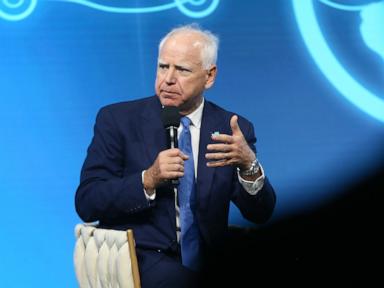
Chief Judge Patrick J. Schiltz of the U.S. District Court for Minnesota issued a scathing 29-page order unsealed on June 22, 2026, dismantling a high-stakes federal effort to criminalize local political dissent. By quashing six grand jury subpoenas aimed at Governor Tim Walz, Attorney General Keith Ellison, Minneapolis Mayor Jacob Frey, and other top Twin Cities officials, the court exposed a profound overreach by the Department of Justice. The ruling establishes that the federal government cannot use the sweeping investigative powers of a grand jury to bully, harass, or punish state leaders who object to federal policy.
The legal battle stems from a bitter conflict over federal immigration enforcement. In late 2025, the Trump administration launched Operation Metro Surge, deploying heavily armed federal agents into Minnesota communities. The operation quickly turned volatile. The fatal street shootings of two U.S. citizens, Renee Good and Alex Pretti, by federal immigration officers sparked mass protests, community outrage, and immediate legal challenges from state and local leaders. In response to the state’s resistance, the Justice Department pivoted, deploying grand jury subpoenas in January 2026 under the guise of an obstruction investigation.
Judge Schiltz saw right through the strategy. The order explicitly describes the federal government’s actions as an unlawful and unethical manipulation of judicial machinery designed to force compliance with a federal immigration agenda that Washington could not legally mandate.
The Coercion Machine and the Abuse of Grand Juries
Grand juries possess immense power. They can compel testimony, demand decades of internal communications, and operate largely behind a veil of secrecy. This power exists to uncover evidence of actual crimes, not to serve as an administrative hammer against local politicians who speak out against federal operations.
The Justice Department alleged that Minnesota leaders were conspiring to obstruct federal immigration enforcement. Yet, when pressed by the court to produce a single, credible piece of evidence or a plausible investigatory justification for the subpoenas, federal prosecutors came up entirely empty-handed. The court noted that the government struggled without success to explain what crime it was actually investigating.
Instead, the evidence showed that the subpoenas were served exactly one day after federal attorneys urged a judge to throw out Minnesota’s lawsuit against Operation Metro Surge. The timing was not a coincidence. It was a direct retaliatory strike meant to intimidate state officials into withdrawing their legal challenges and dropping their public criticism of the federal surge.
The federal government cannot directly command state governors or local police departments to act as arms of federal immigration enforcement. This principle, rooted deeply in the Tenth Amendment, prevents Washington from commandeering local resources. When the state refused to voluntarily bend to federal pressure, the Justice Department attempted to use the threat of criminal grand jury indictments to achieve the exact same result.
Blood on the Streets of the Twin Cities
To understand how the legal fight escalated to this point, one must look at the chaotic reality of Operation Metro Surge on the ground. This was not a standard, quiet federal enforcement action. It was an aggressive, highly visible deployment that treated the streets of Minneapolis and St. Paul like an occupied zone.
The turning point occurred when federal agents killed Renee Good and Alex Pretti. Both were U.S. citizens. Neither was the target of an immigration warrant. The shootings blew up the fragile relationship between local communities and federal law enforcement, turning the Twin Cities into a powder keg of civil unrest.
Governor Tim Walz placed the Minnesota National Guard on alert, not to block federal agents, but to maintain public order as thousands of citizens took to the streets in protest. Mayor Jacob Frey spoke out aggressively, demanding that immigration enforcement agents leave the city. Attorney General Keith Ellison launched state-level inquiries into the operational conduct and training of the federal forces involved.
The federal response to this local pushback was swift and defensive. Rather than addressing the systemic failures and operational errors that led to the deaths of American citizens, the administration chose to go on the offensive. They framed public statements of dissent and standard municipal policy decisions as a criminal conspiracy to obstruct justice.
A Dangerous Precedent Checked by the Judiciary
Had Judge Schiltz upheld these subpoenas, the balance of power between states and the federal government would have shifted dramatically. A ruling in favor of the Justice Department would have given any presidential administration the green light to weaponize the criminal justice system against political opponents at the state house level.
Every internal email, every text message, and every private policy discussion regarding how a state responds to federal actions would be subject to federal seizure under the threat of contempt of court. Local officials would be forced to think twice before criticizing federal policy, knowing that an intrusive grand jury investigation could be launched against them the next day.
The unsealed order makes it clear that the court found overwhelming evidence of an unlawful motive behind the federal probe. Judge Schiltz wrote that using grand jury proceedings to pressure political opponents into taking official action is a blatant abuse of the process. The ruling serves as an essential constitutional firewall, reinforcing the boundaries that protect local governance from federal overreach.
The Justice Department’s failure to identify a single valid investigatory purpose reveals the true nature of the probe. It was never about uncovering a criminal conspiracy. It was a political stunt disguised as a federal investigation, designed to create a media spectacle and terrify local bureaucrats into submission.
The ruling forces the federal government back to reality. Washington must navigate the legal limits of its authority rather than relying on heavy-handed judicial intimidation to get its way. The collapse of these subpoenas means that state and local officials can continue to challenge federal overreach in court without the looming threat of retaliatory criminal investigations.