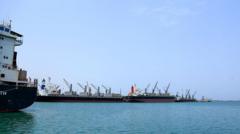
Salt crusts the eyelashes. The horizon is a flat, unforgiving line where the Arabian Sea bleeds into a smoke-streaked sky. Down below, deep within the steel belly of a cargo vessel, the rhythmic heartbeat of a massive diesel engine usually reassures the crew. But tonight, that heartbeat stutters.
Around midnight, the sea lane off the coast of Yemen stops feeling like a thoroughfare and starts feeling like a trap.
Security forces receive the alert through static-laced channels. A projectile—cold, sudden, and precise—has found its mark. The target is an Indian-flagged ship. For months, commercial shipping lanes through the southern Red Sea and the Gulf of Aden have transformed from quiet maritime highways into high-stakes corridors of vulnerability. Navigating these waters no longer requires just a master's ticket and a compass; it demands a calculation of risk where the variables shift by the hour.
Consider what happens next on the bridge of a stricken vessel.
There is no time for grand speeches. There is only the frantic assessment of damage, the smell of burning composite materials, and the blinding glare of flames against the dark water. Water rushes into compartments not meant to hold the sea. Alarms shriek in metallic cadences. Crew members, thousands of miles away from families in Mumbai or Kochi, execute emergency drills rehearsed in quiet ports, now tested under the harsh glare of reality.
The geopolitical chessboard feels abstract when viewed from thousands of miles away through satellite maps and briefing rooms. It becomes real when a bulkhead collapses. It becomes real when the bilge pumps fail to keep up with the incoming tide of the ocean.
Maritime commerce is the invisible circulatory system of the global economy. Most people never think about the steel boxes stacked high on container ships, or the bulk carriers hauling grain and fuel across oceans, until the supply chain snaps. They do not picture the midnight watchkeeper peering through binoculars into a moonless night, scanning for the telltale wake of a small, fast-moving boat or the thermal signature of an airborne threat.
When a ship flying the Indian flag takes a hit off the coast of Yemen, the shockwaves reach far beyond the immediate coordinates logged by maritime rescue coordination centers. They hit the insurance markets in London. They hit the dispatch boards in Singapore. They hit dinner tables in coastal villages in India where a spouse or a parent stares at a silent phone, waiting for a secure satellite connection that confirms their worst fears have not materialized.
The conflict ashore in Yemen has long since spilled over its geographic borders, reaching out with long-range munitions to touch neutral merchant mariners who have no stake in local political struggles. These civilian crews are simply carrying the commerce that keeps lights on and store shelves stocked continents away.
Risk management at sea has evolved into a grim science. Captains now weigh the economic cost of taking the longer, safer route around the Cape of Good Hope against the financial pressure to take the shortcut through the Suez Canal—a shortcut that now demands running a gauntlet. Every voyage through the Bab-el-Mandeb strait is a gamble.
As dawn breaks over the site of the attack, the oil slick shimmers in the morning light, catching the sun in bruised rainbows of diesel and crude. Tugboats and naval escorts move in to assist, a testament to the fragile solidarity of international waters where help is measured in steaming hours, and hours can feel like lifetimes.
The ship may stay afloat, or it may settle quietly into the silt of the seabed, joining the long, forgotten history of iron and ambition that paves the ocean floor. But the quiet hum of global trade has changed permanently. The sea is no longer just a path between ports. It is a reminder of how thin the margin is between ordinary life and sudden chaos.