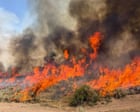
A utility helicopter supporting suppression efforts on a Utah wildfire crashed with two crew members on board, triggering an immediate emergency response and underscoring the grim hazards of low-altitude aviation in heavy smoke and turbulent mountain terrain. When aerial firefighting assets drop water and retardant onto an active front, they operate at the absolute ragged edge of aerodynamic limits.
We watch them on the evening news. Bright red retardant bombers carving paths through billowing smoke plumes, heavy lift helicopters dipping buckets into narrow alpine reservoirs. They look routine. They look like a calibrated, industrialized response to natural disasters.
They are not routine. They are high-risk tactical interventions carried out in violently unstable atmospheric conditions.
Every wildfire season brings a familiar rhythm of deployment, exhaustion, and periodic tragedy. Yet the fundamental mechanics that push pilots and specialized aircraft into life-threatening environments rarely receive proper scrutiny until a hull is lost. To understand why aerial firefighting remains one of the most perilous professions in modern aviation, we have to look past the dramatic photography and examine the physics, the economics, and the institutional pressures governing the skies over Western timber.
The Microclimate Trap
Wildfires do not merely exist within weather systems; they create them.
An intense blaze acts as a massive thermal engine. It draws in cold air at the surface and blasts superheated air, ash, and combustion gases thousands of feet into the atmosphere. This column of rising air generates localized weather patterns capable of neutralizing the control inputs of even the most experienced rotorcraft pilot.
Air density drops sharply as ambient temperature climbs. Combine extreme heat with high altitude terrain typical of the Great Basin and the Rocky Mountains, and an aircraft's engine performance degrades significantly. Rotor blades bite into thin air, reducing lift precisely when the machine is loaded down with heavy retardant or water buckets.
Wind shear adds another layer of jeopardy. As gales sweep across ridgelines and descend into narrow canyons, they fracture into unpredictable eddies and downdrafts. A pilot attempting a precision drop into a steep draw faces invisible walls of descending air that can slam an aircraft downward toward the canopy with terrifying speed.
Visibility inside a smoke basin often drops to zero. Pilots must rely on specialized instrumentation, local geography memorized from previous passes, and sheer spatial awareness to navigate terrain that would be considered hazardous under clear blue skies. When visibility vanishes entirely, the margin for error shrinks to zero.
The Fleet Dilemma
Behind every aerial asset deployed to a Utah wildfire lies an aging, patchwork fleet of aircraft.
Commercial operators and government agencies rely heavily on vintage platforms originally engineered during the Cold War era. While these machines undergo rigorous maintenance schedules and frequent component overhauls, they represent an older generation of aviation technology. Avionics suites, engine management systems, and structural designs often lack the advanced safety redundancies found in modern commercial transport category helicopters.
Replacing these airframes carries a staggering price tag. A state-of-the-art heavy utility helicopter can cost tens of millions of dollars to acquire and outfit for specialized firefighting duty. Consequently, operators push existing airframes through decades of service life, trusting maintenance logs and mechanical inspections to keep catastrophic failures at bay.
The economic model of contracting exacerbates the strain. Private operators frequently bid for seasonal exclusive-use contracts with state and federal land management agencies. This system creates intense financial pressure. Operators must maximize utilization during peak fire months to remain profitable, leading to punishing operational tempos for both flight crews and maintenance personnel.
Fatigue is a silent hazard in the cockpit. When fires rage simultaneously across multiple states, the pool of qualified fire-qualified pilots and mechanics stretches dangerously thin. Crews fly consecutive multi-hour missions under high stress, battling heat exhaustion, dehydration, and cognitive fatigue. Mistakes under these conditions carry irreversible consequences.
The Incident Command Pressure Cooker
The decision to launch aircraft into marginal weather or deteriorating fire conditions is never made in a vacuum. It is the product of intense operational urgency driven by Incident Management Teams.
When a wildfire threatens communities, critical infrastructure, or municipal watersheds, the political and social pressure to suppress the flames immediately is immense. Local residents demand visible action. Elected officials press for maximum air support.
This creates a subtle but pervasive operational bias toward launching missions that might otherwise be scrubbed.
Experienced pilots are fiercely protective of their refusal rights. Federal interagency guidelines explicitly empower any crew member to turn down a mission deemed unsafe. In practice, however, the organizational culture of firefighting heavily prizes aggressive action. The cultural imperative to save the property and protect the crew on the ground can cloud risk assessment, leading to a phenomenon known as normalization of deviance.
Procedures that would trigger safety investigations in commercial aviation become normalized as standard operating risks during a major wildfire incident. Flying below minimum visibility thresholds, operating past maximum duty hours, and pushing into severe turbulence are often rationalized as necessary sacrifices to contain an expanding blaze.
Rethinking Tactical Doctrine
As climate shifts drive longer, more volatile fire seasons across the American West, the reliance on traditional aerial suppression tactics faces mounting skepticism from aviation safety experts.
Dropping water or retardant rarely puts out a major wildfire on its own. Instead, it buys time for ground crews to construct containment lines, cool down hot spots, or protect specific structures. It is a tactical delay action, not a definitive solution.
Yet the public and institutional focus frequently centers on the air fleet as the primary weapon against the flame. This misallocation of focus diverts attention and funding away from necessary investments in landscape-level resilience, prescribed burning, and structural hardening of rural communities.
When an aircraft crashes during a suppression operation, it represents a profound human and institutional failure. It forces a temporary pause in the operational tempo, triggering mandatory safety stand-downs and investigations by the National Transportation Safety Board and the Federal Aviation Administration.
Yet the systemic pressures that contributed to the flight remain entirely intact. The next dry lightning storm rolls across the ridge, the smoke plumes rise, and the aircraft launch once again into the turbulent air.
The structural hazards of low-level mountain aviation will not vanish simply through expressions of grief or procedural tweaks. Real reform requires confronting the economic realities of aging fleets, re-evaluating the contractual incentives driving operator behavior, and accepting that some fires cannot be safely or effectively fought from the air. Until those institutional changes take root, the sky above the ridgeline will remain a lethal arena for the crews tasked with holding the line.