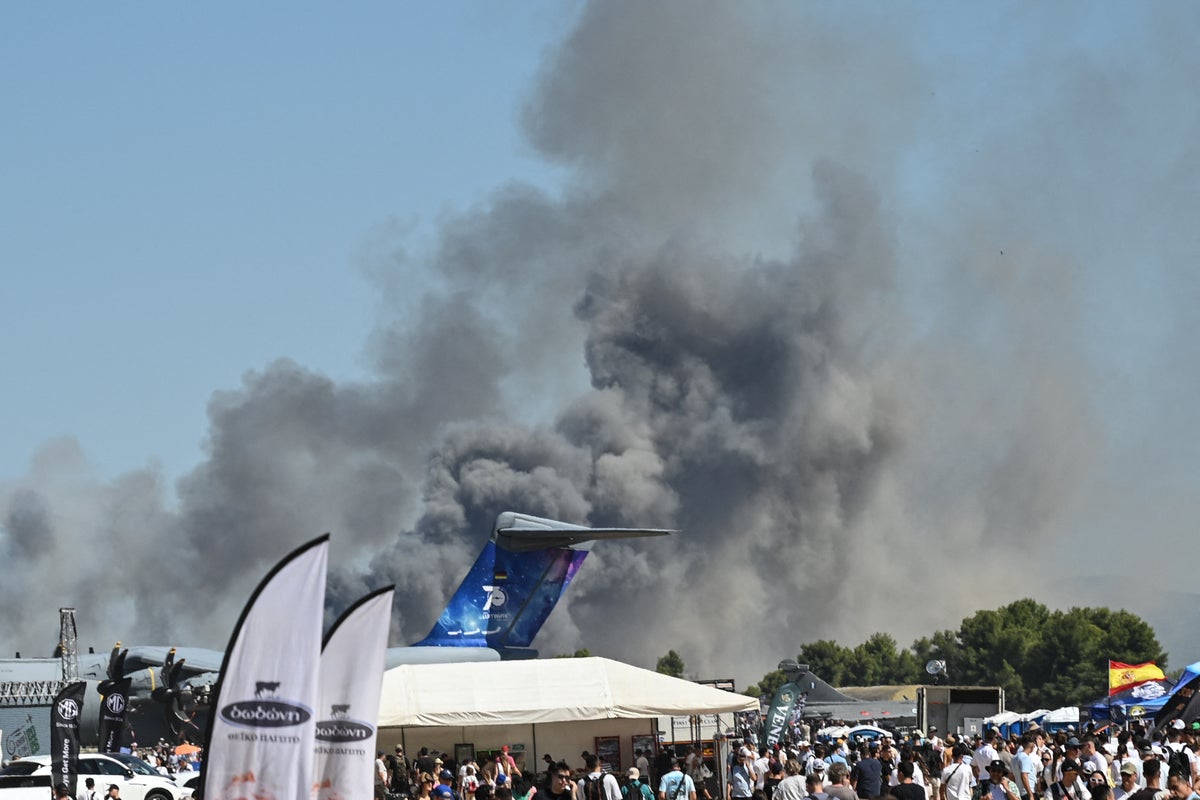
A Hellenic Air Force F-4 Phantom fighter jet crashed during a low-altitude maneuver at the Athens Flying Week air show at Tanagra Air Base, killing its two pilots and igniting a massive ground fire in front of thousands of spectators. The tragedy, which occurred roughly sixty kilometers north of Athens, immediately revived intense debate over the safety and viability of civilian aerial exhibitions featuring aging military hardware. While emergency responders deployed eighty-five firefighters alongside eleven water-dropping aircraft and helicopters to contain the blaze, the structural questions surrounding why high-risk military displays continue over crowded civilian venues remain unanswered by defense authorities.
The Anatomy of a Low-Altitude Failure
Air show accidents rarely stem from a single catastrophic mechanical failure. They are almost always the product of a tight operational margin colliding with human factors and environmental stress. The F-4 Phantom is an aging airframe design originating from the late 1950s. Although upgraded over the decades by the Hellenic Air Force to carry advanced avionics, the physical stresses placed on legacy structural components during aggressive low-level aerobatics remain severe.
When a multi-role combat aircraft performs for a crowd, the flight profile demands maximum thrust and abrupt pitch changes at low altitudes. This leaves virtually zero recovery window if an engine stalls, a control surface binds, or spatial disorientation affects the crew. Witnesses at Tanagra Air Base watched the twin-seat jet lose altitude abruptly mid-demonstration before breaking apart on impact, triggering separate blazes across the airfield.
The tactical utility of flying these vintage platforms at public spectacles has long divided military analysts. Proponents argue that air shows serve as vital recruitment tools and maintain public morale and support for defense spending. Critics counter that exposing irreplaceable flight crews and aging jets to the extreme risks of public displays—solely for entertainment and public relations—defies standard risk-management logic.
The Logistics of Catastrophe Response
When an accident occurs within the perimeters of an active military installation hosting a civilian event, the immediate priority splits between crowd control and emergency containment. At Tanagra, the thick plumes of black smoke visible for miles caused immediate panic among sections of the audience, prompting base loudspeakers to broadcast urgent evacuation instructions.
Deploying ground firefighting units alongside aerial assets is standard procedure for military air bases, yet the proximity of the crash site to dry vegetation during the Hellenic dry season compounded the hazard. Fire suppression was severely delayed in the initial minutes because responders had to navigate burning wreckage and potential ordnance hazards before locating the two pilots. This friction highlights a grim reality: emergency response teams at air shows are reactive by design. They cannot prevent the kinetic energy of a multi-ton fighter jet from reaching the ground; they can only attempt to limit the collateral damage afterward.
The Ethics of Military Aerial Entertainment
Military air shows occupy a unique space where national defense capability meets public theater. Governments invest heavily in maintaining elite pilot training pipelines, yet air show routines often push those very pilots outside standard combat flight envelopes to deliver a more dramatic spectacle for civilian onlookers. Low-altitude passes and high-G pitch-ups are designed to thrill crowds, but they introduce variables that have little to do with actual combat readiness.
The loss of two experienced Hellenic Air Force officers at Tanagra deals a direct blow to a branch already operating under intense regional pressures and operational demands. Every tactical airframe lost during a peacetime exhibition represents a permanent reduction in an already constrained fleet inventory.
As organizers cancel the remainder of the Athens Flying Week schedule and military inspectors begin the painstaking process of analyzing flight data recorders and wreckage fragments, the pressure mounts on defense ministries across Europe to reevaluate the parameters of public flying displays. The glamour of military aviation is routinely underscored by its inherent danger, but when the cost includes the lives of veteran aviators and the devastation of base infrastructure, the public relations benefit ceases to justify the toll.