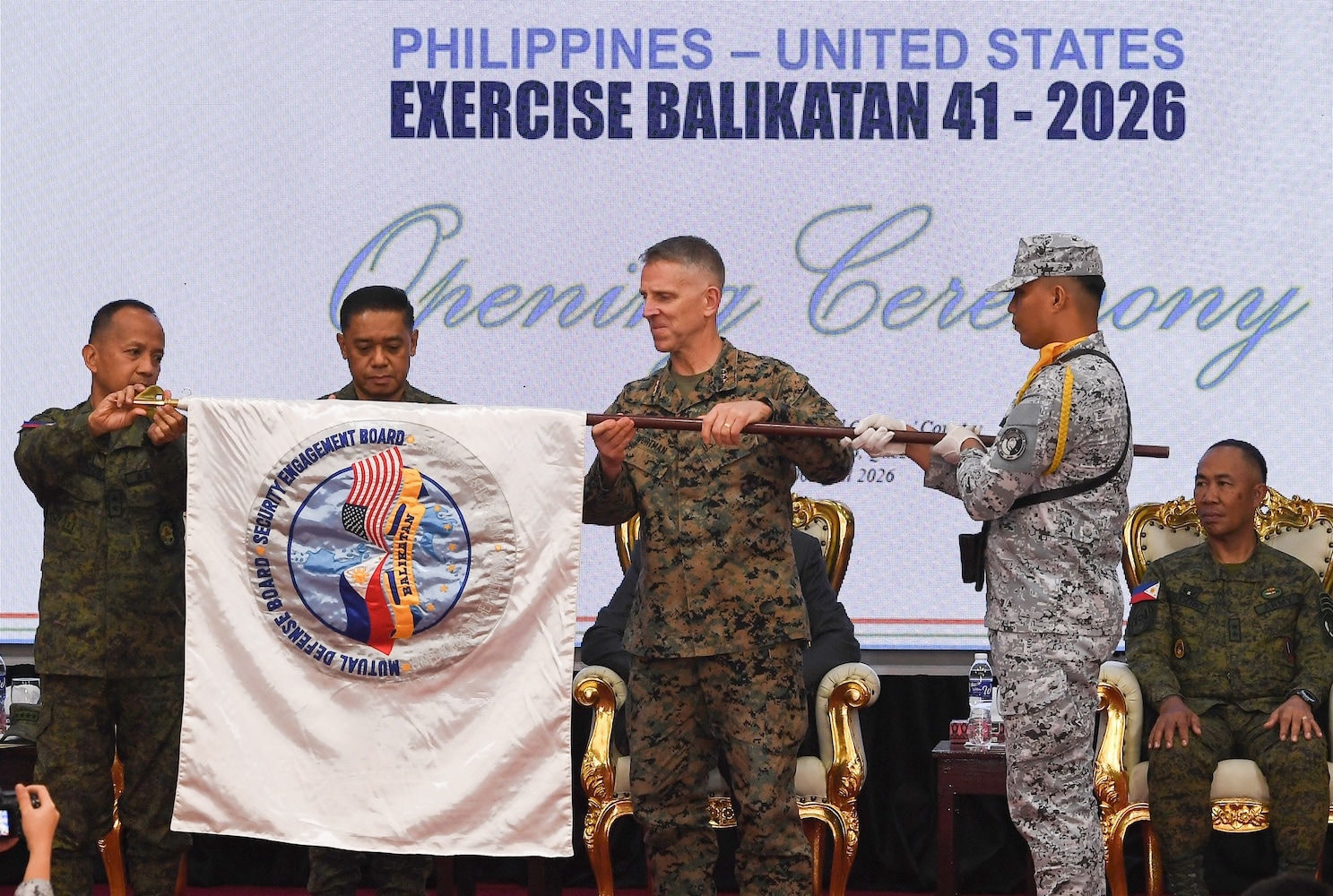
The recent surge in joint military maneuvers between the United States, Japan, and the Philippines marks a departure from the symbolic "friendship" drills of the past. For decades, cooperation in the South China Sea remained a series of fragmented bilateral agreements. That era is over. These nations are now constructing a unified, interlocking defense architecture designed for one purpose: making a Chinese move against Taiwan or the West Philippine Sea too costly to attempt.
This shift toward trilateral integration is not just about more boots on the ground or ships in the water. It represents a fundamental recalibration of the "First Island Chain" strategy. By linking Japanese technological sophistication and northern positioning with the Philippines’ geographic proximity to critical maritime chokepoints, the Pentagon is building a cage.
The End of Strategic Ambiguity in Manila
The Philippines has long been the weakest link in the regional security chain. Under previous administrations, Manila swung wildly between seeking Chinese investment and clinging to its Mutual Defense Treaty with the U.S. This vacillation created a vacuum that Beijing exploited through its "gray zone" tactics—using coast guard vessels and maritime militia to harass Filipino fishermen and seize submerged features like Scarborough Shoal.
The current administration has changed the math. By granting the U.S. access to four additional sites under the Enhanced Defense Cooperation Agreement (EDCA), Manila has effectively anchored itself to a broader regional deterrent. Some of these sites sit on the doorstep of Taiwan. This is not a coincidence. If a conflict breaks out in the Taiwan Strait, the Philippines is no longer a bystander. It is a launchpad.
This alignment comes with immense risk. Critics in Manila argue that the country is painting a target on its back for a conflict it did not start. However, the prevailing view among the Philippine military elite is that the alternative—watching their sovereign waters be swallowed piece by piece—is no longer an option. They have realized that sovereignty without the hardware to back it up is just a suggestion.
Japan Sheds the Pacifist Mask
Japan’s involvement in these trilateral exercises signals the most significant shift in its post-war defense posture. Tokyo is no longer content to let the U.S. handle the heavy lifting of regional security. The deployment of Japanese troops and equipment to Philippine soil for joint training is a visual confirmation of Japan’s new National Security Strategy.
Tokyo’s primary concern is the "cabbage strategy" employed by the Chinese navy, where layers of ships wrap around a disputed territory to choke off access. To counter this, Japan is exporting its defense technology and maritime surveillance capabilities to Manila. This isn't just about selling boats. It’s about creating a common operating picture where the Japanese Self-Defense Forces and the Philippine military see the same radar tracks in real-time.
The integration of Japan’s air defense systems with U.S. and Philippine assets creates a "kill web" that complicates Chinese flight paths. Japan understands that if the Philippines falls under Beijing's sphere of influence, the sea lanes that carry 90% of Japan’s energy imports are at the mercy of the People’s Liberation Army. Self-interest, not just democratic solidarity, is driving this trilateral engine.
The Technology of Interoperability
War games are often dismissed as theater, but the technical data gathered during these exercises is the real prize. The primary challenge in the Indo-Pacific is not a lack of firepower, but a lack of connection. In a high-end fight, different radio frequencies, data links, and command structures lead to chaos.
Recent drills have focused on "distributed lethality." This concept involves spreading out small, highly mobile units across various islands rather than concentrating forces on a few large, vulnerable bases. These units are equipped with anti-ship missiles and advanced sensors.
Interoperability is the buzzword that matters here. If a Philippine coast guard vessel spots a Chinese destroyer, that data needs to flow instantly to a U.S. missile battery or a Japanese F-35. The goal is a plug-and-play military environment where any sensor can talk to any shooter. This requires massive investments in secure communication satellites and AI-driven data processing to filter out the noise of electronic warfare.
The U.S. is also testing its Mid-Range Capability (MRC) missile system in the region. This ground-based system can fire Tomahawk and SM-6 missiles, effectively putting the entire South China Sea within striking distance of mobile launchers hidden in the Philippine jungle. It is a logistical nightmare for Chinese planners, who must now account for a mobile threat that can appear on any one of a thousand islands.
The Gray Zone and the Risk of Miscalculation
While the high-end military hardware gets the headlines, the real struggle is happening in the "gray zone." This is the space between peace and open war. Beijing uses its maritime militia—ostensibly civilian fishing boats—to swarm contested areas. These vessels don't fire shots; they just occupy space, ram boats, and use water cannons.
Trilateral exercises are now incorporating "maritime law enforcement" scenarios to counter these tactics. By training together, the three navies are establishing standardized rules of engagement. They are signaling that a move against a Philippine resupply mission to the Second Thomas Shoal will be met with a coordinated response.
The danger lies in the "escalation ladder." If a Chinese water cannon causes a Philippine sailor to die, does that trigger the U.S. Mutual Defense Treaty? If the U.S. intervenes, does China strike the base from which the U.S. ships launched? The thin line between a deterrent and a provocation is where the world’s most dangerous game is being played.
Logistic Realities vs Political Rhetoric
Despite the shiny new equipment and the bold statements from heads of state, the trilateral alliance faces a massive hurdle: logistics. The Indo-Pacific is an ocean of distances. Moving fuel, ammunition, and parts across thousands of miles of open water is a vulnerability that no amount of joint training can fully solve.
The Philippines’ infrastructure is still lagging. The EDCA sites require significant upgrades to handle heavy cargo aircraft and sustained operations. Japan has pledged billions in development aid, much of it targeted at "dual-use" infrastructure like ports and airfields. This is "gray zone" defense in its own right—building the bones of a military network under the guise of economic development.
Furthermore, the domestic politics of all three nations remain a wild card. A change in leadership in Washington or Manila could see these agreements shredded overnight. The U.S. is notoriously fickle about long-term overseas commitments, and the Philippine electorate is prone to populist shifts. Beijing is counting on this instability. They are playing the long game, waiting for the political will in Manila or Washington to crumble under the weight of economic pressure or domestic distraction.
The Economic Counter-Weight
Security does not exist in a vacuum. China remains the top trading partner for both Japan and the Philippines. This creates a "security-trade paradox" where Manila and Tokyo are arming themselves against their own biggest customer.
To make this security alliance stick, the U.S. and Japan must offer an economic alternative that rivals China’s Belt and Road Initiative. The Luzon Economic Corridor is the first real attempt at this. By pumping investment into the heart of the Philippines’ industrial base, the trilateral partners hope to reduce Manila’s economic dependence on Beijing. If the Philippines is too reliant on Chinese trade, the military alliance will eventually buckle under economic blackmail.
The success of these war games is measured by what doesn't happen. The goal is to create a regional reality so complex and a defense so integrated that the cost of changing the status quo becomes prohibitive. The "noose" being tightened around the First Island Chain is made of more than just steel and gunpowder; it is woven from data links, trade routes, and the hard-nosed recognition that in the South China Sea, isolation is a death sentence.
The U.S. Army’s deployment of the Typhon missile system to the northern Philippines during recent exercises sent a shockwave through the region’s strategic circles. This wasn't a routine movement of gear. It was the first time since the Cold War that such a capability had been stationed in the area, providing a land-based "reach" that nullifies the geographic advantage China once held within the First Island Chain. This is a game of inches and angles, where the placement of a single battery on a remote island can shift the calculus of an entire theater.
The military reality is that the era of uncontested Chinese expansion in the South China Sea has met its match in a coordinated, multi-national front that refuses to blink.


