Silence has a weight. Anyone who has ever sat in a locked room waiting for a door to rattle knows that time stops moving forward and begins to pool around your ankles like cold water.
Five hundred days.
Say it out loud and let the syllables drag across your tongue, because a number on a news ticker flattens human endurance into trivia. Five hundred sunrises where the light belongs to someone else. Five hundred nights where breathing too loudly feels like a gamble. When a teenager disappears into the machinery of abduction, the world outside eventually resumes its ordinary noise—commutes, grocery lists, weather forecasts—while the person inside is forced to shrink their entire existence down to the dimensions of a single room and the unpredictable moods of a captor.
Most headlines treat the rescue of a kidnapped teenager through the online game Among Us as an internet quirk, a strange collision of pop culture and true crime that earns a quick click before the reader scrolls to the next distraction. That reading misses the entire human architecture of what happened. Behind the viral novelty lies a terrifying psychological reality, a desperate act of resourcefulness, and a quiet indictment of how adults routinely misunderstand the digital spaces where young people actually live.
The Architecture of Captivity
To understand why a social deduction game became an escape hatch, you first have to understand how captivity works on the mind. People imagine kidnapping as a Hollywood thriller—locked basements, frantic pounding on windows, daring physical escapes. Reality is usually much quieter and infinitely more corrosive. Captors rarely rely on chains alone; they rely on isolation, disorientation, and the slow erasure of agency.
Consider a hypothetical scenario that mirrors the documented patterns of prolonged domestic abduction. Imagine being sixteen years old, stripped of your phone, your contacts, your neighborhood, and every familiar landmark that proves you exist. Day after day, your captor controls when you eat, when you sleep, and whether you speak. Over weeks and months, fear calcifies into hypervigilance. You learn to read floorboards creaking down the hall. You memorize the rhythm of keys in a lock. You become an expert in survival, which means appearing compliant while keeping a tiny, guarded spark of your own mind untouched.
In that kind of suffocating confinement, the outside world doesn't just feel far away; it begins to feel theoretical. You start to wonder if anyone is still looking, or if your face on a missing-persons flyer has faded into background wallpaper.
When I think about prolonged isolation, I remember the weeks I spent recovering alone in a cramped apartment after a severe accident—not captivity, not even close, yet even that fraction of enforced stillness taught me how quickly four walls begin to bend inward. Your thoughts echo. Small objects take on disproportionate meaning. A sliver of afternoon sun moving across linoleum becomes the only clock you trust. Multiply that claustrophobia by five hundred days, add the constant threat of violence, and you begin to grasp the sheer cognitive miracle required just to keep thinking clearly enough to plan an escape.
Yet human beings possess an astonishing refusal to vanish completely. Even in the tightest cage, people look for cracks in the mortar.
Why Adults Misread the Digital Playground
For years, parents, commentators, and policymakers have treated multiplayer video games as digital junk food—loud, distracting, and vaguely corrosive to real-world connection. We worry about screen time. We complain about headphones at the dinner table. We look at cartoon astronauts running around a spaceship repairing wires and see nothing more than a time sink.
We got the function of those spaces completely backward.
To a teenager growing up in the 2020s, an online game is not a mere pastime; it is the modern town square. It is the corner store, the skatepark, the mall food court, and the landline phone stretched across a bedroom floor at midnight. Because adults often dismiss games as trivial, captors frequently make the same fatal miscalculation. A captor who confiscates a smartphone to sever ties with family and police might still permit access to a gaming console or a tablet, viewing it as a harmless pacifier that keeps a restless teenager quiet inside the house.
Think about that blind spot. The very thing designed to keep someone occupied inside four walls contains a hidden doorway to thousands of strangers outside them.
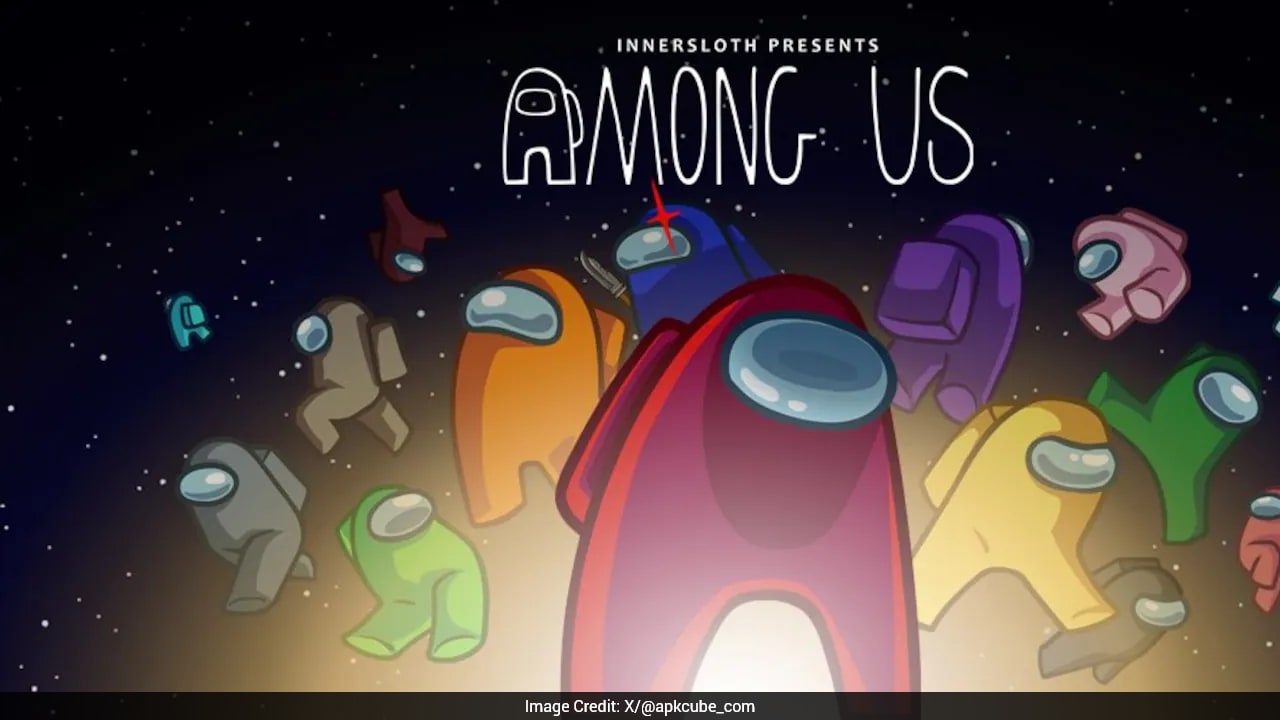
Among Us, in particular, operates on a deceptively simple premise. Players are dropped onto a damaged spaceship as crewmates trying to complete maintenance tasks while one or more hidden impostors sabotage the ship and eliminate the crew. When a body is found or an emergency meeting is called, everything stops. A chat window opens. Suddenly, ten strangers have sixty seconds to argue, accuse, defend, and persuade one another using nothing but typed words on a tiny screen.
It is a game entirely about deception, trust, and reading between the lines of short text messages.
The Anatomy of a Whisper in a Crowded Room
Imagine the logistics of crying for help when someone is monitoring your every move. You cannot simply log onto a public forum and type your address; if your captor glances over your shoulder, the window slams shut forever, and the consequences could be fatal. You have seconds, not minutes. You have a chat box designed for quick phrases like red is sus or saw blue in electrical, surrounded by players who are half-distracted, joking around, or arguing about game mechanics.
Consider what happens next when a captive teenager finds a brief, unguarded window inside a lobby full of players.
You type a message into the chat. You say you have been kidnapped. You drop a name, a city, or a fragment of your reality into a stream of cartoon banter. Most players scroll right past it, assuming it is a dark joke, a troll fishing for attention, or a kid testing boundaries. Internet chat rooms are flooded with exaggeration every second of the day; skepticism is the default armor of anyone who spends time online.
Except one person pauses.
Another child—sitting in another bedroom, perhaps hundreds of miles away—reads the words twice. Something in the phrasing doesn't feel like a punchline. Maybe it is the specificity of the details, or the quiet urgency stripped of internet slang, or the simple human instinct that recognizes distress even through a pixelated font.
That moment is the hinge on which an entire life turns.
Psychologists call it overcoming the bystander effect, the well-documented tendency for individuals to assume someone else will step in when a crisis unfolds in a public space. Online, the bystander effect is amplified by anonymity and distance. It is effortless to close a tab, join a new lobby, and forget a disturbing message within ten seconds. Choosing to take a stranger's plea seriously requires a leap of empathy against every cynical reflex the internet trains into us.
Instead of brushing it off, that other child listens. They ask follow-up questions. They treat the words on the screen not as a game mechanic, but as a human pulse. And then, crucially, they carry that message across the boundary from the digital world into the physical one—telling a trusted adult, alerting authorities, refusing to let the signal die inside the server.
Five Hundred Days Unraveled in Hours
Law enforcement investigations born from digital tips move differently than traditional missing-persons searches. For five hundred days, the trail had gone cold. Conventional leads—security cameras, cell phone pings, neighborhood canvases—had long since dried up. When a child vanishes for more than a year, statistics grow grim. Time becomes the enemy of memory, and cold cases tend to stay frozen until an unexpected variable breaks the surface.
That variable was a chat log.
Digital breadcrumbs leave behind precise footprints even when a user thinks they are operating in the shadows. IP addresses, server timestamps, account metadata, and regional routing data allow investigators to triangulate a physical location from what looks, on the surface, like an anonymous cartoon avatar. Once a credible tip connects a missing person's identity to an active online session, the investigation shifts from searching in the dark to following a direct wire.
Still, the final stretch carries unbearable tension. A raid on a residence where a captive is held must be executed with surgical speed so the captor has no opportunity to flee or harm the victim. Every second between tracing an address and knocking down a door stretches taut.
When officers finally breach that threshold and find a teenager alive after five hundred days, the relief is almost impossible to describe without sounding melodramatic—yet there is nothing theatrical about it. Survival after prolonged captivity looks quiet. It looks like blinking against bright daylight. It looks like a voice that has grown unused to speaking freely. It looks like a family receiving a phone call they had prayed for every single night while slowly preparing themselves for the worst.
What We Owe the Spaces Young People Inhabit
I will admit something that used to make me uneasy: for a long time, I judged teenagers for how fiercely they guarded their online lives. When you grow up in an era where community meant knocking on a neighbor's screen door, watching an entire generation pour their friendships, humor, and vulnerability into glowing rectangles can feel alienating. It is easy to mistake unfamiliarity for shallowness.
This story demolishes that arrogance.
It forces us to confront two uncomfortable truths at the exact same time. First, predators adapt to technology far faster than most parents or institutions realize, exploiting gaps in supervision, isolating vulnerable kids, and hiding in plain sight behind ordinary suburban walls. Second, young people are not passive victims wandering blindly through digital spaces; they are remarkably fluent navigators who understand how to communicate, build trust, and signal distress inside environments adults barely bother to learn.
Think about the emotional intelligence required on both sides of that screen. One child had to stay composed enough under terrifying conditions to smuggle truth past a captor inside a game designed for deception. Another child had to possess enough empathy and moral courage to believe a stranger, verify what they were hearing, and bring help.
Neither of those actions came from a safety brochure. They came from human connection surviving inside an unlikely vessel.
If there is a lesson here for parents, educators, and anyone who cares about young people, it is not to panic and pull every router out of the wall. Isolation—cutting kids off from communication tools without understanding how they use them—only deepens vulnerability. Real protection comes from curiosity. It means sitting beside the kids in your life, asking what they play, learning who they talk to, and taking their digital worlds seriously enough that they know they can come to you when something feels wrong—whether the danger is happening to them or to a voice they just met online.
Because sometimes, the difference between disappearing forever and coming home comes down to a tiny text box at the bottom of a screen, a handful of typed words, and another kid on the other end of the wire who refuses to look away.