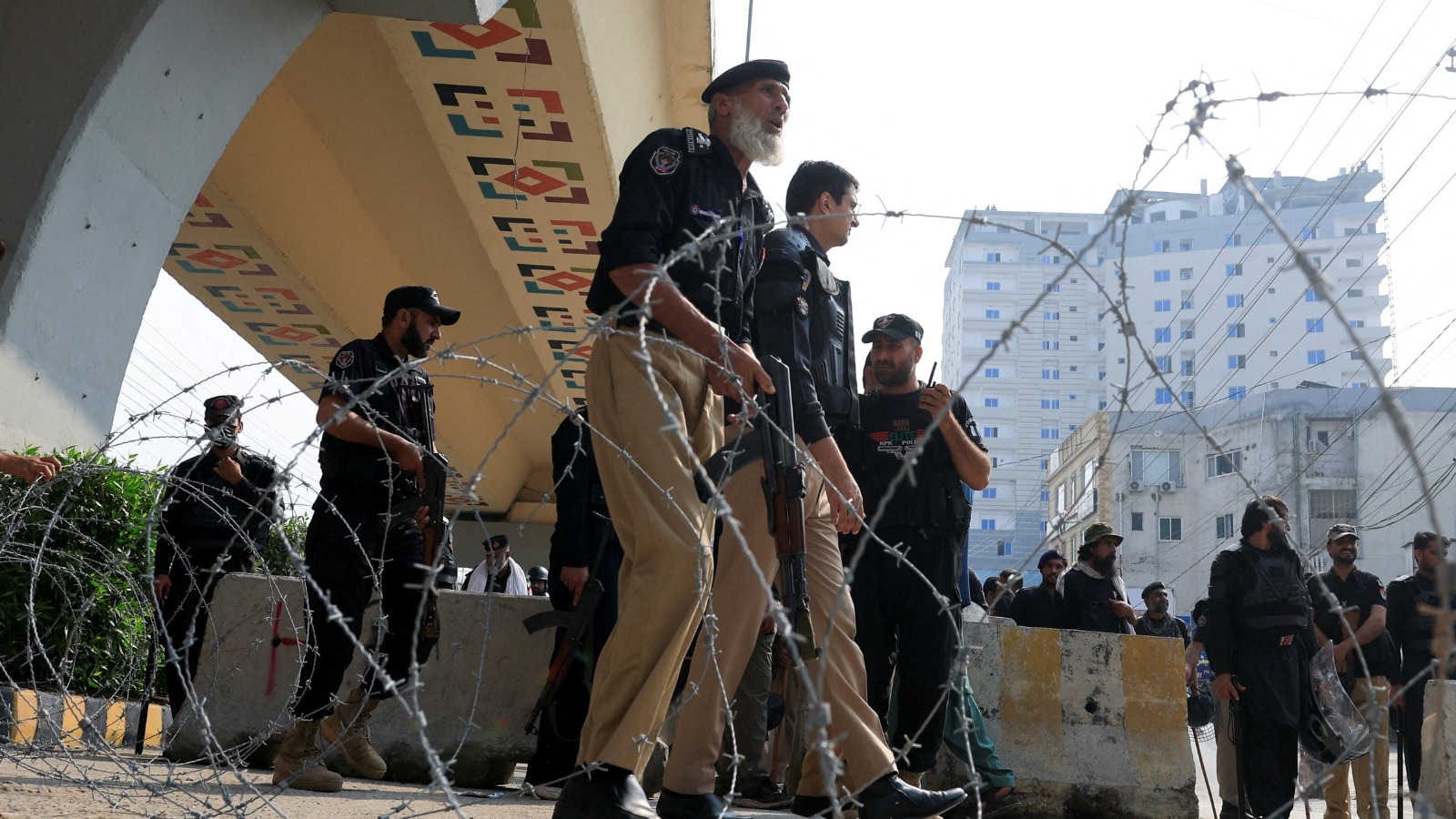
Fear has a very specific odor. In Narang Mandi, a town in Pakistan's Punjab province, it smells like scorched drywall, melted plastic, and the lingering residue of kerosene oil splashed across doors that used to belong to Christian neighbors.
When a mob materializes from the humid afternoon air, shouting religious slogans and carrying gasoline canisters, the state machinery does not typically arrive to prevent the devastation. It arrives hours later to survey the ashes. If you found value in this post, you might want to look at: this related article.
This latest episode of arson and targeted intimidation against the Christian minority in Narang Mandi did not occur in a vacuum. It represents the logical endpoint of a system that has systematically outsourced law enforcement to the street, weaponizing unverified blasphemy allegations into a blunt instrument of terror, property destruction, and social cleansing.
To understand why Narang Mandi burned, one must look past the immediate police reports and examine the mechanics of impunity that have governed Pakistan's minority relations for decades. For another perspective on this development, check out the recent update from TIME.
The Spark and the Blueprint
The sequence of events in Narang Mandi followed a depressingly familiar script. Rumors began to circulate through local loudspeaker announcements and WhatsApp groups, claiming that a member of the Christian community had desecrated religious texts. In an environment where religious sensitivities are perpetually hyper-inflated, verification is treated as an unnecessary luxury.
Within hours, crowds gathered. By the time local religious and political figures could posture at mediation, the rhetoric had already shifted from protest to punishment. Homes were ransacked, personal belongings were thrown into the streets and set ablaze, and families fled into the surrounding fields to escape the violence.
The Human Rights Focus Pakistan (HRFP) and other independent monitors quickly condemned the rampage, demanding immediate arrests and accountability. Yet, condemnation has become a hollow ritual. Statements are issued, committees are formed, and the cycle repeats itself a few districts over, a few weeks later.
The blueprint is simple: manufacture an accusation, mobilize an anonymous crowd through fear and peer pressure, strike quickly before police reinforcements can organize, and leave the local administration scrambling to manage the fallout rather than protect the victims.
The Economic Subtext of Persecution
To view these incidents purely through a lens of theological zealotry is to miss the underlying material reality. Blasphemy allegations in rural and semi-urban Punjab frequently intersect with land grabs, labor disputes, and commercial envy.
Minority communities in towns like Narang Mandi often occupy the lowest rungs of the socioeconomic ladder. Many work as sanitation laborers, brick kiln workers, or small-scale tenant farmers. When individuals from these communities manage to acquire modest property, build a permanent brick home, or challenge exploitative employment conditions, social friction inevitably follows.
An accusation of blasphemy acts as a convenient social solvent. It instantly erases property titles, employment contracts, and civil rights. Once a family is driven out by a violent mob, their land and possessions are frequently abandoned, leaving a vacuum that local strongmen or opportunistic neighbors are all too happy to fill.
The police are well aware of this dynamic. Yet, officers face an impossible professional calculus. Confronting an agitated mob carrying religious banners risks immediate accusations of blasphemy sympathy, which can result in mob violence directed at the police station itself or career-ending political fallout. Consequently, institutional cowardice masquerades as crowd control strategy, allowing attackers to disperse unhindered before the tear gas canisters are even unpacked.
The Legal Architecture of Impunity
Pakistan's controversial blasphemy laws, particularly Section 295-C of the Penal Code, carry a mandatory death penalty for defaming the Prophet Muhammad. While the state rarely executes anyone under these statutes, the law functions as a perpetual Damocles sword over religious minorities and dissenting voices alike.
Crucially, the law does not penalize false accusers with equal severity. Filing a malicious, fabricated accusation of blasphemy carries negligible legal risk. This asymmetry creates an institutional incentive for abuse. If an accuser faces zero consequences for lying, and the community faces total destruction for being accused, the power dynamic becomes absolute.
Furthermore, vigilante justice has found a comfortable accommodation within the mainstream political landscape. Mainstream political parties, regardless of their ideological packaging, routinely pander to religious extremist factions to secure electoral constituencies. When political leaders treat violent agitators as valued coalition partners or key voting blocs, local law enforcement receives clear, unspoken signals to look the other way.
The HRFP's condemnation of the Narang Mandi incident highlights the absence of state deterrence. Without high-profile prosecutions, transparent trials, and severe penalties for individuals who lead mob violence, impunity remains the default setting.
The Long Shadow Over Remaining Minorities
The cumulative effect of these recurring episodes is a slow-motion demographic transformation. Generation by generation, Pakistan's non-Muslim populations are being concentrated into urban slums or pressured into silence and conformity.
Christian families in Narang Mandi who spent decades building modest lives now face a stark choice: rebuild amidst lingering hostility under the constant threat of recurrence, or abandon their ancestral homes and migrate to larger urban centers where anonymity offers a thin shield against persecution.
When houses burn in Narang Mandi, something essential to the constitutional fabric of the country burns with them. A nation that cannot secure the most vulnerable neighborhoods against the tyranny of the street cannot claim to govern under the rule of law.
The smoke over Narang Mandi has cleared, replaced by the quiet, heavy dread of families sweeping up ash from concrete floors, waiting for the next whisper of an accusation.