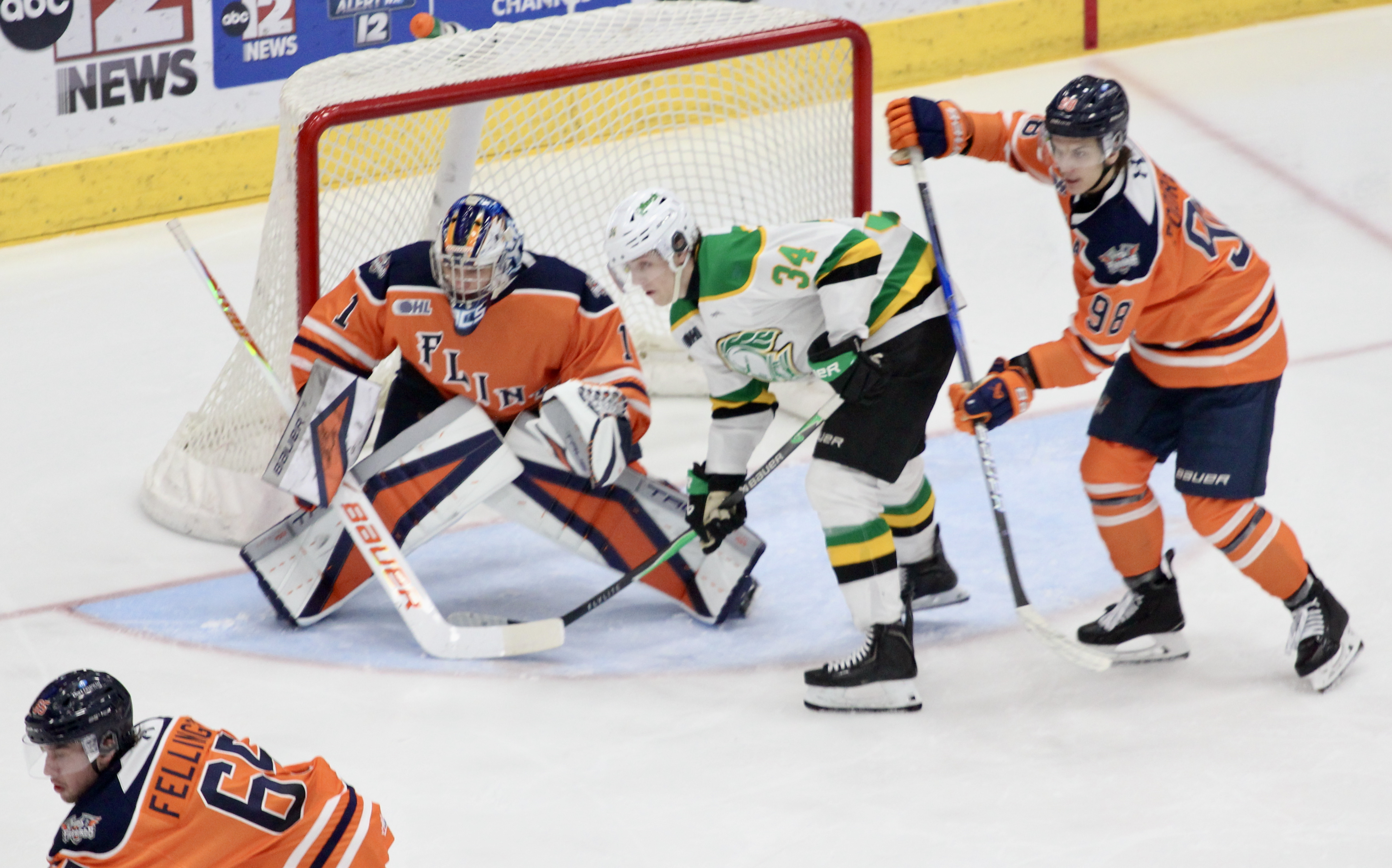
Scoreboard watching is the pastime of the unimaginative. On the surface, the Flint Firebirds’ season-ending win over the London Knights looks like a gritty display of pride—a mid-tier team taking down a powerhouse to build "momentum" before the post-season. The local papers will call it a statement win. They are wrong. This game wasn't a statement; it was a symptom of a developmental league that has forgotten how to value its own assets.
If you’re cheering for a win that yields zero movement in the standings while risking the health of your top-six rotation, you aren't a fan of winning. You’re a fan of theater. The Knights, already locked into their dominance, and the Firebirds, cemented in their seed, played a high-speed game of chicken that served no one but the ticket office.
The Momentum Myth
Coaches love to talk about "carrying a winning feeling" into the playoffs. It’s a comfortable narrative. It’s also statistically irrelevant. In the high-variance world of major junior hockey, momentum is a ghost. I’ve sat in draft meetings where scouts laughed at the idea of March performance dictating April results. What actually dictates April results? Fresh legs and a lack of structural damage to your star center’s MCL.
By playing their starters heavy minutes in a game that literally could not change their playoff opponent, Flint didn't build momentum. They built fatigue. They took a roster of eighteen-year-olds—whose bodies are already redlining after a sixty-eight-game gauntlet—and asked them to block shots against a London team that treats every shift like a blood feud.
Winning a meaningless game is the ultimate pyrrhic victory. If you don't believe me, look at the history of eighth-seed "miracles." They don't happen because a team won their final regular-season game; they happen because the top seed underestimated them or because the underdog had a goalie who spent the final week of the season on a massage table instead of facing sixty pucks a night.
The London Knights Strategy of Psychological Warfare
Let’s talk about London. The Knights didn't "lose" this game in any meaningful sense. Mark Hunter and Dale Hunter have built a program that understands the long game better than anyone else in the CHL. When London drops a game like this, they aren't licking their wounds. They are gathering data.
They used this game as a live-action laboratory. They tested defensive pairings in low-stakes scenarios. They saw how Flint responded to specific forecheck pressures. By "holding off" the Knights, the Firebirds essentially showed their entire hand a week before the games actually matter. London gave Flint the win but kept the blueprint.
The "lazy consensus" says the Knights were stunned. The reality is that London is a machine that views the regular season as a 2,500-minute practice session. If you think a late-season loss rattles a room full of NHL prospects, you haven't been in a room full of NHL prospects. They are already thinking about their entry-level contracts and the Memorial Cup. A Sunday night in Flint is a footnote.
The Cost of Pride in Junior Hockey
The OHL is a developmental league, but it's coached like the seventh game of the Stanley Cup Finals. This is a fundamental error. When Flint pushes their veterans to secure a "home-ice feel" for the fans in a dead-end game, they are prioritizing gate receipts over player longevity.
The Math of Attrition
Consider the physical toll. A typical OHL shift involves:
- An average of three high-velocity impacts.
- Lactic acid buildup that requires 48 to 72 hours for full metabolic recovery.
- Neurological fatigue that slows reaction times by milliseconds—the difference between a clean hit and a concussion.
When you multiply this across a "meaningless" game, you are essentially gambling with the team's playoff ceiling. Is the roar of the crowd in March worth a sluggish first period in the playoff opener?
Why the Schedule is a Trap
The OHL regular season is too long. There, I said it. Sixty-eight games for teenagers is an archaic holdover from a time when we didn't understand sports science. By the time we hit the final weekend, the "matchups" are often set. Yet, the league insists on these high-intensity finales.
Smart organizations should be "load managing" (a dirty word in hockey circles, I know) their elite talent. If you are a Firebirds fan, you shouldn't want to see your captain killing a 5-on-3 penalty in the third period of a game that doesn't move you up the Western Conference ladder. You should want him in the press box with a heating pad, watching film.
The Counter-Intuitive Path to a Deep Run
If I’m running a bench in the final week of the season, I’m doing the opposite of what Flint did.
- Dressing the Spares: Play your fourth line twenty minutes. See which of your prospects can actually handle the pace. You might find a playoff specialist you didn't know you had.
- Special Teams Sabotage: Don't show your power play. Run a "Plan B" setup that you have no intention of using in the playoffs. Force your upcoming opponent to waste hours of video review on a ghost formation.
- The "Slow" Game: Explicitly instruct players to avoid the boards. This sounds like heresy to "old school" hockey minds, but protecting the roster is the only job that matters in March.
Flint did none of this. They played for the "W" in the column that is about to be wiped clean. They gave their fans a nice night out and gave their playoff opponent a perfect scouting report.
The Delusion of "Closing Strong"
We see this in every sport. A team wins their last five games, the media crowns them a "dangerous out," and then they get swept in the first round because they ran out of gas. True strength isn't winning when the pressure is off; it’s having the discipline to prioritize the games that actually have a trophy at the end of them.
The Firebirds held off the Knights. Great. They also held onto a philosophy that values short-term optics over long-term strategic advantage. In a week, nobody will remember the score of this game. They will, however, remember if Flint’s top scorers look half a step slow because they were pushed to the limit in a game that meant nothing.
Stop celebrating the win. Start questioning the strategy.
Stop falling for the "momentum" trap and start looking at the mileage on the tires. If you want to win a championship, you have to be willing to lose a Sunday night game in March. Flint wasn't. London was. We'll see who’s still playing in May.
Go home, look at the standings, and realize that the score tonight was 0-0 in every way that counts.


.png)