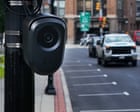
Everyone is losing their minds over automated license plate readers.
The lazy consensus dominating civic debate right now treats private-public camera networks like an unprecedented dystopian invasion. Headlines screech about civil liberties, partisan coalitions form between privacy advocates and anti-tax hardliners, and city councils freeze procurement contracts while pearl-clutchers imagine a panopticon on every suburban corner.
They are aiming their pitchforks at the wrong target.
While activists waste precious oxygen protesting automated tracking devices mounted on traffic lights, they happily carry high-definition tracking beacons in their pockets, volunteer their biometrics to social media giants, and invite listening devices into their kitchens. Focusing municipal surveillance outrage on hardware capturing exterior vehicle metadata misses the entire architecture of modern mass tracking.
The Mechanics Of Municipal Tracking
Let us look at how these systems actually function without the Hollywood thriller embellishments. Companies deploy solar-powered optical units equipped with machine vision algorithms designed to scan alphanumeric characters on metal plates, timestamps, vehicle makes, models, and primary colors. Local law enforcement agencies subscribe to these data feeds to cross-reference hotlists for stolen vehicles, missing persons alerts, and outstanding warrants.
The populist backlash argues that this creates a persistent dragnet logging everyday citizens going about their lawful business. Technically, they are correct. Every time a sedan passes a reader, a record enters a database.
Practically, however, the outrage collapses under the weight of basic data economics. Governments do not possess the human capital, computational focus, or storage infrastructure to monitor your morning commute. The database is a passive archive, query-driven and reactive. It operates less like an active spy agency and more like a high-speed library catalog for metal boxes on wheels.
The Real Surveillance Threat Matrix
To understand why panicking over municipal hardware is a misallocation of civic energy, look at what commercial data brokers extract from you before you even back out of your driveway.
- Location Aggregation: Your smartphone constantly pings cellular towers, connects to ambient Wi-Fi networks, and logs GPS coordinates through free weather and flashlight applications. This data sells openly on secondary markets to hedge funds, advertisers, and insurance companies with zero judicial oversight.
- Behavioral Profiling: Social media algorithms map your psychological vulnerabilities, political leanings, and consumer habits based on micro-interactions lasting milliseconds.
- Financial Surveillance: Credit card processors and digital payment gateways build granular ledgers of your daily habits, dietary preferences, and personal associations.
Contrast these invasive commercial pipelines with a stationary camera photographing the rear bumper of a Honda Civic on Main Street. One system knows your emotional state, your medical concerns, and your private relationships. The other knows you drove past a CVS at 8:14 AM.
The Bipartisan Theater
The strange-bedfellows coalition of far-left civil libertarians and populist conservatives opposing automated readers provides great theater for local news broadcasts. It allows politicians to signal principled opposition to government overreach without touching the donors who profit from digital tracking.
Opposing municipal hardware costs nothing. It requires no confrontation with Silicon Valley lobbyists, no regulation of surveillance capitalism, and no disruption of the advertising-industrial complex. Politicians can grandstand against a local police department contract, pat themselves on the back for defending freedom, and then authorize multi-million dollar smart-city data-sharing agreements with corporate conglomerates five minutes later.
It is security theater played in reverse: freedom theater.
What Effective Oversight Looks Like
If you want to protect civil liberties, abandon performative bans on optical readers and start demanding brutal transparency regarding data governance. The danger of automated plate reading is not the technology itself; it is the absence of hard rules governing retention and access.
Agencies must enforce strict operational boundaries:
- Zero Retention Mandate: Unflagged plate data must automatically purge within forty-eight hours. Permanent storage transforms an investigative tool into a historical dossier generator.
- Airtight Warrant Requirements: Accessing historical movement logs must require a probable cause warrant signed by a judge. No fishing expeditions, no lateral sharing with federal immigration enforcement, and no corporate monetization.
- Audit Trails: Every single query executed by an officer must leave an immutable log subject to independent public review.
When you establish hard boundaries around retention and access, automated readers become boring administrative tools rather than civil rights catastrophes.
The Real Price Of Convenience
We live in a society that traded privacy for convenience decades ago. We handed the keys of our digital lives to massive technology monopolies because we wanted fast food delivery apps, personalized playlists, and instant navigation.
Crying foul over a solar-powered traffic camera while your phone broadcasts your GPS coordinates to a dozen ad-tech brokers is the ultimate exercise in missing the forest for a single, highly visible leaf.
Stop fighting the hardware bolted to the utility pole. Start fighting the invisible software tracking every heartbeat inside your pocket.