The passport sits on a kitchen table in Ohio, crisp and dark blue, its gold foil eagle catching the light of an amber desk lamp. Inside its blank pages lies a quiet provocation. An invitation from Beijing to cross oceans, walk marble hallways, and peer past the horizon of cable news chyrons.
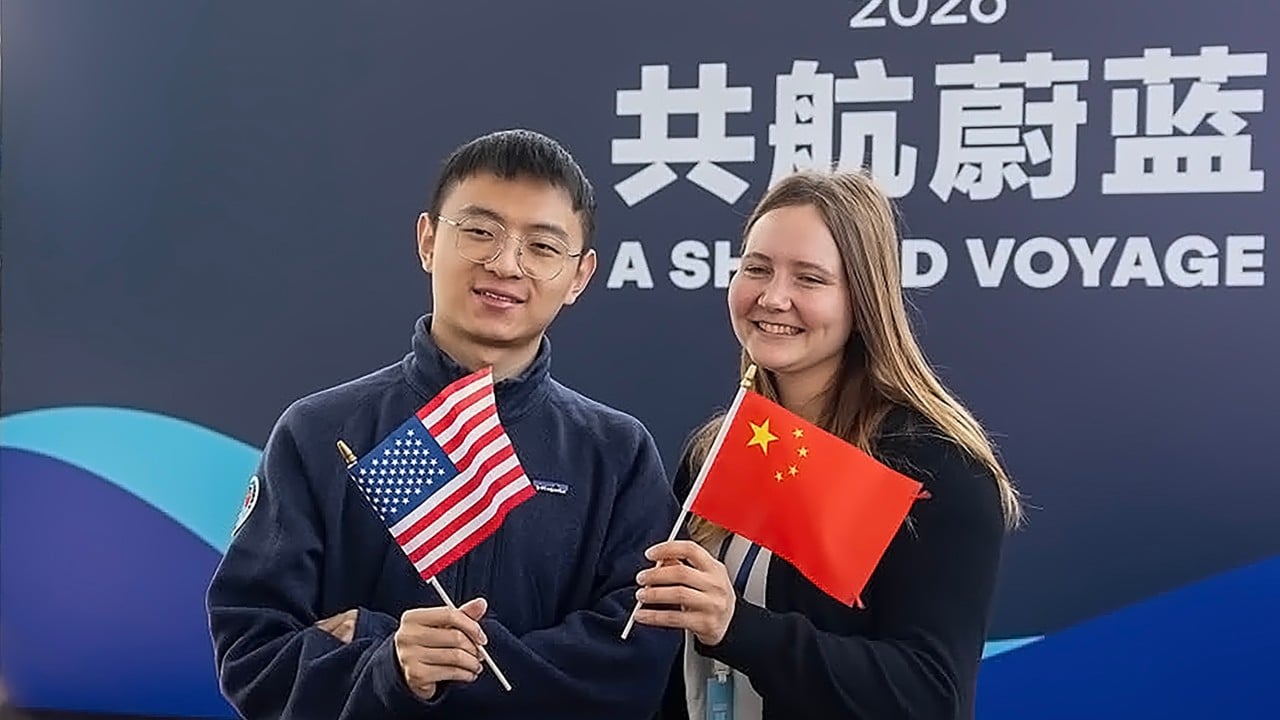
For a generation raised against a backdrop of rising tensions, trade tariffs, and digital whispers of a cold war reborn, the proposition feels almost surreal. Xi Jinping’s standing offer to bring fifty thousand young Americans to China over the next five years is not merely a diplomatic gesture. It is a calculated gamble on physical presence. It asks a simple question: What happens when the abstract monster on a screen is replaced by the smell of steamed buns, the chatter of a Beijing subway car, and the heavy stone of the Summer Palace?
Consider Maya, a twenty-one-year-old political science major from Columbus. She has spent her college years analyzing GDP metrics, reading think-tank papers on semiconductor embargoes, and watching lawmakers posture under blinding white television lights. To Maya, China is a monolith of steel towers and state-managed algorithms. It is a concept. A rival.
When she looks at the invitation, her skepticism is well-earned. Governments do not fly teenagers halfway across the world out of pure hospitality. They do it to shape memory. They do it to curate impressions.
Yet, history suggests that proximity resists propaganda.
Decades ago, during the height of another ideological deep freeze, a group of American table tennis players stepped across a border and cracked open a closed door. Ping-pong diplomacy did not erase ideological differences, but it humanized the enemy. It proved that real diplomacy often begins not in smoke-filled treaty rooms, but in the awkward, shared laughter of strangers trying to communicate across a language barrier.
Now, Beijing wants to run that experiment again at scale. But the stage has changed, and so has the audience.
If a young American boards that flight, what will they actually see?
The itinerary, carefully orchestrated by host institutions like Peking University or provincial cultural bureaus, will certainly feature the greatest hits of civilizational grandeur. There will be the infinite gray stone of the Great Wall slicing through mist-shrouded peaks. There will be the labyrinthine red courtyards of the Forbidden City, where emperors once ruled beneath yellow-tiled roofs. There will be high-speed bullet trains gliding across the Central Plains at three hundred kilometers per hour, blurring fields of wheat into green ribbons.
These are not illusions. They are physical triumphs. The high-speed rail network is a staggering engineering marvel that makes the crumbling infrastructure of the American rust belt look like an antique. The skyscrapers of Shenzhen and Shanghai pulse with a neon-lit dynamism that humbles Western capitals.
Critics call this the Potemkin tour. A carefully choreographed illusion designed to blind foreign visitors to the realities of surveillance, censorship, and political control.
They are not entirely wrong.
A visitor on a sponsored youth exchange is unlikely to find themselves sitting in a deep, unvarnished conversation with a detained dissident or a silenced labor organizer. They will not be given unfettered access to the inner machinery of the state security apparatus. The view will be elevated, clean, and directed.
And yet, total control is an illusion, too.
You cannot script the casual interactions of a crowded night market in Chengdu. You cannot sanitize the way a young local university student fumbles through hesitant English to ask an American visitor about their favorite music, their rent prices, or their thoughts on Taylor Swift.
Human curiosity is notoriously leaky. It refuses to stay inside the boundaries drawn by state propagandists.
When an American college student sits across a low plastic table from a peer in a bustling alleyway, eating spicy skewers and trading photos of their pets, the geopolitical abstraction dissolves. They realize, with a sudden and quiet jolt, that the person sitting opposite them is not an avatar of an authoritarian regime. They are simply another human being navigating the anxious, beautiful chaos of their twenties. They worry about job markets. They stress over exams. They scroll through the same digital feeds, dodging the noise of their respective states.
This is the invisible stakes of the endeavor. It is not about winning hearts and minds in a zero-sum propaganda war. It is about creating cognitive dissonance.
When Maya returns to Ohio after two weeks of breathing the air of Beijing and tasting the vinegar of Shanxi noodles, the simplistic narratives of cable news will no longer fit cleanly in her mind. She will still know about the crackdowns, the geopolitical friction, and the deep systemic divides. But those facts will now be haunted by the memory of a specific person who laughed at her terrible Mandarin pronunciation.
That is a dangerous outcome for anyone who profits from perpetual enmity.
Hostility requires abstraction. It requires the target to remain flat, distant, and terrifying. The moment you introduce a human face, a specific voice, and a shared memory, the machinery of hatred begins to stutter.
Beijing knows this. Washington knows this, too, which is why the invitation has been met in some Western circles with nervous hand-wringing. If a generation of future leaders walks the streets of Chinese cities and finds them vibrant, modern, and populated by kind, ordinary people, the easy certainty of a looming apocalyptic clash starts to fray.
Conversely, if the visitors find themselves suffocated by surveillance or alienated by cultural barriers, the trip confirms their worst suspicions. Either way, the passive consumption of news is replaced by direct, undeniable experience.
The passport on the desk in Ohio remains open. The ink of the visa stamp is waiting.
We live in an era that worships distance. Screens allow us to lob ideological hand grenades at one another across digital chasms without ever having to smell the smoke or look into the eyes of those we wish to defeat. We retreat into echo chambers where the enemy is always cartoonish and our own righteousness is absolute.
To accept an invitation into the heart of a rival empire is an act of quiet defiance against that digital tribalism. It requires stepping out of the theater of war and into the messy, complicated realm of reality.
The tour will be curated. The monuments will be grand. The state will put its best foot forward. But beneath the polished glass of the high-speed trains and the ancient stones of the imperial palaces, real people are living, breathing, and waiting to see who we are, just as we are waiting to see who they are.
The question is not what Beijing will show them.
The real question is whether we are still brave enough to look.