Unidentified drones repeatedly breached the restricted airspace over Fort Lesley J. McNair in Washington, D.C., this month, hovering directly over the residences of Secretary of State Marco Rubio and Defense Secretary Pete Hegseth. The incursions, occurring on a single night within the last ten days, triggered emergency White House meetings and forced officials to weigh the immediate relocation of two of the highest-ranking members of the U.S. national security apparatus.
While the primary concern is the safety of Rubio and Hegseth, the incident exposes a more systemic failure. The American military, optimized for decades to intercept supersonic missiles and heavy bombers, is currently being outmaneuvered by off-the-shelf plastic rotors. This is not a hobbyist problem. It is a fundamental shift in the geometry of domestic defense.
The Illusion of the Hard Perimeter
Fort McNair is one of the oldest and most storied installations in the United States. Its geography is its defense, tucked between the Potomac and Anacostia rivers. Yet, the recent sightings prove that physical barriers and traditional gate security are obsolete. When multiple drones appeared over the base under the cover of darkness, the response was not an immediate kinetic takedown, but a series of high-level discussions about "relocation."
This hesitation is a direct result of a legal and technological quagmire. On U.S. soil, the military does not have a "free-fire" zone. The Federal Aviation Administration (FAA) regulates the domestic skies, and the rules of engagement for Downing a drone in a densely populated urban center like Washington are a nightmare of jurisdictional overlap. If a drone is hovering over a cabinet member's house, do you jam it and risk crashing a civilian aircraft? Do you shoot it down and risk a kinetic projectile landing in a nearby neighborhood?
The Pentagon’s current posture is one of reactive frustration. General Gregory Guillot, commander of U.S. Northern Command (NORTHCOM), recently admitted to Congress that the military faces between one and two such incursions every single day across its domestic installations. The Fort McNair incident is simply the most politically sensitive iteration of a daily reality.
The Langley Shadow
To understand why the McNair sightings are so alarming, one must look back to December 2023. For seventeen consecutive nights, a fleet of drones—some as large as small cars—swarmed Langley Air Force Base in Virginia. They arrived forty-five minutes after sunset and stayed until midnight, performing coordinated maneuvers over one of the most sensitive airbases in the world, home to the F-22 Raptor.
The military watched. They tracked. They did not—or could not—stop them.
The Langley swarm demonstrated a level of "pattern of life" surveillance that suggests a state-actor nexus. These weren't kids playing with Christmas presents. These were platforms displaying sophisticated electronic signatures and endurance far beyond commercial specifications. The fact that similar drones are now hovering over the homes of the men in charge of U.S. foreign policy and the War Department suggests the "probing" phase of this shadow war has graduated to targeted intimidation.
The Technical Gap
The U.S. defense industry has spent eighty years perfecting "exquisite" systems. We build $2 billion stealth bombers and $100 million fighter jets. However, the threat at Fort McNair is "attritable"—it is cheap, expendable, and ubiquitous.
Layered Defense Failure
- Detection: Traditional radar often filters out "slow and small" objects to avoid clutter from birds.
- Identification: Distinguishing between a lost tourist and a foreign intelligence service (FIS) asset in real-time is currently a manual, high-stress process.
- Mitigation: Jamming (Electronic Warfare) is the preferred non-kinetic solution, but it is imprecise. In a city like D.C., jamming can interfere with emergency services, cellular networks, and legitimate aviation.
The military’s newly formed Joint Interagency Task Force 401 (JIATF-401) is attempting to bridge this gap, but the policy moves slower than the technology. Recent guidance signed in late 2025 finally gave base commanders more authority to act against drones before they cross the fence line, but authority is useless without the hardware to enforce it.
The Iranian Nexus
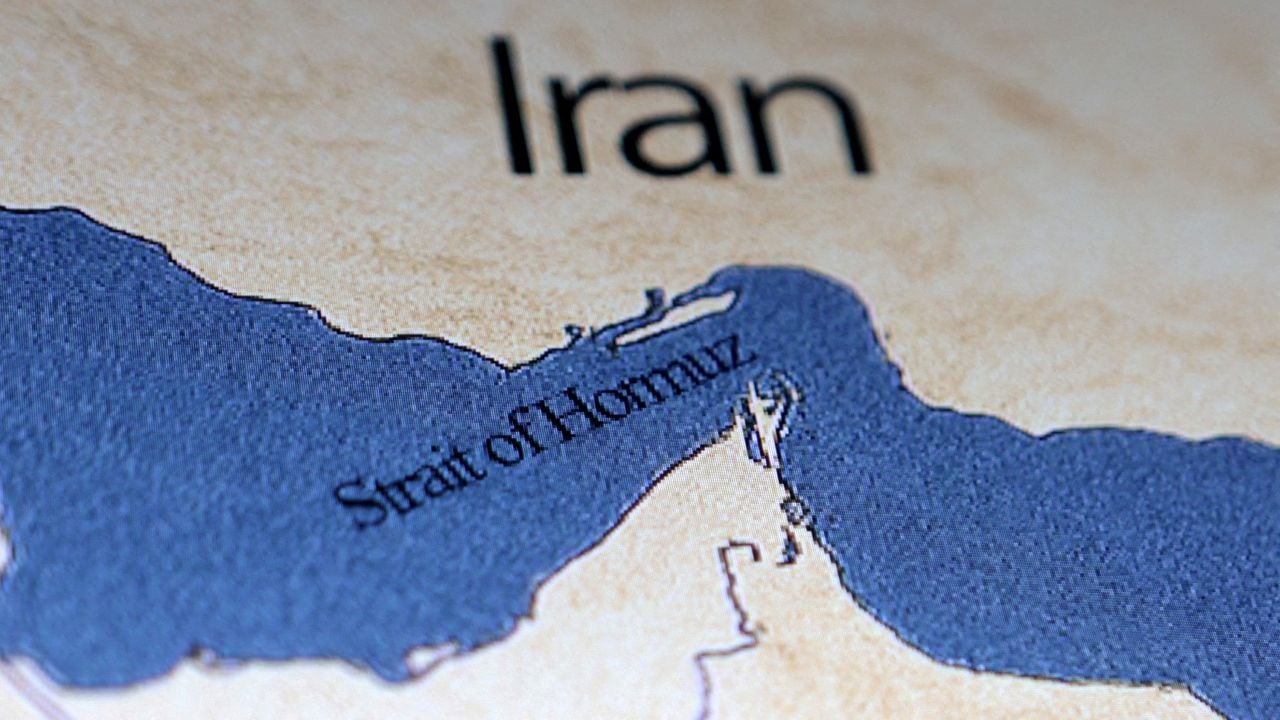
While the origin of the McNair drones remains officially "undetermined," the timing is impossible to ignore. The United States and Israel are currently engaged in active kinetic exchanges with Iran. Both Rubio and Hegseth have championed a "maximum pressure" campaign against Tehran.
Iran has pioneered the use of low-cost loitering munitions and surveillance drones, exporting the technology to proxies across the Middle East. If an adversary can prove they can hover a lens or a payload over the bedroom of the Secretary of State in the heart of the American capital, they have achieved a psychological victory without firing a shot. It signals that the "front line" is no longer the Persian Gulf; it is the Potomac.
The FBI is currently investigating the potential for "unwitting" operators—individuals paid by foreign entities to fly drones near sensitive sites under the guise of hobbyist photography. This tactic provides plausible deniability and exploits the very freedoms the U.S. is trying to protect.
The Price of Hesitation
We are currently in a period of "asymmetric vulnerability." The cost for an adversary to launch a $2,000 drone is negligible. The cost for the U.S. to defend against it—in terms of manpower, technology, and political risk—is astronomical.
The White House discussions regarding the relocation of Rubio and Hegseth are a temporary fix for a permanent problem. Moving the targets does not remove the threat; it only concedes the airspace. Until the Department of Defense can deploy a domestic counter-UAS (C-UAS) shield that is as reliable as the gate guards at the front entrance, the most powerful men in the world will remain exposed to the most common technology on the market.
The era of the "safe" home front is over. The drones over Fort McNair aren't just a security concern; they are a declaration that the perimeter no longer exists.