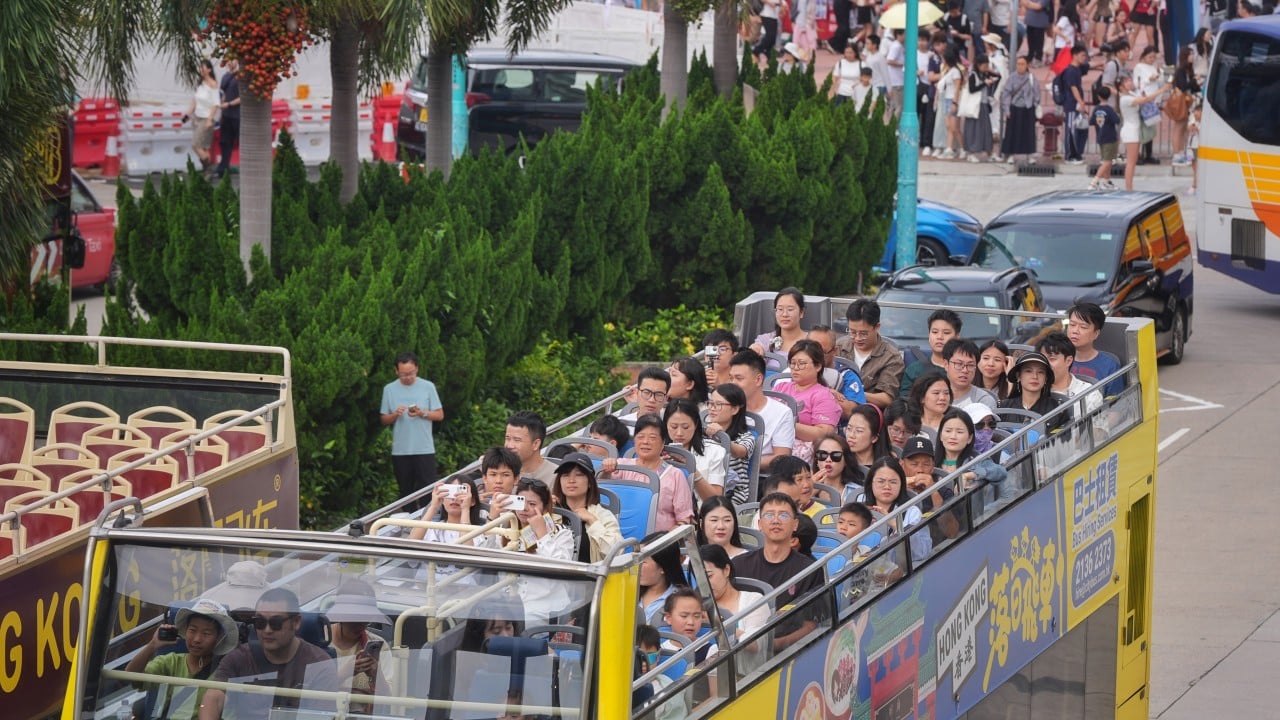
The bus smells of stale upholstery and the collective anxiety of forty-five people who were promised a miracle. Among them is Ms. Zhang, a retired schoolteacher from Gansu. She spent decades saving for this. She wanted to see the skyline of Victoria Harbour, the one she saw on the flickering television sets of her youth. She paid less for this entire cross-border excursion than she would for a decent pair of walking shoes back home.
She thinks she found a bargain. She actually found a cage. If you liked this article, you should look at: this related article.
This is the "zero-fee" tour, a persistent shadow in the travel industry that has survived every government crackdown, every regulatory fine, and every viral video of a screaming tour guide. On paper, these tours are impossible. They offer transport, lodging, and meals in one of the world’s most expensive cities for a price that wouldn't cover a bowl of high-end wonton noodles. But the math always balances in the end. It just balances on the backs of people like Ms. Zhang.
The Invisible Architecture of the Shakedown
The economics are simple, brutal, and hidden. A travel agency in mainland China assembles a group. They sell the seats for a pittance. They then "sell" this group to a local Hong Kong operator. The local operator isn't getting paid to show these tourists the sights; in fact, the operator often pays the mainland agency for the "privilege" of hosting them. For another look on this event, refer to the recent update from AFAR.
Now, the Hong Kong guide starts the day in the red. They are thousands of dollars in debt before the bus engine even turns over. To break even, to simply make a living, they must extract every cent of that debt—and then some—from the pockets of the retirees and families sitting behind them.
Consider the "Jewellery Stop." This isn't a cultural visit. It is a high-pressure boardroom negotiation where the tourists have no leverage.
The bus doors hiss shut at a remote industrial building in Hung Hom or To Kwa Wan. The group is ushered into a neon-lit showroom. The exits are not clearly marked. The "guide," who was charming at the border, now undergoes a personality shift. The tone turns sharp. They speak of "patriotism" and the "duty" to support the local economy. They shame those who don’t buy. Ms. Zhang watches as a younger man in the group tries to leave to find a bathroom, only to be barked at and told the bus won't leave until the group meets a sales quota.
This is not tourism. It is a retail hostage situation.
The Crackdown That Didn't Bite
For years, the Hong Kong government and the Travel Industry Authority (TIA) have played a game of whack-a-mole. They pass laws. They mandate that guides cannot force shopping. They require agencies to register their itineraries.
Yet, the "underground" tours thrive because they are masters of the pivot. When the authorities started checking the big jewelry outlets, the operators moved to registered "exhibition centers" that look like museums but function like high-pressure sales floors. When the TIA cracked down on the "zero-fee" label, the agencies raised the price by a symbolic ten dollars and rebranded them as "Value Heritage Experiences."
The problem is one of desperation. On both sides.
The tourists are often from lower-tier cities, lured by social media advertisements promising a slice of the "Pearl of the Orient" for the cost of a lunch. They are not savvy travelers. They are people for whom Hong Kong represents a lifelong dream, a place of status. They don't know that a legitimate hotel room in the city costs more than their entire four-day itinerary. They want to believe the lie because the truth is too expensive.
The guides, meanwhile, are often freelancers without a base salary. They are cogwheels in a machine that demands they be predators. If they don't sell, they don't eat. It creates a toxic friction that spills out onto the sidewalks of Kowloon.
The Ghost of To Kwa Wan
If you walk through the neighborhood of To Kwa Wan at midday, you can see the scars of this business model. This isn't the Hong Kong of postcards. There are no sweeping harbor views here. Instead, there are narrow sidewalks choked by hundreds of tourists standing in line for "pig-feed meals"—low-cost, mass-produced catering served in basement canteens.
Residents of these neighborhoods live in a state of permanent siege. Their grocery stores are replaced by specialty pharmacies selling overpriced bird's nest and "medicinal" oils to tour groups. Their quiet afternoons are punctuated by the megaphone blasts of guides corralling their flocks.
The tension reached a boiling point recently when the sheer volume of these low-budget groups began to paralyze the district. The government's response was to suggest "staggered lunch hours" and better bus parking. It was like putting a Band-Aid on a compound fracture. The issue isn't where the buses park; it's why they are there in the first place.
They are there because the "low-cost" model requires volume. Since the profit margin on a single tourist is thin, the only way to make the numbers work is to process human beings like industrial livestock. More bodies. More stops. More pressure.
Why the Scam Refuses to Die
You might wonder why anyone would ever go on a second tour like this. They don't. But China is vast. There is an inexhaustible supply of first-time travelers who haven't heard the warnings, or who think they are too smart to be pressured into buying a three-thousand-dollar gold plated pendant.
The industry also exploits a cultural loophole. In many of these groups, there is a strong sense of collective responsibility. If the guide tells the group that the bus is being held up because "someone" hasn't spent enough, the group often turns on itself. The pressure doesn't just come from the man with the megaphone; it comes from the person in the next seat who just wants to go back to the hotel and rest their aching feet.
This social engineering is the secret sauce of the ultra-low-priced tour. It turns the victims into the enforcers.
The digital age has only complicated matters. Platforms like Xiaohongshu are flooded with "travel hacks" and ultra-cheap deals. While some users post warnings, the algorithms often favor the flashy, the impossibly cheap, and the aesthetically pleasing. A photo of a sparkling necklace in a Hong Kong shop looks better on a feed than a cautionary paragraph about predatory contract law.
The True Cost of a Cheap Ticket
What is lost in this cycle isn't just money. It's the soul of the destination.
When a city becomes a backdrop for a shakedown, it ceases to be a city and becomes a theme park of exploitation. The "Mainland Chinese visitor" is not a monolith; they are individuals like Ms. Zhang, who deserved a moment of wonder at the top of the Peak, but instead spent four hours in a windowless room in an industrial estate being told she didn't love her family enough if she didn't buy a souvenir.
The crackdown continues, and the TIA issues its reports, and the police conduct their spot checks. But as long as there is a gap between the dream of Hong Kong and the reality of its prices, the "forty-dollar trap" will exist. It will simply change its name, move to a different street, and wait for the next bus to arrive from the border.
As the sun sets over To Kwa Wan, the buses finally groan away, leaving behind a trail of discarded plastic water bottles and a neighborhood that feels a little more hollowed out than it did that morning. Ms. Zhang sits by the window, clutching a small bag containing a "genuine" jade bracelet that cost her three months of her pension. She looks out at the neon signs, her reflection in the glass looking tired, confused, and very, very far from home.
The harbor is beautiful, but from the window of a moving bus heading toward a budget hotel in the outskirts, you can't really see the water. You can only see the reflection of what you've lost.