The coffee in the trailer always tastes like paper cups and sawdust.
Marc Tremblay sits on the edge of a mismatched office chair, staring at a spreadsheet that refuses to lie. Outside the window, a yellow excavator sits perfectly still in the middle of a muddy lot in Ottawa. It should be roaring. It should be moving earth, clearing the way for seventy-two families to have a place to call home. Instead, it is a multi-ton lawn ornament costing Marc thousands of dollars a week just by existing in neutral.
Marc is a mid-sized residential developer. He is not a tycoon; he is a guy who signs the front of paychecks and still has drywall dust embedded in the lines of his palms. For twenty years, his life has been measured in the rhythmic thud of framing hammers and the smell of freshly poured concrete.
Today, the silence is deafening.
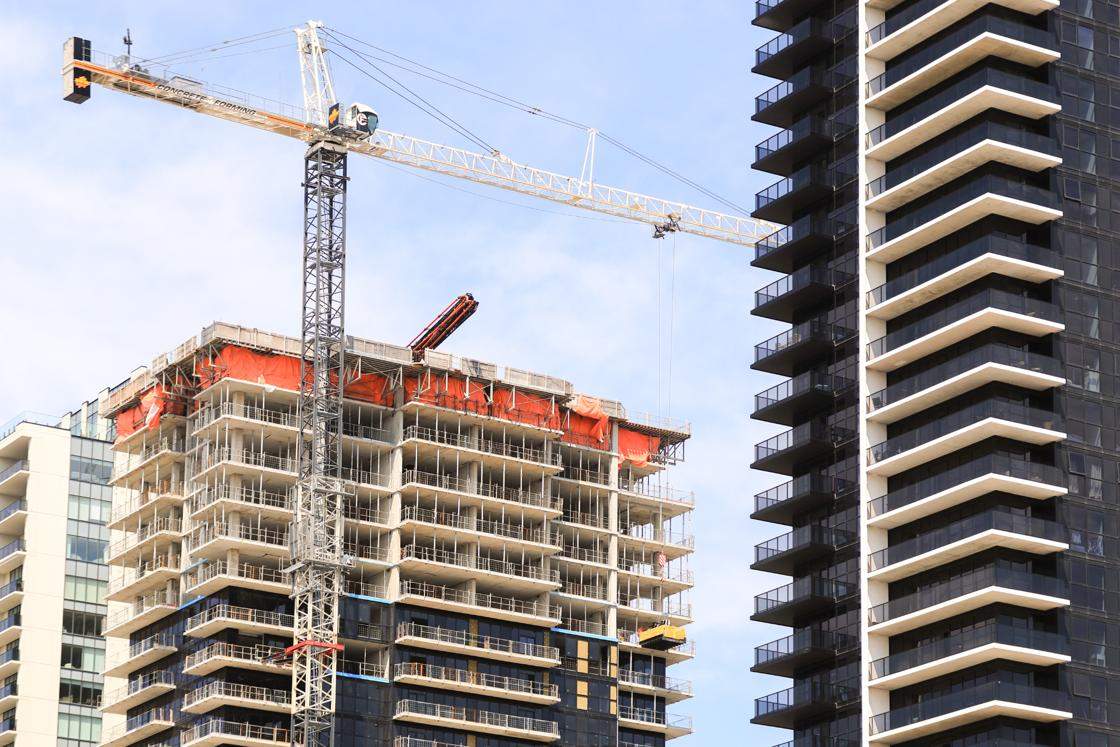
What Marc is feeling in his gut is currently being quantified in the sterile hallways of Statistics Canada. The numbers came out, dry and clinical, stripped of the sweat and anxiety of the people who actually build things. Investment in Canadian residential building construction is down. It is not a dip. It is a sustained, grinding retreat.
To the casual observer scrolling through a business feed, a percentage drop in capital investment sounds like an abstract problem for billionaires. It sounds like a column on a ledger that will eventually balance itself out.
It is not.
When residential construction investment falls, it means a welder named Dave is looking at his phone, wondering why his union hall hasn’t called. It means a young couple in Halifax is outbid on a fixer-upper for the fourteenth time because the supply line has choked out. It means the invisible machinery that keeps a society housed is grinding to a halt.
The Math of Momentum
Let us step out of Marc’s quiet trailer for a moment to look at the anatomy of a slowdown.
Building a house is an exercise in faith. You buy land today with the hope that three years from now, the economics of the world will still make sense. But right now, the math is broken.
Consider a simplified scenario. Imagine trying to build a deck on your house. If the wood suddenly costs double, the screws are delayed by six months, and the bank doubles the interest rate on the loan you took out to buy the materials, what do you do? You put the tools away. You wait.
Now multiply that deck by a high-rise condo tower or a sprawling subdivision.
The retreat in housing investment is driven by a triad of economic gravity: stubborn interest rates, bloated material costs, and a chronic shortage of specialized labor. When central banks raised rates to tame inflation, they did so with a blunt instrument. It cooled consumer spending, yes, but it also made the capital required to build housing incredibly expensive.
Developers rely on loans to get projects out of the ground. When the cost of borrowing skyrockets, the profit margins—which are already thinner than most people realize—evaporate. If a project does not pencil out on paper, a bank will not fund it. If a bank does not fund it, the shovel never touches the dirt.
The tragedy is that this slowdown is happening at the exact moment Canada needs the opposite. The population is growing at record speeds. Demand is a roaring engine; supply is a car with a transmission that just dropped onto the highway.
The Ripple on the Asphalt
We tend to think of housing shortages as a localized misery. We look at the skyrocketing rents in Vancouver or the suburban sprawl of Toronto and think it is a big-city disease. But economic paralysis has a way of traveling down the highway, bleeding into places that used to be safe harbors.
Take the story of Sarah and Elena. They do not exist as specific data points in the government registry, but they exist in every coffee shop and rental viewing across the country. They are a nurse and a high school teacher living in a town two hours outside of Montreal. A few years ago, their combined income would have bought a comfortable bungalow with a yard big enough for a dog.
Today, they are trapped in a two-bedroom apartment with a landlord who hints at renovations every time the lease is up for renewal.
Because Marc and developers like him cannot get financing to build new townhouses, the people who would normally buy those townhouses are staying in their starter homes. The people in the starter homes cannot move up, so they stay in their apartments. The apartments never open up, so the rents climb for the people at the very bottom of the ladder.
It is a game of musical chairs where someone keeps stealing the chairs while the music is still playing.
The emotional toll of this stagnation is harder to measure than capital expenditure, but it is far more corrosive. It breeds a quiet, simmering resentment. When a generation realizes that working fifty hours a week cannot guarantee four walls and a roof of their own, the social contract begins to fray at the edges. The anxiety becomes part of the atmosphere, a low-frequency hum at every dinner table.
The Myth of the Quick Fix
Whenever these reports drop, the airwaves fill with predictable remedies. Municipalities promise to slash red tape. Federal politicians trade barbs about tax incentives and zoning laws. Advocates call for massive injections of public money to build social housing.
Some of these ideas are necessary. None of them are magic.
The reality of the construction industry is that it possesses the turning radius of an ocean liner. You cannot turn a faucet on and instantly get a million new homes. If every regulatory barrier vanished tomorrow morning, we would still confront the hard, physical reality of the ground.
We do not have enough people who know how to pour foundations, run electrical conduits, or install HVAC systems. For decades, our culture told young people that success meant a desk, a laptop, and a digital life. We stigmatized the trades. Now, the average age of a master plumber in this country is closer to retirement than it is to high school graduation.
You cannot download a carpenter. You cannot automate the installation of a main sewer line.
Even if the financial investment miraculously returned to peak levels tomorrow, the physical capacity to build is constrained by the number of boots on the ground. It takes years to train an apprentice into someone who can run a crew. We are paying the price for a generation of collective neglect.
The View from the Dirt
Back in the trailer, Marc Tremblay closes his laptop. The screen goes black, reflecting the gray Ottawa sky. He walks out into the mud, his boots sinking slightly into the clay.
He walks over to the idle excavator and puts a hand on the cold steel of the bucket. He knows the guy who owns this machine. He knows the guy has three kids and a mortgage that just renewed at a terrifying new rate. Marc wants to give him work. He wants to give everyone work.
The silence on a stalled construction site is different from the silence of a forest or a quiet room. It feels heavy, charged with the ghost of the activity that should be happening. It is the sound of missing paychecks, delayed marriages, and dreams put on ice.
The numbers on the government websites will change again next month. They might tick up slightly, or they might slide further into the red. Analysts will dissect the percentages, and pundits will assign blame according to their political preferences.
But out here in the dirt, the truth is much simpler than a spreadsheet. A country that stops building its own future is a country that is quietly borrowing against its own survival.
Marc turns his back on the idle machinery and walks toward his truck. The keys rattle in his pocket, a small, lonely sound against the vast, unfinished landscape.