Dust settles slowly in central Turkey. When a hundred-foot column of volcanic ash finally gives way, the sound isn't the sharp crack of breaking timber or the shattering of glass—it is a low, sub-audible groan that vibrates in your chest before it reaches your ears, followed by a sudden, suffocating silence.
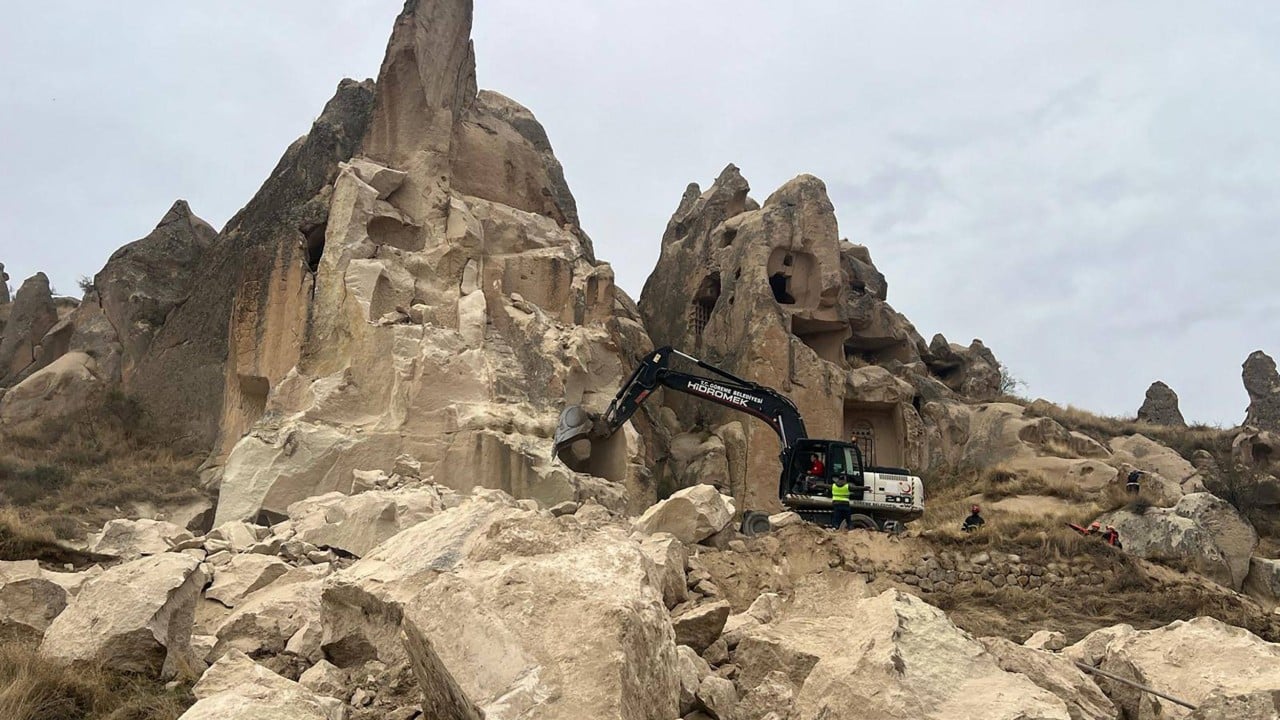
Three people died when a rock spire collapsed in Cappadocia.
In the flat, clinical prose of wire reports, that is the whole story: three fatalities, a famous tourist destination, a geological failure. You read the headline over morning coffee, feel a brief flicker of abstract sympathy, and scroll to the weather. Yet if you have ever stood inside one of those hollowed-out cones at dawn, smelling the damp mineral coolness of the tuff stone while hot air balloons drift like silent lanterns outside the carved windows, you know that headline misses everything that matters. It misses the quiet bargain every traveler makes with ancient places, and the invisible clock ticking inside the rock itself.
A Morning Carved in Ash
Consider a composite traveler—let’s call her Elena, though she represents thousands who arrive in Göreme every week with a camera strap across one shoulder and a bucket list on their phone.
Elena wakes at four in the morning because the internet told her the light hits the Rose Valley best just before sunrise. She walks along a narrow, unpaved footpath winding between the fairy chimneys—those towering, mushroom-capped pinnacles that look like they were dripped from wet sand by a giant’s hand. The stone beneath her boots is soft, almost chalky, leaving pale dust on her laces. She ducks into a narrow doorway carved straight into the base of a spire, admiring the smooth chisel marks left by Byzantine monks a thousand years ago. To her, the stone feels eternal. It has survived empires, earthquakes, and centuries of Anatolian winters. Surely it will survive the ten minutes she spends framing a photograph.
That assumption is the exact trap.
We tend to confuse old with permanent. When we look at monuments carved from living rock, our brains categorize them alongside granite mountains or marble cathedrals. Cappadocia is neither. Millions of years ago, ancient volcanoes—Mount Erciyes, Mount Hasan, and Mount Güllü—blanketed this plateau in thick layers of ash and lava. Over millennia, that ash compressed into tuff, a porous, lightweight volcanic rock soft enough to be scooped out with iron hand tools, yet capped in places by harder layers of basalt that shielded the columns beneath from rain.
The very quality that allowed early Christians to carve sprawling underground cities, frescoed churches, and labyrinthine dwellings into the cliffs is the exact quality that makes the region inherently unstable. Tuff is essentially compressed dust waiting for an excuse to return to dust.
The Architecture of Erosion
To understand why a spire suddenly fails on an ordinary afternoon, think of a sugar cube sitting in a saucer with a single drop of water at its base. For a long time, nothing visible happens. The top remains crisp, dry, and solid. Meanwhile, capillary action pulls moisture upward through microscopic pores, dissolving the invisible bonds holding the grains together until the structure collapses under its own weight without a single warning tremor.
In Cappadocia, nature runs this experiment across hundreds of square miles every single season.
Winter brings freezing temperatures that drive water deep into hairline fractures. As the water freezes, it expands by roughly nine percent, acting like millions of tiny iron wedges prying the rock apart from the inside out. Spring thaws the ice, leaving wider voids. Summer bakes the exterior under a relentless central Anatolian sun, causing the outer crust to expand and contract at a different rate than the cool, damp interior.
I remember walking through the Love Valley several years ago after a sudden spring downpour, running my hand along the base of a towering column. Where the rock had been dry and firm the day before, the wet surface crumbled beneath my thumb like stale cornbread. Fine gray grit coated my palm. That was the moment the romance of the place shifted into something far more sobering: you aren't walking through a museum of stone; you are walking through an active, slow-motion demolition site.
The Human Footprint on Soft Ground
Nature built the instability, yet human presence accelerates it in ways we rarely pause to measure.
Over the past two decades, Cappadocia transformed from a quiet backpacker stopover into one of the most heavily photographed destinations on earth. Millions of visitors arrive annually. Boutique cave hotels have multiplied, burrowing deeper into the soft rock faces to offer luxury suites with panoramic terraces. Roads snake closer to fragile formations, carrying tour buses whose low-frequency engine vibrations ripple through the ground hour after hour.
Every footstep on an unmarked trail wears away the protective crust of the tuff. Every unauthorized climb up a sloped pinnacle for a better vantage point loosens stones that took centuries to settle. Even the breath and body heat of crowds inside cramped, unventilated rock-cut chapels alter the microclimate, introducing moisture where the stone needs dryness to hold its strength.
Local authorities and conservationists in Nevşehir Province have long walked an impossible tightrope. Shutting down the valleys entirely would destroy the livelihood of tens of thousands of families whose survival depends on hospitality, guiding, and transport. Leaving everything open invites tragedy. Over the years, officials have fenced off hazardous zones, installed steel reinforcements in high-traffic cliffs, and issued periodic rockfall warnings—especially during seasonal transitions when freeze-thaw cycles peak.
Still, you cannot wrap an entire geological region in bubble wrap. Barriers get stepped over by tourists chasing an unobstructed shot. Warning signs in Turkish and English blend into the visual clutter of a busy trailhead. And rockfalls, by their very nature, rarely announce themselves with dramatic rumbles before they happen. A fracture hidden twenty feet inside a spire can propagate silently for decades until one final gram of cohesion snaps.
What Happens When the Mountain Moves
When a collapse occurs, the immediate aftermath is defined by confusion and grief. Rescuers from Turkey’s Disaster and Emergency Management Presidency (AFAD) alongside local gendarmerie teams have to work with agonizing care. Unlike a concrete building collapse, where heavy machinery can lift slabs cleanly, a tuff rockfall buries victims under tons of pulverized powder and unstable blocks that threaten to trigger secondary slides with every vibration of a shovel or jackhammer.
For the families of the three victims, the technical explanations of volcanic stratigraphy and freeze-thaw mechanics offer zero comfort. They sent loved ones on a journey meant to celebrate beauty, history, and wonder, only to have an ordinary afternoon turn lethal in less than three seconds.
For those of us who travel, the tragedy forces an uncomfortable reckoning with how we move through wild and ancient spaces. Modern tourism has conditioned us to treat dramatic landscapes like theme parks—curated, safety-tested, and engineered to protect us from consequence. We assume that if a path exists, someone has guaranteed the ceiling won't fall. We assume that because a hundred people walked beneath an overhang before lunch, it will hold for us after lunch.
The earth makes no such promises.
Walking With Eyes Open
None of this means you should cancel a trip to Cappadocia or stop seeking out the extraordinary corners of the world. Standing at the rim of the Red Valley at dusk, watching the volcanic spires shift from chalky white to deep terracotta as the sun drops below the plateau, remains one of the most humbling experiences a person can have.
It simply means replacing passive awe with active awareness.
When you visit geologically fragile regions—whether the volcanic valleys of central Turkey, the sandstone arches of Utah, or the chalk cliffs of the English Channel—your safety depends on reading the landscape rather than trusting the crowd. Respect barriers even when everyone else ignores them, because fences in places like Göreme are rarely placed for bureaucratic convenience; they are almost always placed where geologists have spotted fresh tension cracks or recent talus piles at the base of a cliff. Look at the ground beneath a rock face before you step under it: fresh, light-colored rubble scattered over dark soil or worn paths means the stone above is actively shedding weight. Avoid lingering directly beneath overhanging ledges, narrow spires, or deeply undercut bases, especially after heavy rain or sharp temperature swings.
Most of all, let go of the idea that a photograph is worth stepping past a warning line.
Long after the rescue crews pack up their gear and the headlines fade from the news cycle, the wind will keep scouring the valleys of Cappadocia, grain by microscopic grain, carving new shapes out of old ash while erasing the ones we thought would last forever.