The modern battlefield has a massive math problem, and the French military just realized Latvia has the solution.
If you look at recent conflicts, the economic reality of air defense is totally broken. Armed forces are routinely firing half-million-dollar missiles to swat down cheap, three-thousand-dollar loitering munitions. It is financially unsustainable and logistically dangerous. You run out of interceptors long before the enemy runs out of plastic drones.
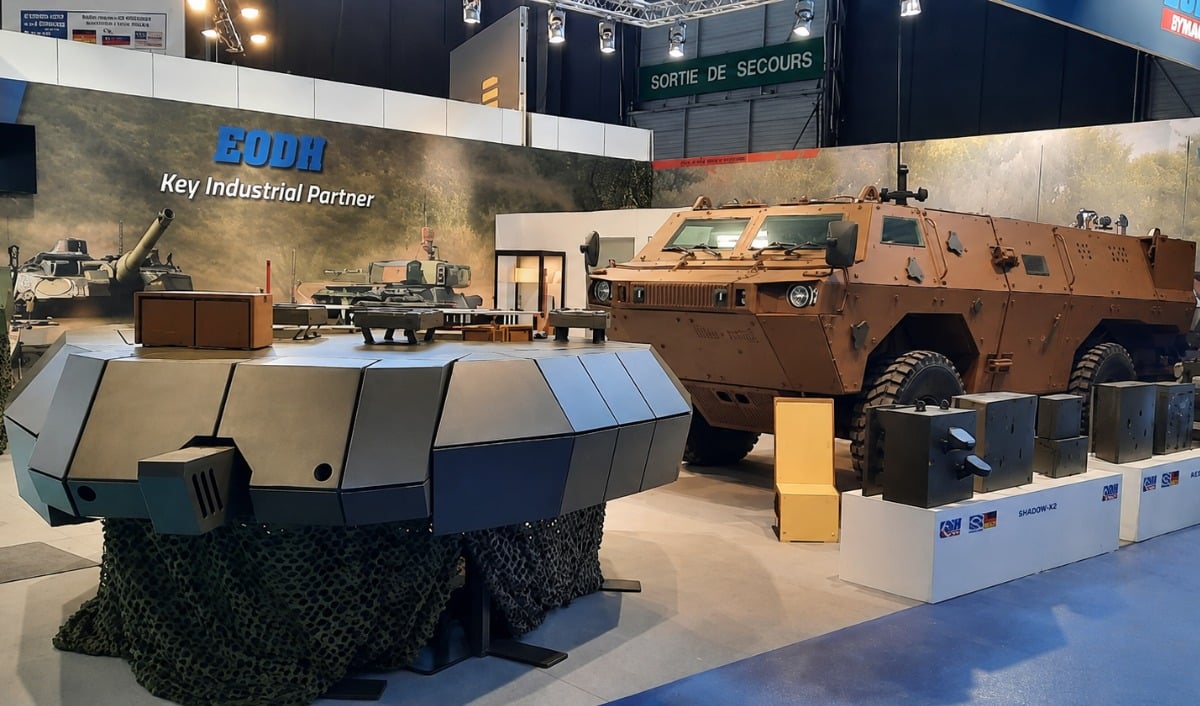
That is why the French Armed Forces just made a fascinating move at the Eurosatory 2026 defense exhibition in Paris. Instead of turning to a domestic aerospace giant, France selected a Latvian autonomous weapons developer named Origin Robotics to supply its new counter-drone shield.
The French Defence Procurement Agency (DGA) confirmed a contract to procure the BLAZE autonomous interceptor drone system. It is a major wake-up call for how Western powers view drone warfare. For years, Western militaries prioritized complex, exquisite hardware. Now, they are shopping in the Baltics for cheap, smart, expendable tech that actually scales.
The Brutal Math of Modern Air Defense
The decision by France to purchase the BLAZE system boils down to cost and capacity. Traditional air defense systems like the Aster or even short-range Mistral missiles are phenomenal at destroying fighter jets and cruise missiles. But using them against a swarm of commercial quadcopters modified to carry explosives is a fast track to military bankruptcy.
During rigorous testing by the DGA over recent months, the French military pitted various international systems against each other. They needed something that could handle force protection and counter-drone operations without blowing through the national budget.
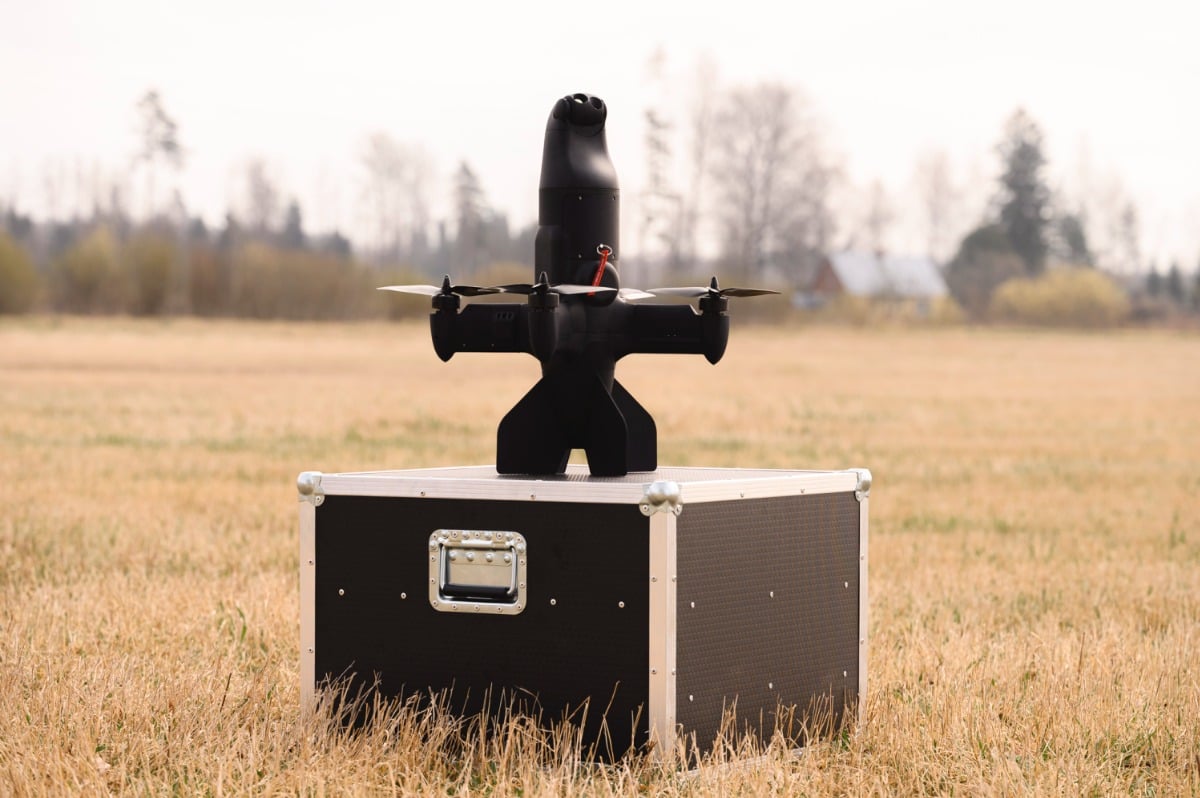
The BLAZE system won because it acts like a reusable, low-cost kinetic missile. It is a four-rotor autonomous drone that relies on radar for initial tracking and proprietary computer-vision software to lock onto an intruding target. Once the operator gives the green light, the autonomous system takes over, chasing down the threat in intercept mode without manual steering. It gets close enough to neutralize the target using an onboard fragmentation mechanism, aiming to reach a price point where the interceptor itself can be treated as disposable if needed.
Sovereignty and the Technology Transfer Catch
France rarely buys foreign military gear without a catch. President Emmanuel Macron has spent years pounding the drum of European strategic autonomy and protecting domestic industries. So, the deal with Origin Robotics is not a simple import arrangement.
Origin Robotics partnered with DSV, a French defense technology integrator. Under the terms of the agreement, DSV will handle the supply to the French Armed Forces but will also establish local assembly and manufacturing operations directly in France.
This technology transfer allows France to stamp a "Made in France" label on the production line, securing its own domestic supply chain. It is a clever blueprint for small defense tech startups looking to break into major Western markets. You build the core IP and autonomous software in a high-innovation hub like Latvia, then partner with a local industrial heavyweight to handle assembly and political optics inside the buyer's country.
The Baltic Drone Wall Goes Global
While this is a massive win for Origin Robotics, it highlights a much larger geopolitical shift. The Baltic states—Latvia, Estonia, and Lithuania—are rapidly becoming the drone capital of the European Union.
Living next door to Russia and Belarus has forced these nations to innovate out of pure necessity. Latvia recently rolled out an acoustic drone detection network along its entire eastern border to spot low-flying threats that slip under normal radar. Now, they are pairing that network with mobile interceptor units.
The French procurement marks the BLAZE system's fourth European operator, joining Latvia, Belgium, and Estonia. When a military superpower like France admits that a small Baltic nation has superior, more practical drone-killing technology, the rest of NATO notices.
Militaries can no longer rely on centralized, highly classified command networks designed during the Cold War to pass down targeting info. By the time a radar track gets cleared through three headquarters, the rogue drone has already hit its target. Systems like BLAZE function on low-classification, parallel networks, sending targeting data directly to the front-line interceptor teams in seconds.
The first BLAZE systems are scheduled to land in the hands of French troops within weeks, with operational training starting immediately. For French forces, the focus now shifts from evaluating the technology to figuring out how to integrate these autonomous killers into their existing airspace management systems without causing blue-on-blue incidents.
Militaries looking to survive the next decade need to stop overthinking exquisite defense programs. The goal now is simple: build a layered defense network, invest heavily in low-classification command software, and buy interceptors cheap enough to lose by the hundreds. France just took its first real step toward that reality.