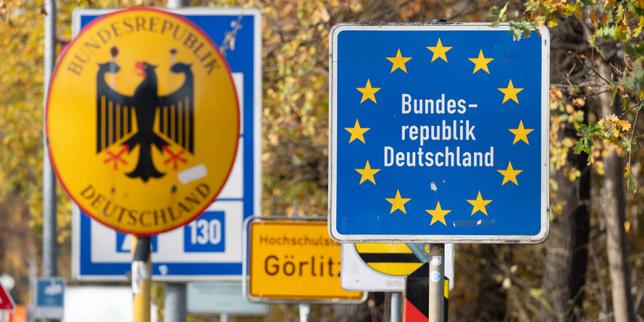
Crossing a border inside Europe used to be a non-event. You drove from France into Germany or hopped a train from Austria into Slovakia without slowing down, showing a passport, or explaining your life story to a tired officer at 6 a.m.
That era is hanging by a thread.
Restrictions on free movement inside the Schengen area have multiplied across the continent, turning what was supposed to be a borderless zone into a patchwork of spot checks, temporary suspensions, and bureaucratic friction. If you travel, ship freight, commute across a frontier, or run a business that relies on European supply chains, you've probably felt it already. The signs are everywhere. Traffic backing up for kilometers on highways that haven't had a passport booth in thirty years. Trains sitting idle at transfer stations while officers walk the aisles. A legal promise on paper that behaves very differently on the ground.
Let's get straight to the core issue. The Schengen rules never abolished national sovereignty over borders, even though most travelers treat the zone as if borders stopped existing in 1995. Under the Schengen Borders Code, member states have the legal right to reintroduce temporary internal border controls when facing a serious threat to public policy or internal security. What started as a rare emergency valve has slowly turned into a semi-permanent habit. Governments reach for border checks when migration numbers spike, when counterterrorism alerts rise, or when domestic politics gets loud and leaders want to look tough fast.
Honestly, it's hard not to see the irony. Politicians love blaming Brussels for European gridlock, yet internal border controls are classic national-level moves dressed up in emergency language.
How Temporary Checks Became the New Normal
If you haven't crossed a land frontier in Europe lately, you might assume controls only pop up during major crises. That's not how it plays out anymore.
Several Schengen states have repeatedly notified the European Commission of extended temporary border controls—sometimes stretching over months and renewed back-to-back across multiple cycles. Security concerns, irregular migration pressures, secondary movements within the bloc, and transnational crime all show up in the official justifications. Once a government puts checks in place, walking them back carries political risk. Nobody wants to lift controls on a Tuesday and face a headline on a Wednesday blaming that decision for a security incident or an influx of arrivals.
So the "temporary" label gets stretched until everyone stops treating it as temporary.
I've watched commuters in border regions adapt to this creep in real time. People who live on one side of a river or valley and work on the other side used to budget a predictable twenty-minute drive. Now a sudden lane funnel or random vehicle inspection can turn a quick trip into an hour-long headache. Cross-border workers aren't smugglers or geopolitical threats; they're nurses, mechanics, teachers, and warehouse staff just trying to get to their shifts. When a border slows down routine daily life, the friction isn't abstract. It's personal.
And it's not just cars on motorways. Long-distance coaches, regional rail lines, and ferry terminals all get caught in the dragnet. Even when officers wave most travelers through with a quick glance at an ID card, the mere possibility of a stop changes how people plan trips and how operators schedule connections.
The Hidden Costs of Border Friction
Most coverage of free movement inside the Schengen area focuses on politics or high-level diplomacy in Brussels and national capitals. That leaves out a huge chunk of the story: the practical, day-to-day tax that border friction places on ordinary people and businesses.
Start with supply chains. Europe's manufacturing economy relies heavily on just-in-time logistics. A truck carrying auto parts, pharmaceuticals, or fresh food doesn't sit in isolation; it feeds a tight schedule across multiple countries. Delays at internal crossings add unpredictability. Predictability is what keeps logistics cheap. When transit times vary wildly because of queues or inspections, companies either hold bigger inventories—which ties up cash and warehouse space—or absorb higher transport costs.
Small and mid-sized businesses get hit harder than giants. A massive logistics firm can reroute, negotiate slot guarantees, and absorb compliance headaches across dozens of depots. A smaller regional company moving goods across two or three neighboring countries feels every extra hour on the road and every shifting rule at a crossing.
Travelers feel a different kind of friction. Even if you hold an EU or Schengen passport or a valid visa, carrying the right documents every single time—without assuming an open road means zero checks—is now basic common sense. Relying on a digital photo of an ID or forgetting a physical document because "we're just popping over the border for lunch" is a rookie mistake that can ruin your day fast.
There's also a quieter cost to trust. Schengen was built on mutual confidence between countries: if one member state secures the outer perimeter and processes entry properly, neighbors don't need to re-police every traveler moving inside. Reintroducing internal checks signals doubt—either in neighboring states' enforcement, in shared databases, or in the system's ability to handle pressure without national backstops.
Why Governments Keep Reaching for the Same Lever
When migration flows shift, smuggling networks adapt, or security threats emerge, why do governments keep reaching for border checks even when economists and transport groups warn about the costs?
Because borders are visible. They're easy to point to on television.
A complex reform of asylum processing, better coordination among police forces, targeted financial investigations into smuggling rings, or investments in external border management takes years and requires multilateral alignment. Setting up a checkpoint or deploying police patrols to a frontier happens much faster, and voters can literally see action being taken.
That doesn't mean every concern behind border checks is imaginary. European countries have faced genuine pressure from irregular migration routes, strained reception systems in certain municipalities, and real security threats over the past decade. Dismissing those pressures as pure theater would be dishonest. Governments have a real duty to protect public safety and manage migration fairly and lawfully.
Where the debate gets heated is over effectiveness and proportionality. Critics—including many transport associations, border-region mayors, and legal scholars—argue that blanket or prolonged internal checks often displace rather than solve problems. Smugglers don't politely drive into a marked inspection lane; they look for smaller roads, off-peak hours, or alternative routes. Meanwhile, legitimate travelers and commerce bear the brunt of the slowdown.
EU institutions have repeatedly tried to balance national security concerns with the integrity of the Schengen zone, pushing for stricter criteria, time limits, and alternative measures like enhanced police cooperation and technology-assisted checks rather than endless highway bottlenecks. Yet when national capitals feel under domestic pressure, treaty ideals often take a back seat to immediate political survival.
Digital Borders and New Rules Add Another Layer
If physical checkpoints weren't enough to complicate movement, Europe's border management is also shifting toward tighter digital tracking and stricter rules for non-EU visitors.
Systems like the Entry/Exit System (EES) and travel authorization frameworks such as ETIAS—designed to modernize how external arrivals and short-stay rules are tracked—change the rhythm of entering and moving around the Schengen zone for third-country nationals. Even when a traveler holds a valid visa or belongs to a visa-exempt nationality, keeping close track of stay limits (such as the classic 90-day rule within a 180-day period across the Schengen area) matters more than ever when border authorities have sharper data tools.
A common misconception among non-EU travelers is treating each Schengen country like a separate clock. It isn't. Days spent in Schengen countries generally count toward your aggregate allowance inside the zone, not country by country. Misreading that math can lead to awkward questions, fines, or complications on future trips.
And for anyone living, working remotely, or splitting time between countries, tax residency, social security coordination, and local registration rules are separate legal tracks from Schengen border rules. Crossing without a passport stamp doesn't mean you're invisible to tax authorities or labor inspectors. That's another trap people walk into when they assume "open borders" means "no rules."
What Actually Works When You Travel or Operate Across Borders
Theory is nice, but when you're actually on the road or running cross-border operations, you need habits that hold up when plans go sideways.
First, build slack into your schedule. If you're driving across a Schengen border for a flight, a train connection, a client meeting, or a delivery window, treat border crossings as variable rather than instant. Leaving an extra thirty to sixty minutes on major corridors—or checking live traffic and border advisories before setting off—saves a lot of stress.
Second, carry real, valid physical identification every time, even for short hops. A physical passport or national ID card (where accepted for cross-border travel) is non-negotiable. Don't rely on an expired document just because you've crossed that spot ten times without anyone looking. Rules can tighten overnight.
Third, if you move goods or manage cross-border staff, don't rely on assumptions from two years ago. Check current customs, cabotage, posting-of-workers, and transit requirements for your exact route and cargo type. What worked smoothly before a new control measure or enforcement push might now require extra paperwork or different routing.
Fourth, keep an eye on official updates from national authorities and the European Commission Schengen area guidance rather than social media rumors. Border stories on social platforms love exaggeration—one traffic jam on a Friday afternoon gets framed as "Schengen has collapsed," while a quiet Tuesday crossing gets ignored.
The Schengen project isn't dead, not by a long shot. Millions of people and billions of euros in goods still cross internal frontiers every single day with minimal fuss compared to non-Schengen borders elsewhere in the world. Still, the gap between the ideal of effortless movement and the reality of frequent checks is wider than it has been in years—and if you plan around that reality instead of pretending nothing changed, you'll save yourself plenty of time and frustration.
- Check official border and travel advisories for your specific crossing points before departing, especially on weekends, holidays, and major transit corridors.
- Always travel with valid physical ID or passport documents and verify your remaining allowed days if you're a non-EU visitor tracking short-stay limits.
- Add buffer time to cross-border road, rail, and freight schedules, and review current compliance rules with your logistics or legal team if you operate across multiple countries.


