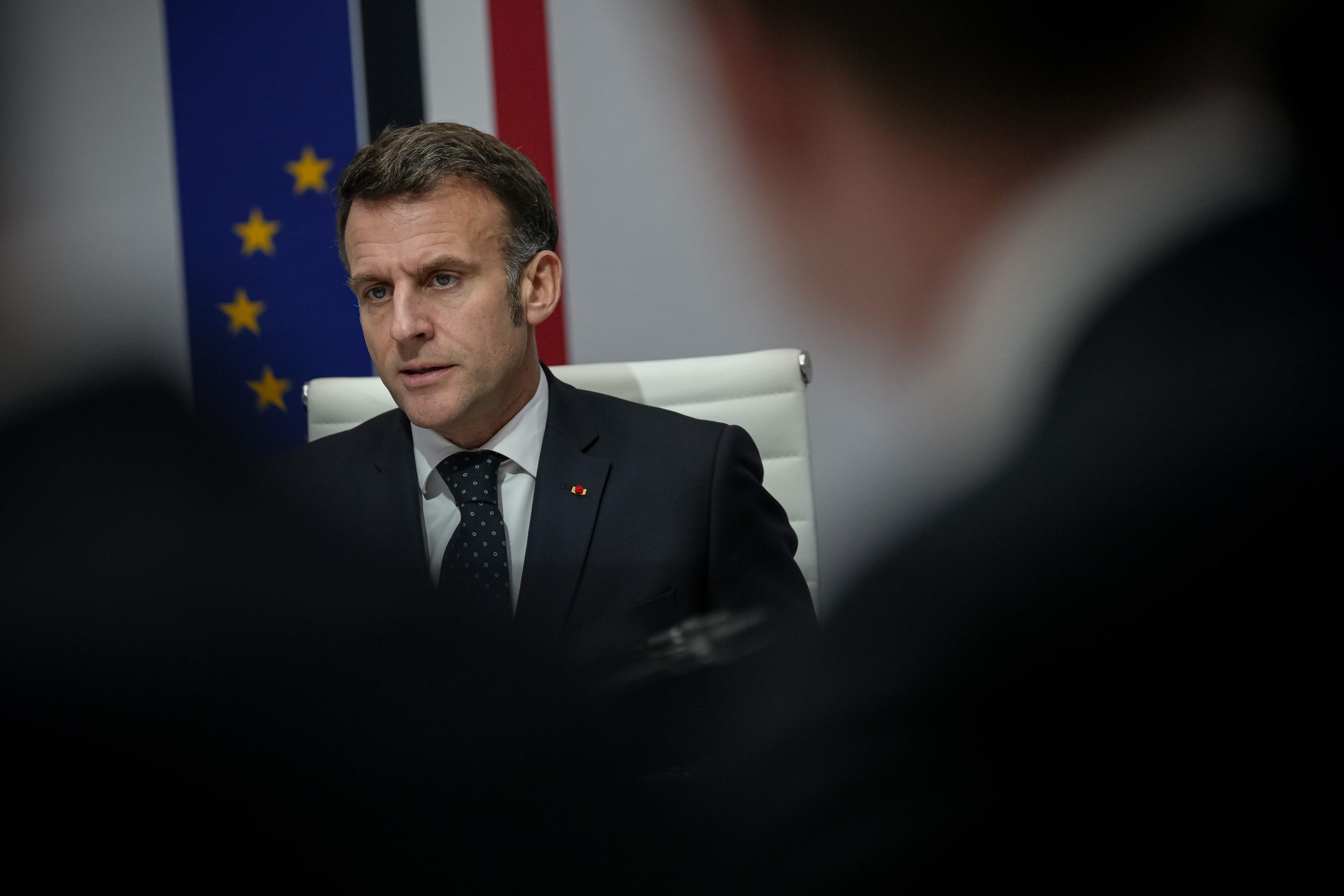
The era of the "peace dividend" has not just ended; it has been buried under the weight of a fundamental shift in French military doctrine. Paris is currently moving to expand its nuclear arsenal, a decision that moves beyond mere maintenance of the force de frappe. By increasing the number of available warheads and accelerating the modernization of delivery systems, France is signaling that the era of minimum deterrence is no longer sufficient to guarantee "assured destructive power" in a multipolar, high-threat environment. This is not a reactive tweak to a budget. It is a calculated move to ensure that France remains the sole credible nuclear guarantor for a European continent increasingly nervous about the reliability of the American security umbrella.
For decades, the French nuclear posture remained relatively static, hovering around 300 warheads. This number was calculated on the principle of "strict sufficiency"—having just enough to inflict unacceptable damage on any adversary. But the calculus has changed. The rise of sophisticated missile defense systems, the return of large-scale conventional warfare to Europe, and the expansion of nuclear arsenals in the East have forced the Élysée to reconsider the math of survival.
The Logic of Assured Destruction in the 21st Century
To understand why France is adding more warheads, one must first understand the concept of penetration probability. A nuclear deterrent is only effective if the adversary believes the warhead will actually reach its target. As adversaries deploy more advanced anti-ballistic missile (ABM) systems and integrated air defense networks, the number of warheads required to guarantee a "hit" increases.
If a defense system has a 50% interception rate, you need two warheads to achieve the same result that one warhead provided a decade ago. It is a grim, mathematical reality. France’s decision to increase its stockpile is a direct response to the hardening of global airspace. By saturating an enemy's defensive capabilities with more reentry vehicles, Paris ensures that its "warning shot" or its ultimate strike remains a credible threat.
Furthermore, the nature of the warheads themselves is evolving. The transition to the Tête Nucléaire Océanique (TNO) on the M51.3 submarine-launched ballistic missiles (SLBMs) represents a leap in stealth and maneuverability. These are not the blunt instruments of the Cold War. They are precision tools designed to evade the very defenses meant to stop them.
The European Dimension and the Sovereignty Trap
France occupies a unique position as the only nuclear-armed power in the European Union. While the United Kingdom remains a nuclear power via NATO, its reliance on American-made Trident missiles creates a perception of dependency that France has spent sixty years avoiding. French nuclear sovereignty is absolute; the President of the Republic holds the launch codes without a second signature required from Washington or Brussels.
This independence is now France's greatest diplomatic lever. As political shifts in the United States raise questions about the long-term viability of Article 5, Emmanuel Macron has leaned into the idea that French nuclear forces protect more than just French soil. He has invited European partners to engage in a "strategic dialogue" about the role of the French deterrent in collective European security.
However, this invitation comes with a catch. For Europe to rely on French nuclear protection, it must also align with French strategic autonomy. This means buying European (often French) military hardware and reducing reliance on American defense contractors. The increase in warhead counts serves as proof of concept. It shows that Paris is willing to shoulder the massive financial and political burden of being a top-tier nuclear power so that Europe doesn't have to look across the Atlantic for every security crisis.
Modernizing the Triad with Two Legs
Unlike the United States or Russia, France does not maintain a land-based missile silo system. It long ago scrapped the missiles on the Plateau d’Albion, opting instead for a "dyad" consisting of:
- The Oceanic Leg: Four Triomphant-class ballistic missile submarines (SSBNs), with at least one always on patrol. This is the backbone of the French deterrent, providing the "second strike" capability that ensures an adversary cannot wipe out France's nuclear options in a single surprise attack.
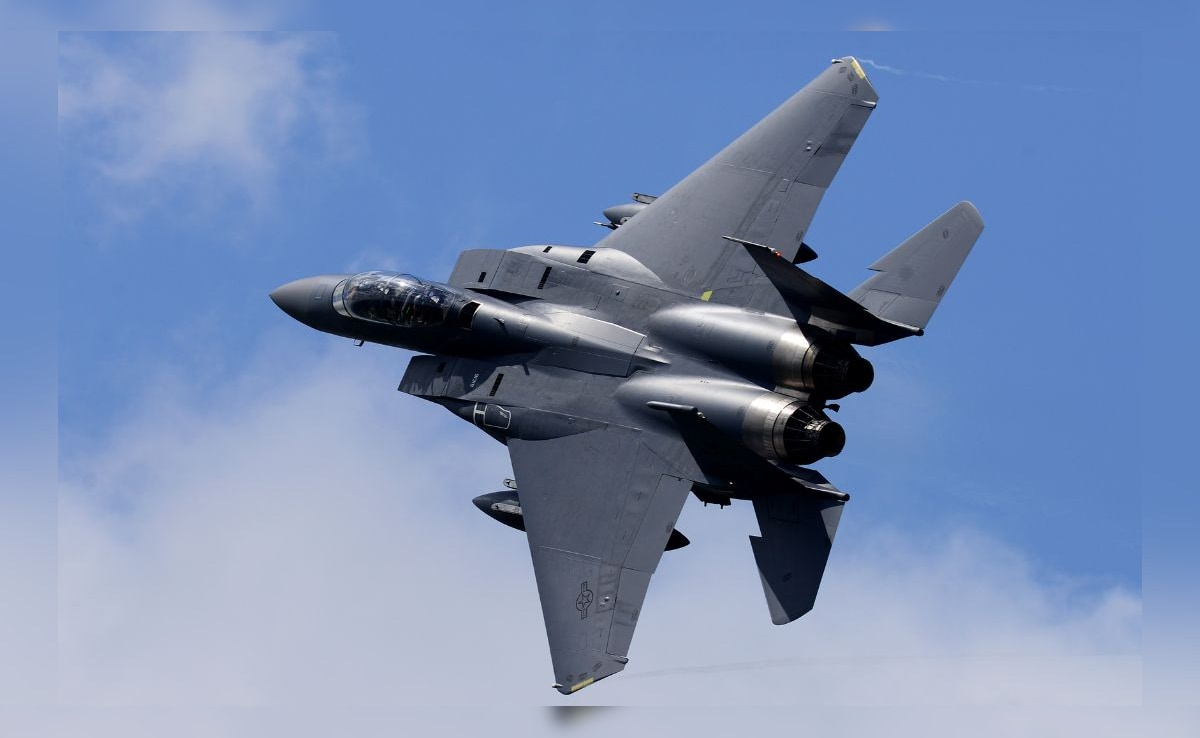
- The Airborne Leg: The Force Aérienne Stratégique (FAS), utilizing Rafale B fighters equipped with the ASMPA (Air-Sol Moyenne Portée Amélioré) supersonic cruise missile. This leg offers flexibility and visibility, allowing the French government to signal its resolve by deploying nuclear-capable jets during a crisis.
The current expansion focuses heavily on the M51 missile series. These missiles are massive, three-stage behemoths capable of hitting targets thousands of kilometers away with pinpoint accuracy. The development of the M51.3 and the future M51.4 is not just about range; it is about the ability to carry multiple independently targetable reentry vehicles (MIRVs).
By increasing the number of warheads available to the fleet, France can ensure that even if a submarine is forced to operate in a contested environment, the sheer volume of its payload remains a decisive factor. The math of war is moving toward saturation.
The Hidden Cost of Nuclear Ambition
Expanding a nuclear arsenal is an extraordinarily expensive endeavor, both financially and politically. The French defense budget has seen significant increases, with the Loi de Programmation Militaire (LPM) 2024-2030 allocating roughly 413 billion euros to military spending. A massive chunk of this is dedicated to "nuclear deterrence."
Critics argue that this focus on nuclear "big sticks" comes at the expense of conventional forces. In the trenches of modern conflict, a nuclear warhead is a weapon of non-use. You cannot use a TNO warhead to stop a drone swarm or a cyberattack. There is a persistent tension between the need for "assured destructive power" and the need for "flexible response" in low-intensity or hybrid conflicts.
Yet, from the perspective of the French General Staff, the nuclear umbrella is what allows the conventional forces to operate at all. Without the ultimate guarantee, France would be subject to nuclear blackmail, restricted in its ability to project power in Africa, the Mediterranean, or the Indo-Pacific.
The Technological Arms Race
The push for more warheads is inextricably linked to the development of hypersonic technologies. Russia and China have made significant strides in hypersonic glide vehicles (HGVs) that can bypass traditional radar and interceptors. France is not sitting idly by. The V-MaX program (Véhicule Manœuvrant Expérimental) is France’s entry into the hypersonic race.
Adding more warheads provides a buffer during this technological transition. While the French military perfects its own hypersonic delivery systems, having a larger quantity of traditional, highly capable ballistic warheads acts as a bridge. It ensures that there is no "vulnerability gap" while the next generation of physics-defying weaponry is refined.
We also see a renewed focus on the infrastructure of the nuclear complex. From the enrichment facilities at Pierrelatte to the research centers of the CEA (Commissariat à l'énergie atomique), the entire supply chain is being revved up. This is an industrial mobilization that hasn't been seen since the Cold War. It requires a specialized workforce and a long-term commitment that spans decades, not election cycles.
Deterrence in an Age of Uncertainty
The traditional model of deterrence relied on "rational actors" who understood the consequences of mutual destruction. Today, the geopolitical landscape is more fragmented. We are seeing the emergence of "asymmetric nuclear threats" and the erosion of arms control treaties like the INF and New START.
In this chaotic environment, the French doctrine of "the interest of the nation" is becoming more elastic. Paris has intentionally left the definition of its "vital interests" vague. Could a massive cyberattack on French power grids trigger a nuclear response? Could a threat to a key European ally be seen as a threat to France itself? By increasing the size and potency of its arsenal, France makes the cost of miscalculating these boundaries even higher for any potential aggressor.
This is the grim reality of the new security environment. France is not building more warheads because it wants to use them; it is building them because it believes the only way to avoid a catastrophic conflict is to make the price of entry unthinkable.
The expansion of the French nuclear stockpile is a definitive rejection of the hope that the world would eventually move toward disarmament. It is a cold-eyed acknowledgment that in a world where hard power is once again the primary currency of international relations, "assured destruction" is the only insurance policy that matters. As the first M51.3 missiles begin to enter service, the message from Paris is clear: the defense of Europe will be backed by a French hammer that is growing heavier by the day.
Monitor the upcoming sea trials of the next-generation SNLE 3G submarines. These vessels will be the definitive platforms for France’s expanded nuclear capability and will dictate the strategic balance of the North Atlantic for the next fifty years.