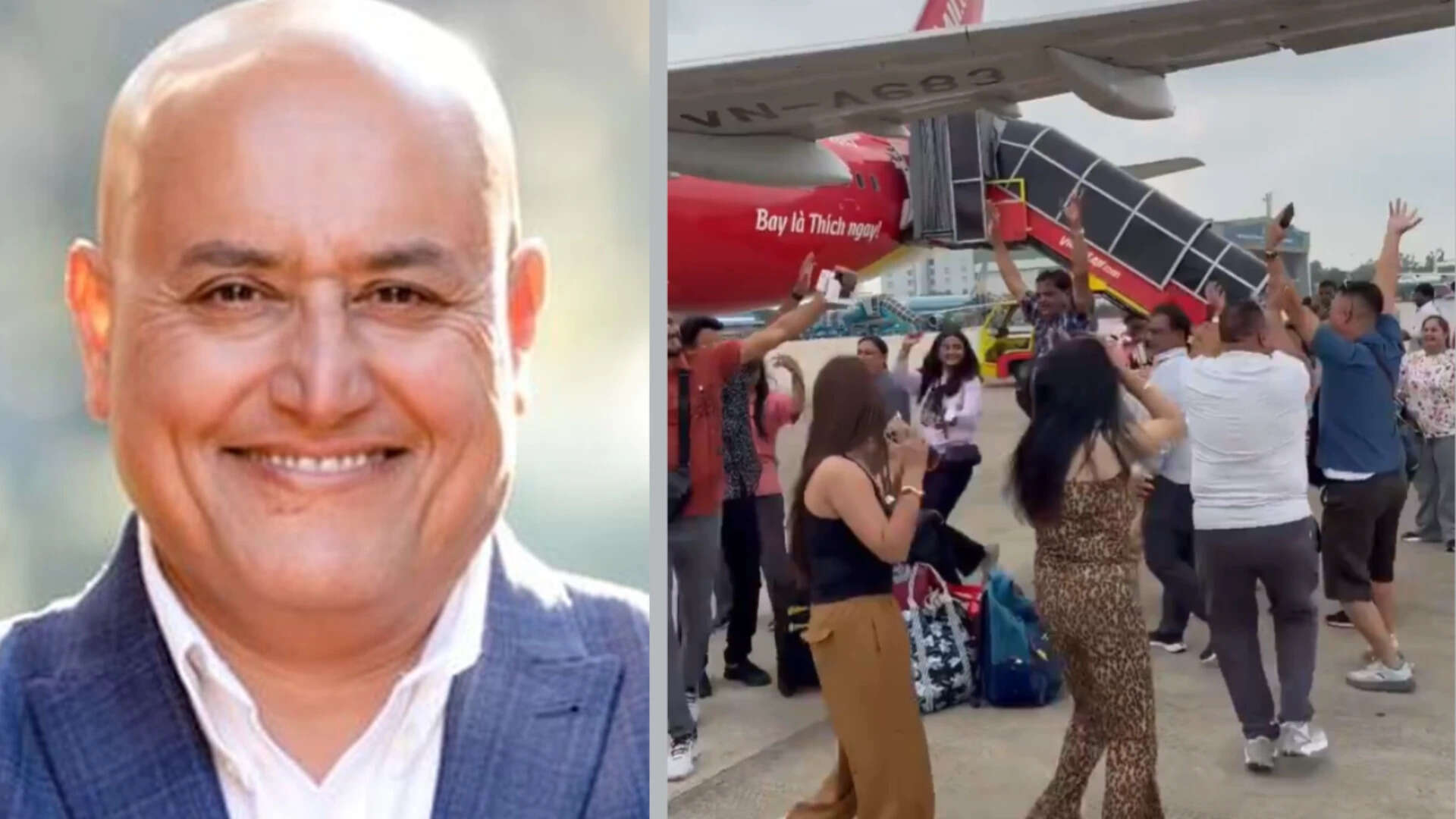
The globalization of tourism depends on a foundational paradox: the optimization of hyper-efficient, sterile infrastructure operating alongside the fluid expression of local cultural identities. When a viral video captured Indian tourists performing Garba on an airport tarmac in Vietnam alongside a parked VietJet Air aircraft, it triggered a public rebuke from Hotmail co-founder Sabeer Bhatia. The entrepreneur noted that culture is defined by behavioral consideration and civic etiquette rather than visible performance.
This tension is not a mere clash of manners. It represents a structural friction between global operational standards and localized cultural behaviors. To evaluate the systemic implications of such behavior, one must look past the superficial dichotomy of cultural pride versus public nuisance. Instead, it requires evaluating the physical risks of restricted aviation zones, the mechanics of behavioral export, and the strategic economic costs imposed on a nation's global branding.
The Operational Risk Function of Airside Interventions
An airport tarmac is not a public square. It is a highly regulated, high-risk industrial zone known in aviation logistics as the airside operational area. Within this zone, passenger movement is mathematically optimized to minimize time-to-board while maximizing human safety against systemic variables. Introducing uncoordinated, non-linear human movement into this space introduces severe operational liabilities.
Jet Blast and Foreign Object Debris Generation
The proximity of passengers to commercial aircraft presents immediate kinetic risks. Aircraft engines, even while idling or preparing for pushback, generate significant exhaust velocity and thermal output. A group operating in a circular dance formation disrupts the structured queue, potentially placing individuals within the hazard zones of engine intake or jet blast.
Furthermore, high-energy group movements in an open-air operational environment increase the probability of introducing Foreign Object Debris (FOD). Items of clothing, footwear, or personal accessories detached during a performance can be ingested by aircraft engines. The economic cost of FOD-induced engine damage runs into hundreds of thousands of dollars per incident, alongside severe systemic flight delays.
The Breakdown of Spatial Control Economics
Aviation safety protocols rely on strict spatial containment. Ground crew resources are allocated based on predictable, linear passenger vectors between the terminal gate or shuttle bus and the aircraft stairs. When a passenger cohort transitions from a moving vector to a stationary, expanding cluster, the ground crew's situational awareness is compromised. This spatial disruption forces a reallocation of security personnel, increases the risk of ground vehicle collisions, and directly threatens the airline's turnaround time optimization.
The Soft Power Dilemma: Cultural Export Versus National Brand Equity
The debate surrounding the incident highlights two conflicting frameworks regarding how national identity should be expressed internationally.
[Spatial Optimization Vector: Terminal Gate -> Linear Passenger Flow -> Aircraft Stairs]
                             |
                   (Disrupted by Circular Group Formation)
                             |
                             v
[Operational Vulnerabilities: Increased Turnaround Time + FOD Hazard + Ground Security Reallocation]
The Performance Framework
Defenders of public cultural displays operate on a performance framework. This viewpoint treats global shared spaces as neutral stages for the projection of soft power and heritage. From this perspective, performing a traditional folk dance at an international transit hub is seen as an act of cultural confidence that normalizes a nation's presence in global geographies.
The Behavioral Framework
The alternative approach, articulated by technology executives like Bhatia, prioritizes a behavioral framework. This perspective argues that a nation's global prestige is built through the collective adherence of its citizens to international civic standards, including etiquette, situational awareness, and respect for institutional rules. When behavioral standards are ignored, visible cultural performances lose their positive value and instead reinforce negative stereotypes regarding civic compliance.
This dynamic creates a measurable bottleneck for countries experiencing a surge in outbound tourism. A nation's passport strength and the ease with which its citizens obtain visas are deeply tied to institutional trust. If a tourist demographic becomes associated with operational disruptions or regulatory non-compliance, foreign civil aviation authorities and immigration bureaus may implement stricter friction points, raising the compliance burden for all travelers from that nation.
Strategic Mitigations for Outbound Tourism Growth
As disposable income rises across emerging economies, the volume of first-time international travelers will continue to increase. Relying solely on public criticism on social media is an ineffective strategy for modifying collective traveler behavior. Managing the intersection of cultural expression and global infrastructure requires targeted structural solutions.
- Airlines as Behavioral Safeguards: Air carriers serving high-volume tourist routes must integrate clear behavioral expectations into their pre-flight communication channels. This involves treating airside safety compliance with the same legal weight as in-cabin regulations, explicitly warning passengers about the legal and financial penalties of unauthorized airside stops.
- Infrastructure Design Adaptation: Airport operators handling high volumes of leisure tour groups must design physical transit paths that prevent lingering. Implementing physical barriers, continuous moving walkways, and dedicated ground staff monitoring on the tarmac can structurally eliminate the space required for impromptu gatherings.
- Pre-Departure Civil Orientation: Tourism boards and travel agencies managing large-scale international group itineraries bear a structural responsibility. Group packages should include mandatory orientations detailing the civic norms, local laws, and operational boundaries of the destination countries.
The long-term value of a nation's cultural capital is determined by how effectively its citizens navigate global systems. True soft power is achieved when a country's citizens demonstrate complete mastery over international civic expectations, ensuring that cultural heritage is shared in appropriate spaces without compromising global operational standards.