The floor should be sticky. That is the first thing Sarah notices as she adjusts the headset. In a real venue, your shoes would make a slight tearing sound against the beer-soaked concrete of a basement club or the soda-stained floors of a stadium. Instead, there is only the soft pile of her living room rug. She is holding a lukewarm sparkling water rather than a twelve-dollar plastic cup of watered-down lager.
Everything is wrong, yet as the lights go down in the digital void, her heart does that familiar, frantic stutter.
For decades, the concert was a physical sacrifice. You gave up your personal space, your hearing, and a significant portion of your paycheck to stand in a swarm of strangers, breathing the same recycled air. It was an exercise in collective effervescence. But the wind has shifted. What started as a desperate pivot during the global lockdowns of 2020 has curdled into something permanent, profitable, and strangely intimate. We are witnessing the death of the "nosebleed seat" and the birth of a medium that is neither quite cinema nor quite a gig. It is a third thing.
The Ghost in the Machine
Consider the economics of a touring band. To move a four-piece rock outfit across the Atlantic requires a logistical ballet of carnets, work visas, flight cases, and carbon offsets that would make a corporate liquidator weep. For the fan, the barrier is just as high. If you live in a "secondary market"—AI-speak for any city that isn't London, New York, or Tokyo—you are often ignored.
Then came the livestream.
At first, it was grainy. A singer-songwriter in their kitchen, squinting at a scrolling sidebar of fire emojis while their cat walked across the frame. It was charming because it was pathetic. We felt for them. But the "industry" doesn't stay pathetic for long. It optimizes.
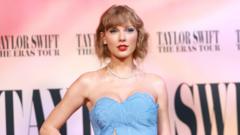
By the time Taylor Swift’s The Eras Tour hit theaters, the concert film had evolved from a mere souvenir into a primary product. It wasn't just a recording of a show; it was a curated hyper-reality. In a stadium, you see the artist as a glittering speck against a LED backdrop. In the film, you see the individual beads of sweat, the frayed edges of a costume, and the micro-expressions of a human being performing at the absolute limit of their endurance.
This is the central tension of the modern concert film. It offers a level of "closeness" that is physically impossible at a live event. You are closer to the artist than their own security detail. Yet, you are entirely alone.
The Loneliness of the Long-Distance Fan
Let’s look at Marcus. Marcus is forty-two, lives in a rural town three hours from the nearest stadium, and has two kids who need to be in bed by eight. For Marcus, the "rise of the livestream" isn't a tech trend. It’s an invitation back into a world he thought he’d aged out of.
Last Friday, he paid twenty-five dollars for a high-definition stream of a jazz fusion set playing in an underground club in London. He sat in his darkened den with a pair of studio-grade headphones.
"The sound was better than the room," he told me.
He’s right. When you attend a live show, you are at the mercy of the venue's acoustics—the way the bass traps in the corners or how the high-mids bounce off the back wall. When you stream a high-end production, you are receiving the board mix. You are hearing what the sound engineer hears. It is sterile, yes. It lacks the physical "thump" in your chest that only moving air can provide. But it is perfect.
We are trading the visceral for the cerebral. We are choosing the perfect representation of a thing over the messy reality of the thing itself. This shift is reflected in the numbers: the global concert film market is projected to grow by double digits annually through the end of the decade. This isn't a bubble. It’s a restructuring of how we consume "presence."
The Invisible Stakes of the Digital Ticket
There is a danger here that the industry prefers not to discuss. If we can pay twenty dollars to see the best possible version of a show from our couch, why would we ever pay two hundred to see a mediocre version from the back of a hall?
The "livestreamed gig" acts as a double-edged sword for emerging artists. On one hand, it democratizes access. A band from Jakarta can sell virtual tickets to fans in Berlin without ever booking a flight. On the other hand, it forces musicians to become film directors. To make a stream compelling, you can't just play your instruments. You need multi-cam setups, lighting cues that translate to digital sensors, and a personality that can bridge the gap between a lens and a retina.
The stakes are invisible because they are emotional. When we sit in a theater or a living room to watch a concert, we are engaging in a simulation of community. We see the crowd on screen cheering, and we might feel a phantom warmth, but we are essentially voyeurs. We are watching other people have an experience.
The question we have to ask ourselves is: does the convenience outweigh the cost of the soul?
The Geometry of Connection
The tech is getting weirder. We’ve moved past the 2D screen into the "Metaverse" concerts—Avatar-led performances where the artist is represented by a digital twin. Critics call it soulless. The millions of teenagers who attended the Fortnite concerts call it Friday night.
To understand why this works, you have to look at the geometry of the experience. A traditional concert is a triangle: the artist at the top, the audience at the base, and the music flowing between them. A livestreamed concert is a straight line. It is a direct, unmediated pipe from the performer’s intent to your ears.
There is a specific kind of magic in that line. It’s the feeling of a private performance. When an artist looks into the camera during a livestream, they are looking at everyone, which means they are looking at you. In a crowd of twenty thousand, you never get eye contact. In a stream of two million, you get it constantly.
It is a grand illusion. A trick of the light and the lens.
The Residual Heat
As Sarah takes off her headset, the silence of her apartment feels heavy. The concert is over. There was no encore because there was no one to clap until their palms bled to demand one. The stream simply ended. A "Thank You For Watching" graphic replaced the sweat and the neon.
She feels a strange mix of exhaustion and isolation. She saw every finger movement on the guitar fretboard. She heard the singer’s breath catch in the bridge of the third song. She was closer than she had ever been to her idol.
And yet, as she walks to the kitchen to put her glass in the dishwasher, she realizes she didn't meet a single new person tonight. She didn't share a glance with a stranger during the chorus. She didn't feel the floor shake.
We are entering an era of "on-demand" ecstasy. We can summon the greatest performances in human history with a thumb-press, rendered in 4K resolution with Dolby Atmos sound. We have solved the problem of logistics, the problem of price, and the problem of the "bad view."
We have perfected the concert, but in doing so, we might have accidentally removed the very thing that made it a concert in the first place: the beautiful, terrifying risk of being in a room where anything could happen, and everyone is watching the same thing at the same time, together.
The screen stays black. The rug remains clean. The music is over, and the only sound left is the hum of the refrigerator.