Israeli politics moves fast, yet somehow the core script never really changes. When Prime Minister Benjamin Netanyahu starts floating the idea of a "unity government," veteran observers don't reach for champagne. They reach for their skepticism.
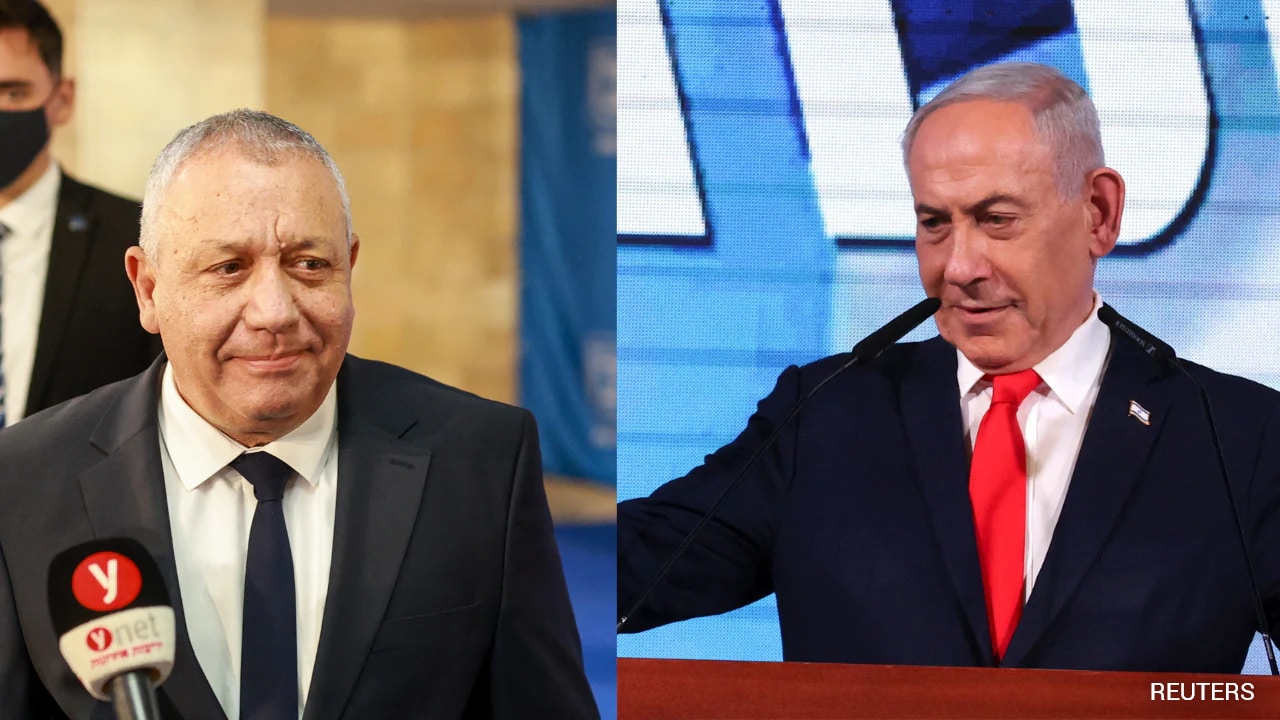
And nobody in the Knesset has sharper skepticism right now than former IDF Chief of Staff Gadi Eisenkot. When Netanyahu renewed his pitch for broad political unity, Eisenkot didn't mince words, accusing the Prime Minister of "playing tricks" to save his own political skin rather than genuinely uniting a fractured country.
If you're trying to figure out whether this latest unity push is a real path toward stability or just another survival maneuver, look closely at the history between these two men. Eisenkot isn't reacting to a single press conference. He's reacting to a decade of political muscle memory—and a very recent, bitter experience inside Netanyahu's own emergency war cabinet.
What Actually Happened Between Netanyahu and Eisenkot
To understand why Eisenkot called Netanyahu's bluff so publicly, you have to look at what happened after October 7, 2023. Back then, the country was reeling. Eisenkot and Benny Gantz, leaders of the National Unity party, set aside years of deep political rivalry and joined Netanyahu's emergency government. They did it because Israel needed steady hands at the wheel during an existential crisis.
It didn't last.
By June 2024, both Gantz and Eisenkot walked out of the war cabinet. Why? Because they concluded that Netanyahu was allowing his far-right coalition partners—specifically Itamar Ben-Gvir and Bezalel Smotrich—to dictate strategic war decisions while blocking serious post-war planning. Eisenkot was blunt in his resignation letter, writing that the cabinet under Netanyahu's leadership failed to make the decisive choices required to achieve Israel's war goals and bring the hostages home.
Fast forward to Netanyahu's renewed calls for a "unity government." From Eisenkot's perspective, you don't get to burn down a genuine unity partnership, prioritize the survival of your extremist coalition partners, and then turn around and ask the opposition to bail you out when the political heat rises. Calling it "playing tricks" isn't just a catchy soundbite. It's a diagnosis of Netanyahu's standard operating procedure.
The Anatomy of a Netanyahu Unity Pitch
I've watched Israeli coalition politics closely for years, and there's a predictable pattern whenever Netanyahu starts talking about national unity. It rarely happens from a position of overwhelming strength. Instead, the unity card gets played when his current coalition becomes too expensive to maintain—either politically, domestically, or internationally.
Think about what a unity government actually means in the Knesset's 120-seat math. It doesn't mean everyone sings together in harmony. It means bringing centrist opposition figures into the tent to dilute the leverage of smaller, more radical parties, or to present a softer, more moderate face to allies in Washington and European capitals.
Here's why opposition leaders like Eisenkot view these invitations as traps rather than genuine partnerships:
- Shared blame without real power. Joining a Netanyahu-led coalition historically means absorbing public anger over government failures while Netanyahu retains control over the security cabinet agenda and legislative priorities.
- The coalition lifeline. Whenever Netanyahu faces pressure over judicial reforms, military conscription exemptions for ultra-Orthodox Haredi men, or stalled hostage negotiations, bringing in centrists buys him months of survival time. Once the immediate storm passes, the centrists usually find themselves sidelined again.
- No commitment to new elections. Notice what Netanyahu's unity pitches almost always leave out. He rarely pairs a unity offer with an agreed-upon date for early elections. Without a clear exit ramp for the current government, Eisenkot sees a unity deal as a mechanism to extend Netanyahu's tenure indefinitely.
Honestly, you don't need a degree in political science to see why Eisenkot refuses to bite twice on the same hook. He already gave Netanyahu the benefit of the doubt during Israel's darkest hour, and he walked away convinced that personal political survival always outranks national strategy in the Prime Minister's office.
Why Eisenkot's Voice Carries Heavy Weight in Israel
In a political arena crowded with career politicians, Gadi Eisenkot occupies a rare space. He spent four decades in the Israel Defense Forces, serving as the 21st Chief of Staff from 2015 to 2019. Israelis across the political spectrum respect his quiet, methodical temperament and his deep operational background.
He also carries personal sacrifice that resonates deeply with the public. During the war in Gaza, Eisenkot lost both his son, Master Sgt. Gal Meir Eisenkot, and his nephew in combat. When a man who has paid that price looks at the Prime Minister and says the unity talk is a political trick, voters listen differently than they do when a typical opposition figure attacks the government.
Eisenkot isn't just criticizing from the sidelines, either. He has consistently argued that Israel needs a broad, genuine unity government—but one formed after the public goes back to the ballot box, not as a backroom deal to keep the current Knesset alive. In his view, real unity requires a fresh mandate from the voters and a clean break from the divisive politics that preceded October 7.
The Coalition Math Behind the Rhetoric
Let's look at the practical pressures driving Netanyahu's messaging. Governing Israel with a narrow right-wing and religious bloc sounds simple on paper, yet in practice, it's a constant high-wire act.
Every faction in Netanyahu's coalition holds veto power. If ultra-Orthodox parties threaten to bolt over military draft legislation, the government wobbles. If far-right ministers threaten to quit over ceasefire terms or humanitarian aid policies, the coalition's majority evaporates overnight.
Floating the idea of a unity government serves two immediate purposes for Netanyahu, even if Eisenkot and Gantz flatly reject it:
- It warns his current partners. By hinting that he could theoretically look toward the center, Netanyahu reminds his right-wing and Haredi allies that they aren't the only game in town. It's a classic negotiating tactic designed to keep rebellious ministers in line.
- It shifts the public narrative. If Netanyahu offers "unity" and Eisenkot calls it a "trick," Netanyahu's supporters can argue that the Prime Minister is trying to bring the country together while the opposition is playing petty politics.
Eisenkot knows this playbook inside and out. By immediately labeling the overture as "playing tricks," he's trying to short-circuit Netanyahu's framing before it takes hold with undecided centrist voters.
What Voters Actually Want From a Unity Government
If you look at public opinion polling in Israel since late 2023, a clear paradox emerges. Most Israelis desperately want national unity. They're exhausted by years of toxic polarization, massive street protests over the judiciary, and deep societal rifts over who shares the burden of military service.
At the same time, majorities in poll after poll have indicated they don't trust the current leadership to deliver that unity. Voters distinguish between the idea of a unity government and a Netanyahu-led unity government.
That distinction is the exact ground Eisenkot is standing on. He isn't rejecting national unity. He's rejecting the notion that you can achieve unity under a leader whose political survival depends on keeping the country divided into rival camps. For Eisenkot, true unity means establishing a state commission of inquiry into the failures of October 7, passing an equitable military draft law, and holding early elections so Israelis can choose a government that reflects where the country is today—not where it was in November 2022.
How to Read Israeli Unity Headlines Without Getting Played
Whenever another round of "unity government" rumors hits the news cycle in Jerusalem, skip the soaring rhetoric about brotherhood and national solidarity. Watch three concrete indicators instead to see if anything real is actually happening:
- Check whether an election date is on the table. Any unity proposal that doesn't include a firm, legally binding timeline for new elections is almost certainly a stalling tactic rather than a genuine transition plan.
- Watch the coalition partners' reactions. If Smotrich and Ben-Gvir aren't panicking or threatening to bring down the government, they probably know Netanyahu's unity talk is just theater meant for external consumption.
- Look at who controls the security cabinet. Unless centrist leaders are granted real veto power over strategic decisions—not just seats at the table—they won't walk back into the same trap they escaped in 2024.
Until those conditions change, Eisenkot's assessment remains the sharpest read on the room. In Jerusalem, calling for unity is easy—actually giving up power to make it real is the part nobody has agreed to yet.