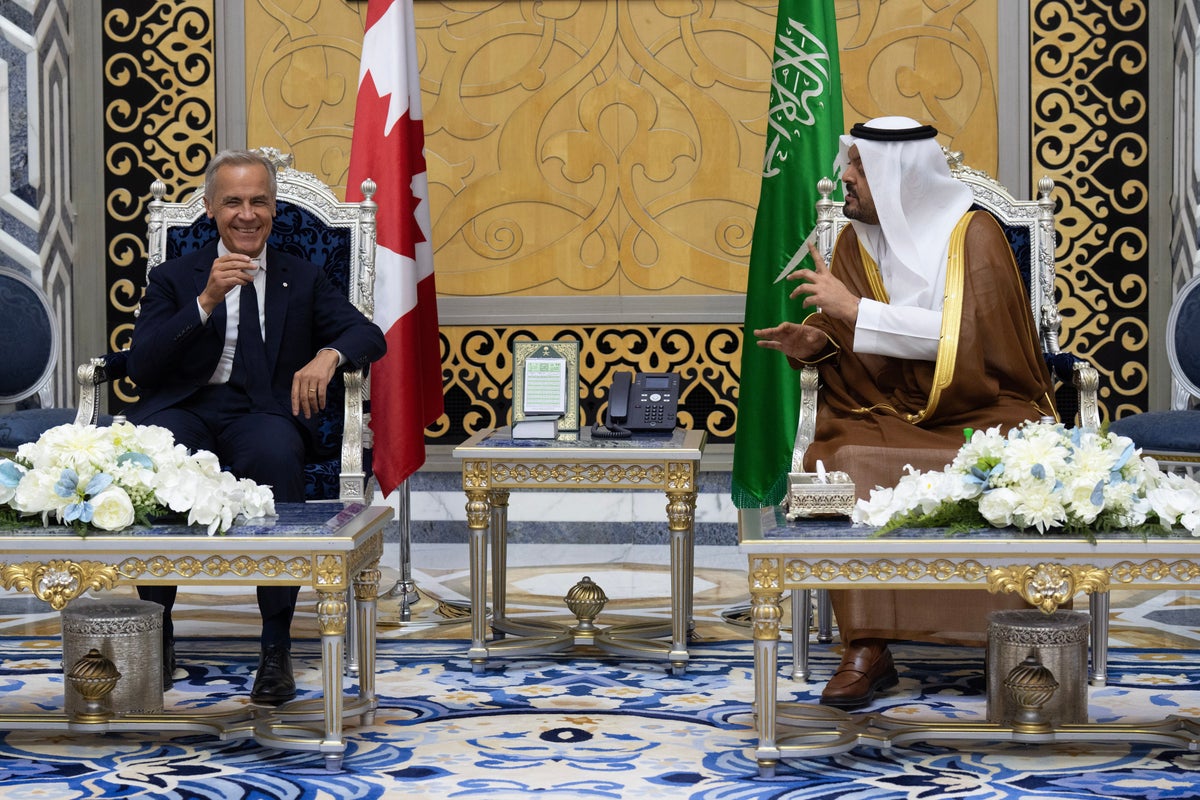
National bilateral strategies succeed or fail based on how well they balance geopolitical liabilities against capital allocation realities. Prime Minister Mark Carney’s July 2026 visit to Jeddah, Saudi Arabia—the first by a sitting Canadian prime minister in 26 years—represents a deliberate shift from ideology-driven foreign policy to transactional geoeconomics.
The baseline of this relationship is defined by a five-year diplomatic deep freeze. This freeze was triggered by the Canadian government’s public criticism of Saudi human rights practices in 2018, which led to expelled ambassadors, a freeze on new trade, and the mass withdrawal of Saudi students from Canadian universities. The normalization process that began in 2023 has culminated in this bilateral summit. It is driven by structural demands on both sides: Canada requires deep capital markets to fund its defense and domestic modernization initiatives, while Saudi Arabia requires western engineering, artificial intelligence, and extraction expertise to execute its Vision 2030 infrastructure program.
The core logic of the visit rests on decoupling diplomatic endorsement from commercial cooperation. Bilateral trade between the two nations reached $3.5 billion in 2025, positioning Saudi Arabia as Canada's second-largest trading partner in the Gulf region. To scale this economic activity, both states are navigating two distinct strategic mechanisms.
The Capital-Technology Swap
The fundamental economic relationship between Ottawa and Riyadh operates as a capital-technology swap. Canada possesses advanced capabilities in institutional project management, engineering, artificial intelligence, and clean technology, but faces constrained domestic venture capital and high fiscal pressures. Saudi Arabia, via its Public Investment Fund (PIF) and state-backed entities, possesses immense liquid capital but lacks the native technical execution layers required to deliver its gigaprojects on schedule.
This interdependence manifests across three primary industrial axes:
- Integrated Project Delivery and Infrastructure: Large-scale engineering firms are building strategic joint ventures with local Saudi entities. For example, Canadian project management firm Dokainish & Company partnered with SAUDCONSULT to export Canadian project controls, data systems, and digital transformation architectures directly into the Kingdom's infrastructure pipeline. This model mitigates the high historical failure rate of large-scale capital investments by standardizing data visibility and cost containment structures.
- Artificial Intelligence and Digital Innovation: Following a series of ministerial-level preparatory visits in early 2026, agreements have focused on embedding Canadian algorithmic frameworks into Saudi smart city initiatives. The strategic objective is to create deployment opportunities for Canadian enterprise software within non-Western jurisdictions that offer fewer regulatory hurdles for large-scale data aggregation.
- Critical Minerals and Energy Transition: Both nations are major resource exporters attempting to hedge against long-term decarbonization. While Canada holds vast reserves of critical minerals necessary for the global energy transition, its domestic extraction timelines are bottle-necked by regulatory and environmental review processes. Saudi capital provides a mechanism to fund global extraction joint ventures outside of Canadian borders, securing supply chain inputs through third-party jurisdictions.
The Strategic Architecture of Capital Mobilization
The bilateral talks focus heavily on structural finance, specifically the development of the Defense, Security and Resilience Bank (DSRB). This new multilateral financial institution is designed to mobilize private capital to support collective security and industrial resilience.
[Private Institutional Capital]
              │
              ▼ (De-risked via Low-Cost Financing)
      [Canada's DSRB] ──► [Sovereign Wealth (e.g., PIF)]
              │
              ▼
[Defense & Infrastructure Projects]
The DSRB functions as a mechanism to channel sovereign wealth funds from the Gulf into long-term, low-cost financing for infrastructure, supply chain security, and defense manufacturing. For Canada, securing Saudi participation in or parallel commitments alongside the DSRB solves a critical macroeconomic challenge: meeting expanded sovereign defense and security commitments without creating severe domestic fiscal deficits.
Canada’s recent attainment of NATO’s 2% defense expenditure target—with a trajectory toward 5% by 2035—requires a massive capital injection into domestic defense industries. By framing defense and resilience as investable asset classes for Gulf capital, Ottawa seeks to anchor its defense industrial strategy in global liquidity rather than relying solely on domestic tax revenues.
Structural Constraints and Execution Risks
The expansion of ties faces clear limitations. The primary systemic risk stems from the asymmetric political structures of the two nations. The Canadian government must operate within an electoral framework where public opinion and civil society put direct pressure on foreign policy decisions. In contrast, the Saudi state executes narrow, top-down economic and social reforms—such as structural modifications to the male guardianship system and expanding female labor participation—without corresponding political liberalization.
This divergence creates a fundamental reputational bottleneck for Canadian firms. The operational reality is that engagement does not equal endorsement, but corporate entities face potential compliance and brand risks if bilateral projects intersect with state security apparatuses or human rights liabilities.
The second limitation is structural economic alignment. While both nations emphasize diversification, they remain structurally correlated to global commodity cycles. A sustained collapse in global energy prices would simultaneously contract Saudi sovereign capital reserves and impair Canada's resource-dependent fiscal balance, limiting the total capacity of the capital-technology swap.
To navigate these structural constraints, enterprise leaders and state strategists must shift from broad diplomatic frameworks to ring-fenced, project-specific execution models. Diversifying capital partnerships away from centralized state entities toward sector-specific joint ventures reduces exposure to sudden diplomatic shifts, ensuring that technical integration outlasts political volatility.