The sirens do not sound for monuments. They sound for kitchens. They sound for the third-floor apartment where a child left a half-finished drawing of a dog on the kitchen table. They sound for the bakery oven that was still warm when the wall vanished.
Charts do not bleed. That is the fundamental seduction of the modern map. When a conflict is reduced to data points—red polygons, blue arrows, casualty counts stacked neatly in quarterly briefs—it becomes an abstraction. Analysts look at satellite imagery and see density indices. They see vector analysis. They see strike radiuses and thermal signatures.
Step closer. Past the digital grain of the drone feed. Past the sterile percentages compiled by monitors in Geneva or Washington. Look at the fragments left behind.
To understand what is happening to civilian areas in the ongoing war between Russia and Ukraine, one must first unlearn the language of military convenience. We are told about collateral damage. We are fed the sanitized jargon of military necessity. But behind every coordinate plotted on a cartographer's grid lies a domestic rhythm violently interrupted.
Consider a hypothetical bakery in a residential district three kilometers from a contested railhead. To a battery commander miles away, the building is simply an alphanumeric grid square. It blocks a line of sight. It might harbor a makeshift supply cache, or it might just sit in the way of an advancing armor column. The decision to fire is made in seconds, driven by telemetry and trajectory calculations.
The impact takes milliseconds.
The aftermath takes generations.
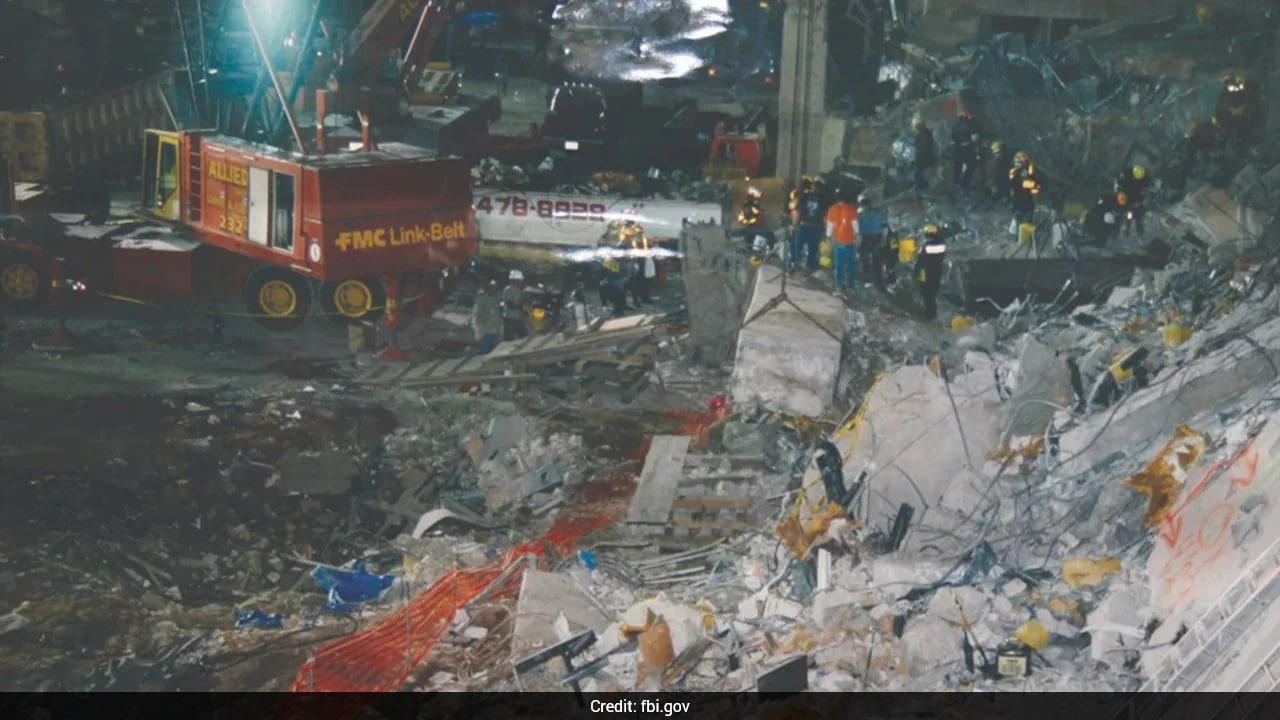
When structural concrete collapses, it does not merely fall; it pancakes. Floors stack on top of floors like dead leaves in autumn, crushing the lives contained within them into silence. This is the geometry of ruin. It is precise, calculated, and utterly devastating to the human scale.
Data compiled by international monitors and human rights organizations reveals a grim, unyielding pattern. Shelling and missile strikes do not respect the boundary between the barracks and the bedroom. Urban centers have become primary theaters of kinetic exchange. Schools, hospitals, apartment blocks, and water treatment plants have absorbed the brunt of heavy artillery, ballistic missiles, and loitering munitions.
Why? Because modern war is systemic. When an invading force seeks to break the will of a nation, the fastest route is not through the entrenched trenches of the frontline. The fastest route is through the darkness of a winter night when the power grid fails because a substation four towns over was reduced to slag.
Fear is a logistics weapon.
When a maternity ward is struck, the message travels faster than any diplomatic cable. It says: No place is safe. Not even the beginning of life. When a grain silo catches fire, the message ripples across continents, starving markets thousands of miles away while choking the local economy to dust.
Yet, numbers flatten this horror. We read that thousands of non-combatants have perished. We nod at the statistical weight of displaced millions. We catalog the destroyed schools like accountants balancing a ledger of ruin. But statistics are a shield against empathy. They allow us to compartmentalize the suffering, to file it away under foreign policy or international law, as if humanity were something that could be regulated by Geneva conventions and ignored when politically inconvenient.
Listen to the silence of a city after the smoke clears.
It is a heavy, suffocating quiet. It smells of pulverized gypsum, burnt rubber, and the distinct, sickening copper tang of fresh destruction. In this silence, survivors begin the agonizing work of sorting through the debris not for salvage, but for memory. A wedding album with water-damaged pages. A chipped porcelain mug. A set of keys to a car that no longer has an engine.
These are the artifacts of civilian resilience. They tell a story that no cartographer can capture with a marker on a tactical overlay.
The mechanics of these attacks reveal an intentional blurring of lines. While international law explicitly forbids targeting non-combatants or launching indiscriminate strikes against densely populated areas, the reality on the ground is a relentless erosion of those norms. Precision-guided munitions miss their targets, or they are deliberately aimed at dual-use infrastructure—power grids, rail lines, communication hubs—knowing full well that the civilian cost is immediate and catastrophic.
When the lights go out in a metropolitan area of a million people, the hospital generators hum for a few hours. Then they run out of fuel. Then the ventilators stop. Then the insulin spoils in the pharmacy fridges. That chain reaction of decay is rarely captured in the initial casualty count, yet it claims just as many lives in the quiet hours before dawn.
We must confront the uncomfortable truth behind these maps. They are not just records of where bombs fell; they are testaments to a systemic failure of global empathy. Every red dot on a tracking chart represents a universe extinguished, a family fractured, a future stolen by the cold math of ballistics.
The snow falls over the shattered facade of a nine-story block in the east. It covers the exposed rebar, the dangling curtains, the jagged edges of a balcony where someone once drank morning coffee. For a moment, the white shroud makes the ruins look almost serene, almost abstract.
Then the wind shifts, and the smell of ash returns.