The viability of diplomatic mediation in high-intensity interstate conflicts depends on structural conditions rather than rhetorical willingness. When United States officials indicate a readiness to mediate between Moscow and Kyiv amidst escalating threats, they operate within a rigid strategic framework. Successful third-party mediation requires an alignment of three variables: a ripe moment defined by a mutually hurting stalemate, a credible enforcement mechanism, and a mutually acceptable negotiation baseline.
Without these components, mediation offers do not signal immediate peace; instead, they function as signaling mechanisms designed to manage escalation risks, shift the burden of compliance onto the adversary, and reallocate geopolitical capital.
The Tri-Lateral Strategic Architecture
To evaluate the prospects of US-led mediation, the conflict must be disaggregated into three interconnected strategic vectors: the Russian escalation calculus, the Ukrainian sovereignty threshold, and the American proxy optimization strategy. Each actor operates under a distinct cost-benefit function that determines their willingness to enter negotiations.
1. The Russian Escalation Calculus
Moscow’s posture toward Kyiv alternates between kinetic escalation and asymmetric threats to achieve specific political outcomes. The cost function of Russian military operations incorporates domestic political stability, economic resilience under sanctions, and the rate of material attrition relative to Western replenishment speeds.
Threat escalation serves as a psychological leverage multiplier. By increasing the perceived probability of total theater breakdown or non-conventional deployment, Moscow attempts to force Western intermediaries to pressure Kyiv into territorial or political concessions. The Russian negotiation baseline demands a structural revision of European security architecture, specifically the neutralization of Ukraine and explicit limits on NATO force posture.
2. The Ukrainian Sovereignty Threshold
Kyiv’s strategic calculus is governed by an existential survival imperative. The Ukrainian state cannot accept a mediation framework that codifies permanent territorial loss or compromises its long-term security guarantees.
For Ukraine, the utility of any negotiation is measured by its capacity to prevent future aggression. This creates a structural bottleneck: temporary ceasefires without ironclad multilateral security guarantees or a pathway to NATO membership are viewed by Kyiv as asymmetric advantages for Russia, allowing Moscow to reconstitute its depleted forces for subsequent offensives. Consequently, the Ukrainian baseline requires the restoration of territorial integrity and a verifiable mechanism for accountability and reparations.
3. The American Proxy Optimization Strategy
The United States approaches the conflict through the lens of global power projection and risk management. The American strategic objective is twofold: degrading Russian conventional military capability to prevent systemic instability in Europe, while avoiding direct kinetic confrontation between NATO and a nuclear-armed adversary.
US willingness to act as a mediator is a dynamic variable governed by domestic political constraints, legislative funding cycles, and competing theater priorities, particularly in the Indo-Pacific.
[US Strategic Calculus] ──► Balances: Degrade Russian Capacity vs. Avoid Direct NATO-Russia Escalation
                               │
                               ├─► High Aid Flow ──► Lowers Short-term Mediation Willingness
                               └─► Supply Bottlenecks ─► Elevates Mediation to Manage Attrition
When US aid flows are robust, the incentive to mediate decreases because the military degradation of the adversary remains cost-effective. Conversely, when domestic political friction or supply chain bottlenecks restrict material delivery to Kyiv, the US pivots toward diplomatic signaling to manage the attrition rate on the ground.
The Structural Mechanics of Mediation Timing
Third-party intervention cannot succeed when the belligerents believe a decisive military victory remains achievable. In political science, the optimal window for intervention is conceptualized as a mutually hurting stalemate. This state occurs when both parties recognize that the costs of continuing the conflict exceed any potential gains from further kinetic operations, yet neither side can achieve total victory.
In the current theater dynamics between Russia and Ukraine, this stalemate is asymmetric. Russia possesses superior raw manpower and a war economy capable of sustained low-tech material production, but lacks the operational capability to achieve a decisive breakthrough that collapses the Ukrainian state.
Ukraine possesses superior western intelligence, precision strike capabilities, and asymmetric operational agility, but suffers from structural deficits in ammunition volume and human reserves.
Because both sides retain the capacity to inflict severe costs while harboring hypotheses of long-term endurance, the structural conditions for a mutually hurting stalemate are not fully met. Offers of mediation during this phase do not represent a transition to peace tracking; rather, they are instruments of tactical positioning.
Signaling Dynamics and Threat Management
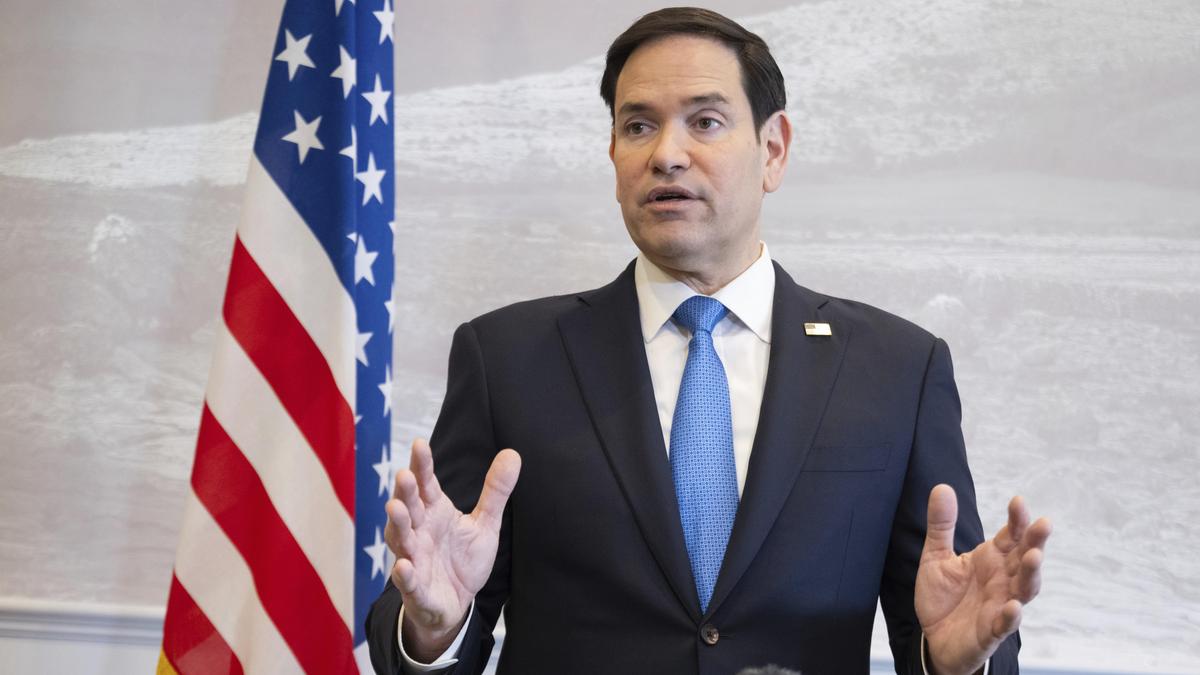
When senior US policymakers assert readiness to mediate, the primary audience is often not the adversary, but rather domestic constituencies and international alliance structures. This diplomatic signaling serves three distinct operational functions.
Burden Shifting
By explicitly stating a readiness to facilitate a negotiated settlement, the US positions itself as the rational, status-quo actor. This shifts the diplomatic burden of proof onto Moscow. If Russia rejects the overture or counters with non-viable ultimatums, the US validates the necessity of continued military assistance to Ukraine among skeptical domestic lawmakers and hesitant European allies.
Escalation Management
Publicly discussing mediation pathways provides an off-ramp narrative that reduces the probability of catastrophic miscalculations. It signals to the adversary that the conflict remains bounded within a rational political framework, disincentivizing desperate, non-linear escalations by affirming that an exit architecture exists if the costs of aggression become unsustainable for the Kremlin.
Alliance Cohesion
The North Atlantic alliance is not a monolith; it features varying degrees of risk tolerance and economic exposure to the conflict. Regular injections of mediation rhetoric satisfy Western European partners who prioritize long-term stability and economic normalization, thereby preserving the unified front necessary to sustain sanctions regimes and forward-deployed military postures.
Operational Hurdles to US-Led Mediation
Even if both belligerents consented to a US-brokered negotiation, the structural architecture of the international system introduces three severe operational bottlenecks that jeopardize execution.
The Credibility Deficit
Effective mediation requires the intermediary to possess either perceived neutrality or sufficient leverage to guarantee compliance from both sides. The US is a primary co-belligerent in all but name, providing the kinetic enablers, financial underwriting, and intelligence infrastructure crucial to Ukraine’s defense.
Moscow views the US as an existential adversary intent on regime destabilization. This eliminates the prospect of the US acting as a neutral arbiter, restricting its role to that of a guarantor for Kyiv within a larger multilateral framework involving non-aligned powers like India, China, or Turkey.
The Enforcement Dilemma
The primary failure mode of historical peace accords is the commitment problem: the inability of parties to credibly commit to a deal today because they retain the incentive to violate it tomorrow when strategic conditions change.
Any mediated settlement between Russia and Ukraine requires an enforcement mechanism capable of deterring a renewed Russian offensive. If the US and NATO refuse to extend formal Article 5 protections to the remaining Ukrainian territory, any signed treaty remains fundamentally unstable, reliant solely on the self-restraint of a revisionist power.
The Territorial-Political Trade-Off
The core of any mediation process involves translating battlefield realities into permanent political boundaries. The fundamental mismatch between the legalist international order—which forbids the acquisition of territory by force—and the realist reality of Russian occupation creates an irreconcilable gap.
A framework that requires Ukraine to formally cede territory undermines the foundational post-World War II international architecture, while a framework demanding immediate Russian withdrawal from all occupied zones ignores the physical distribution of military force on the ground.
Strategic Trajectory and Forecast
The probability of immediate, productive mediation remains low due to the unresolved nature of the attritional struggle. The conflict will continue to be governed by a strict material input-output loop: Western industrial capacity and political will vs. Russian economic resilience and demographic mobilization.
[Conflict Trajectory Loop]
   │
   ├──► Scenario A: Western Attrition Outpaces Russia ──► Forced Inequitable Mediation
   │
   └──► Scenario B: Ukrainian Kinetic Success ──────────► Leverage-Driven Stabilization
The next structural inflection point will occur when one or both actors face critical resource exhaustion.
If Western industrial output fails to meet Ukrainian artillery and air defense requirements over the next eighteen months, Kyiv's operational capacity will degrade, forcing a transition from an active defense posture to an inequitable mediation framework driven by material necessity.
Conversely, if Russian financial reserves erode under sustained sanctions pressure and their armored vehicle storage yards face total depletion, Moscow will be forced to modify its maximum war aims.
The optimal strategic play for the United States is to avoid premature mediation frameworks that codify Russian territorial gains. Instead, policy must focus on scaling domestic and allied defense industrial base production to establish a credible, long-term deterrence baseline.
Only when the Russian leadership calculates that the future cost of holding occupied territory indefinitely exceeds the domestic political risk of a negotiated withdrawal will mediation cease to be a rhetorical instrument and become an operational reality. Until that threshold is crossed, diplomatic offers must be treated as tactical maneuvers designed to optimize the geopolitical status quo rather than resolve it.