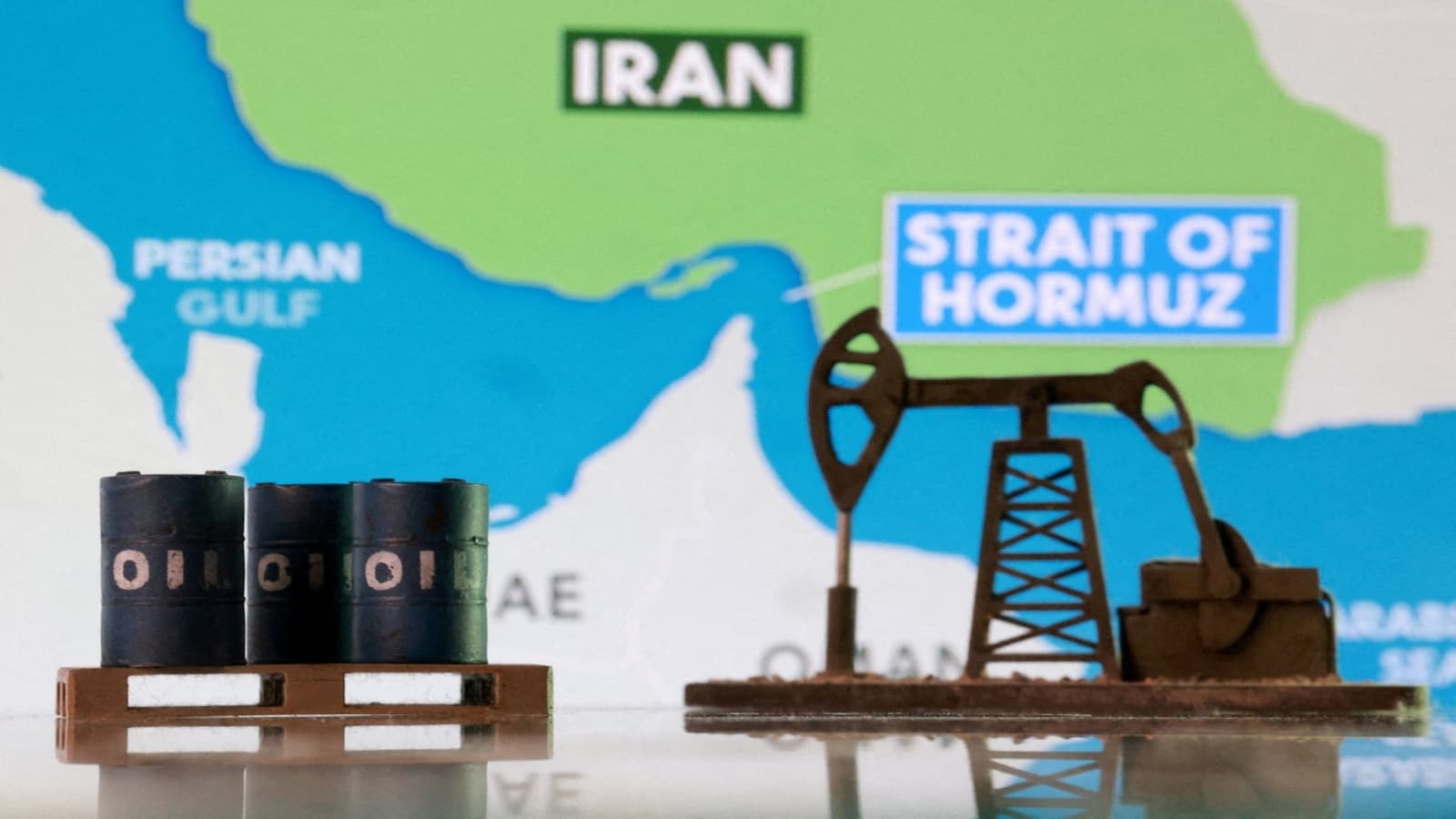
Oil traders aren't panicking anymore. When news broke that fresh attacks targeted commercial vessels in the Strait of Hormuz, the old market playbook suggested a massive spike in crude prices. After all, this 24-mile-wide choke point handles roughly a fifth of global oil consumption. Instead, Brent crude is hovering around $73 a barrel, and WTI has plummeted down toward $70. The terrifying predictions of $150 or $200 oil that dominated the news headlines just months ago have completely fallen apart.
If you look at how markets reacted to supply disruptions in the past, this calm seems bizarre. The shipping channel has spent months crippled by the US-Iran conflict, presenting what the International Energy Agency called the biggest energy supply shock in history. Yet, crude prices are sitting lower than they did during stretches of 2025.
The truth is, the global energy trade has fundamentally rewired itself over the last few years. The traditional "geopolitical risk premium" that used to automatically tack $20 onto a barrel of oil during Middle East flare-ups doesn't work the way it used to.
The Secret Safety Valves Rerouting Global Supply
Wall Street analysts missed how fast state-owned oil giants could adapt to physical blockades. When the Strait of Hormuz effectively closed earlier this year, it didn't completely lock Middle Eastern crude behind a wall.
Saudi Arabia and the United Arab Emirates didn't just sit on their hands. They spent years building bypass infrastructure for exactly this nightmare scenario. Saudi Arabia quickly ramped up volumes through its East-West Pipeline, sending millions of barrels per day overland to the Red Sea, completely avoiding the troubled waterway. Simultaneously, the UAE boosted flows directly to its Fujairah terminal on the Indian Ocean.
Between these pipelines and emergency trucking routes, nearly 4 million barrels per day of Gulf crude found a backdoor out of the region.
You also have to look at the massive global buffer that protected the market. The world entered this period of volatility with massive commercial and strategic inventories. Between sovereign Strategic Petroleum Reserves and crude sitting on commercial tankers, the global economy had nearly 7 to 10 billion barrels of oil in storage.
When the supply shock hit, governments and trading houses quietly tapped these reserves. Drawing down these stockpiles bridged the immediate gap while buyers shifted their supply chains to other producers.
Why Non OPEC Production Smashed Expectations
The biggest miscalculation by oil bulls was underestimating Western production capacity. Every time prices threaten to creep upward, drillers in the US, Brazil, and Guyana turn on the taps.
Global Production Shifts (2025-2026)
------------------------------------
US Shale: Reached record efficiency, capping marginal cost of production.
OPEC+ Actions: Continuing to gradually unwind production cuts.
Alternative Exporters: Nigeria and Guyana hitting higher export targets.
US shale drillers have turned efficiency into an art form. When crude rose past $80 earlier this year, capped wells across Texas and New Mexico started pumping almost immediately. It doesn't cost shale operators what it did a decade ago to bring new supply online. They can react to market deficits in weeks, not years.
At the same time, OPEC+ has been trying to unwind its own voluntary production cuts. The coalition added nearly 188,000 barrels per day to the market, and Saudi Arabia even cut its official selling prices for August deliveries. When the biggest exporters in the world are actively competing for market share and pricing their oil to move, isolated drone attacks on tankers simply can't sustain a bull run.
Hidden Demand Destruction and the Slowing Global Economy
Supply is only half the equation. The real reason traders are shorting oil right now is that global demand is incredibly weak.
Central banks kept interest rates high throughout late 2025 and into 2026 to battle sticky inflation. That prolonged tightening cycle did exactly what it was designed to do: it cooled down global manufacturing and economic growth. The International Energy Agency expects global oil demand growth to slow down significantly this year, expanding by just 1.1 million barrels per day.
There is also a massive, hidden drop in consumption that the mainstream financial media completely ignored. When the conflict in the Middle East escalated, airlines canceled thousands of commercial flights to and from major hubs like Kuwait, Saudi Arabia, Qatar, and the UAE. That structural shift saved hundreds of millions of gallons of jet fuel.
When you combine a slowing Chinese economy, high Western interest rates, and a massive drop in aviation fuel needs, you get a market where supply readily meets demand—even with a major shipping lane compromised.
How to Trade the New Realities of Crude
If you are managing energy investments or trying to hedge corporate fuel costs, relying on old assumptions about geopolitical risk will lose you money. The old correlation between Middle East headlines and skyrocketing oil prices is broken.
First, stop trading the scary headlines. When an attack happens in the Gulf, algorithmic trading bots cause a brief, automatic pop in front-month futures. These spikes are almost always temporary. Look past the immediate noise and monitor physical market indicators instead, like the Brent-Dubai spread. Right now, that spread is signaling a market in contango, meaning near-term supply is completely abundant.
Second, watch Russian export terminals and Western infrastructure rather than the Middle East. With the Strait of Hormuz risks largely priced in and a US-Iran peace framework floating around, the real wild card is structural damage to export infrastructure elsewhere. Drone strikes affecting Russian refining activity or major pipelines in North America have a far more direct impact on immediate product availability than localized skirmishes in the Gulf.
Keep an eye on the $66.50 support floor for WTI. If global economic indicators continue to soften and OPEC+ continues bringing supply back online, crude is highly likely to break through that floor and slide toward the $55 range by the end of the year. Position your hedges accordingly and don't get sucked into the hype of the next geopolitical panic cycle.