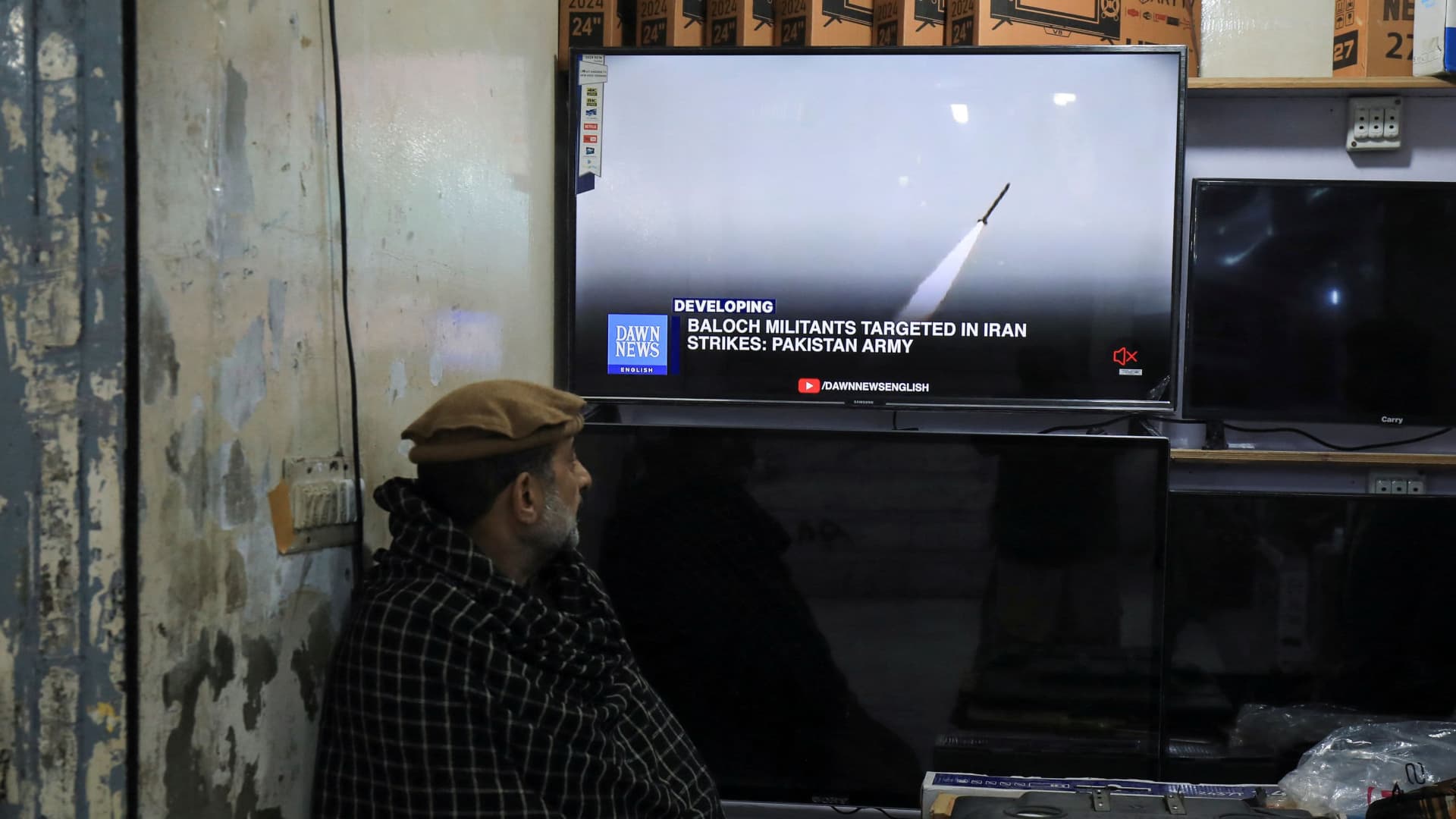
The transition of Iran-Israel relations from strategic alignment to existential antagonism is not a result of ancient religious animosity, but rather a calculated realignment of national security architectures following the 1979 Revolution. For three decades prior to this pivot, the two nations operated under the "Periphery Doctrine"—a cold-blooded geopolitical strategy where non-Arab powers in the Middle East formed a silent axis to contain pan-Arab nationalism. The collapse of this alignment was driven by a fundamental change in the Iranian state’s source of legitimacy, moving from a West-aligned monarchy to a revolutionary theocracy that required an external ideological foil to consolidate internal power.
The Strategic Logic of the Periphery Doctrine (1948–1979)
The initial cooperation between Iran and Israel was built on a shared threat perception rather than cultural affinity. Under Mohammad Reza Pahlavi, Iran viewed the rise of Arab socialism and Nasserism as a direct threat to its monarchical stability and territorial integrity. Israel, seeking to break its regional isolation, identified Iran as a natural partner in the "outer ring" of Middle Eastern states.
- Energy and Intelligence Integration: Iran served as Israel's primary oil supplier during periods of Arab oil embargoes. In exchange, Israel provided military technology and agricultural expertise. The establishment of the Eilat-Ashkelon pipeline serves as the physical monument to this era of pragmatic cooperation.
- Containment of Iraq: Both nations viewed the Ba'athist regime in Baghdad as a destabilizing force. This shared hostility led to coordinated support for Kurdish insurgencies in northern Iraq, effectively pinning down Iraqi divisions that would otherwise have been deployed against Israel or Iranian interests.
- The Intelligence Triad: Operation Trident formalized intelligence sharing between Mossad, the Iranian SAVAK, and Turkish intelligence. This was a clinical arrangement designed to monitor Soviet encroachment and Arab radicalism.
The relationship was never a formal "alliance" in the Western sense; it was a "de facto" partnership characterized by public distance and private intimacy. This structural duality allowed the Shah to maintain standing in the Muslim world while securing his borders through Israeli military and technical assistance.
The 1979 Pivot: Ideological Displacement of Realpolitik
The Iranian Revolution fundamentally altered the cost-benefit analysis of Iranian foreign policy. The new regime under Ayatollah Khomeini replaced the Periphery Doctrine with an "Islamic Universalism" framework. This shift was not merely emotional; it was a structural necessity for the new government to claim leadership over the broader Muslim world and delegitimize its Arab rivals.
The Legitimacy Deficit
By positioning itself as the "vanguard of the oppressed," the Islamic Republic sought to bypass the Sunni-Shia divide. Targeting Israel—the most potent symbolic grievance in the Arab street—became the primary mechanism for Tehran to project influence beyond its borders. This created a "Security-Ideology Loop":
- Internal Consolidation: Framing Israel as the "Little Satan" justified the expansion of the Revolutionary Guard (IRGC) and the suppression of domestic dissent.
- Regional Hegemony: Adopting the Palestinian cause allowed a Persian, Shia power to compete for the hearts and minds of a predominantly Sunni Arab population.
The Asymmetric Doctrine
Unlike the Shah’s conventional military focus, the post-1979 regime developed an asymmetric strategy to offset Israel’s qualitative military edge (QME). This led to the creation of the "Axis of Resistance," a network of non-state actors designed to extend Iran's strategic depth to the Mediterranean.
The Structural Drivers of Modern Conflict
The current state of hostility is sustained by three distinct structural pillars. Each pillar represents a hard constraint that prevents a return to the status quo ante.
1. The Nuclear Threshold Paradox
Israel views an Iranian nuclear capability not just as a military threat, but as an existential "umbrella" under which Iranian proxies could operate with impunity. The Israeli security establishment operates under the "Begin Doctrine," which dictates that Israel will not allow any regional enemy to acquire weapons of mass destruction. Iran, conversely, views nuclear latentcy—the ability to produce a weapon on short notice—as the ultimate deterrent against regime change.
2. The Proxy Proximity Gap
The geography of the conflict has changed. Previously, Iran and Israel were separated by thousands of kilometers and several buffer states. Today, through Hezbollah in Lebanon, militias in Syria, and PIJ/Hamas in Gaza, Iran maintains a "land bridge" to Israel’s borders. This reduces Israel’s reaction time and forces a continuous state of high-alert mobilization.
3. The Shadow War (MABAM)
The conflict has moved into a persistent, sub-kinetic phase known in Israel as Mabam (the war between wars). This involves:
- Cyber Warfare: Reciprocal attacks on civilian infrastructure, such as water treatment plants and fuel distribution networks.
- Maritime Interdiction: Targeting commercial shipping in the Persian Gulf and the Red Sea to increase the economic cost of the opponent's trade.
- Kinetic Sabotage: Assassinations of nuclear scientists and the physical sabotage of enrichment facilities.
The Erosion of Third-Party Buffers
Historically, the presence of strong central states in Iraq and Syria acted as a buffer between the two powers. The collapse or weakening of these states since 2003 has removed the "insulation" that once prevented direct friction.
The vacuum in Syria, in particular, has become the primary theater of direct confrontation. Iran seeks to establish permanent military bases and precision-missile manufacturing sites in Syria to create a multi-front threat against Israel. Israel’s response—a sustained bombing campaign against Iranian assets in Syria—marks a transition from shadow war to overt, albeit localized, kinetic engagement.
Quantitative Divergence in Military Strategy
Analysis of the defense budgets and procurement cycles of both nations reveals a widening gap in tactical philosophy.
- Israel's Qualitative Focus: Israel invests heavily in air superiority (F-35), multi-layered missile defense (Iron Dome, David’s Sling, Arrow), and elite signal intelligence (Unit 8200). The goal is "Total Domain Awareness."
- Iran's Quantitative Focus: Iran prioritizes "Saturation Capabilities." By mass-producing low-cost drones (Shahed series) and ballistic missiles, they aim to overwhelm expensive interceptor systems through sheer volume. The economic math favors Iran here: an interceptor missile can cost $50,000 to $1,000,000, while the drone it destroys may cost only $20,000.
This creates an "Economic Attrition Model" where Israel must spend significantly more to maintain a defensive shield than Iran spends to challenge it.
The Strategic Deadlock
The Iran-Israel rivalry has reached a state of "Stable Instability." Neither side can achieve a decisive victory without risking a total regional war that would devastate their respective economies and invite global intervention.
Iran’s strategy is one of "Strategic Patience," betting that the long-term costs of internal division and regional isolation will weaken Israel. Israel’s strategy is "The Octopus Doctrine," shifting from fighting the "tentacles" (proxies) to targeting the "head" (Iran itself) through covert operations and diplomatic normalization with Arab states (The Abraham Accords).
The Abraham Accords represent the most significant structural counter-move to Iranian influence in decades. By formalizing ties with the UAE, Bahrain, and potentially Saudi Arabia, Israel is attempting to recreate a version of the Periphery Doctrine, but this time with Sunni Arab states as the partners against a Persian revolutionary power.
The primary risk factor remains the "Accidental Escalation" trigger. In a landscape where both sides operate in the "gray zone," a miscalculated cyber-attack on critical infrastructure or an unintended high-casualty event in Syria could force a rapid climb up the escalation ladder. The lack of direct communication channels—which existed under the Shah—means that there are no "off-ramps" or "hotlines" to de-escalate a crisis in real-time.
Future stability depends entirely on whether the international community can establish a new regional security architecture that accounts for Iran's demand for strategic depth and Israel’s requirement for "Zero Tolerance" regarding nuclear proximity. Without such a framework, the cycle of kinetic "checks" and "balances" will continue to intensify until the threshold of conventional war is crossed.